

CRM Partners
Starting Price
Free; $15 per user per month (billed annually)

Starting Price
Free; $12 per user per month for basic features

Starting Price
$14 per user per month (billed annually)
Compare the Best CRM Software of 2026
The Best CRM Software
The best CRM system for your SMB will vary depending on what you need. However, we know that if you stick with the popular CRM software options below, you will be well on your way to growing your business and managing clients and potential customers.
Zoho CRM
Best Value for Money
Zoho CRM

Free Plan
Yes, supports three users, essential tools
Key Features
Lead management, automation
Yes, supports three users, essential tools
Lead management, automation
Expert Take
If you’re looking for a CRM that can help you manage leads, deals and contacts, customize it to your liking, generate detailed reports and enhance collaboration without breaking the bank, look no further than Zoho CRM. In addition, my top pick supports email and telephony services, which makes contacting customers simple. There are also robust automation tools and integrations, and you can connect the CRM to social media sites.
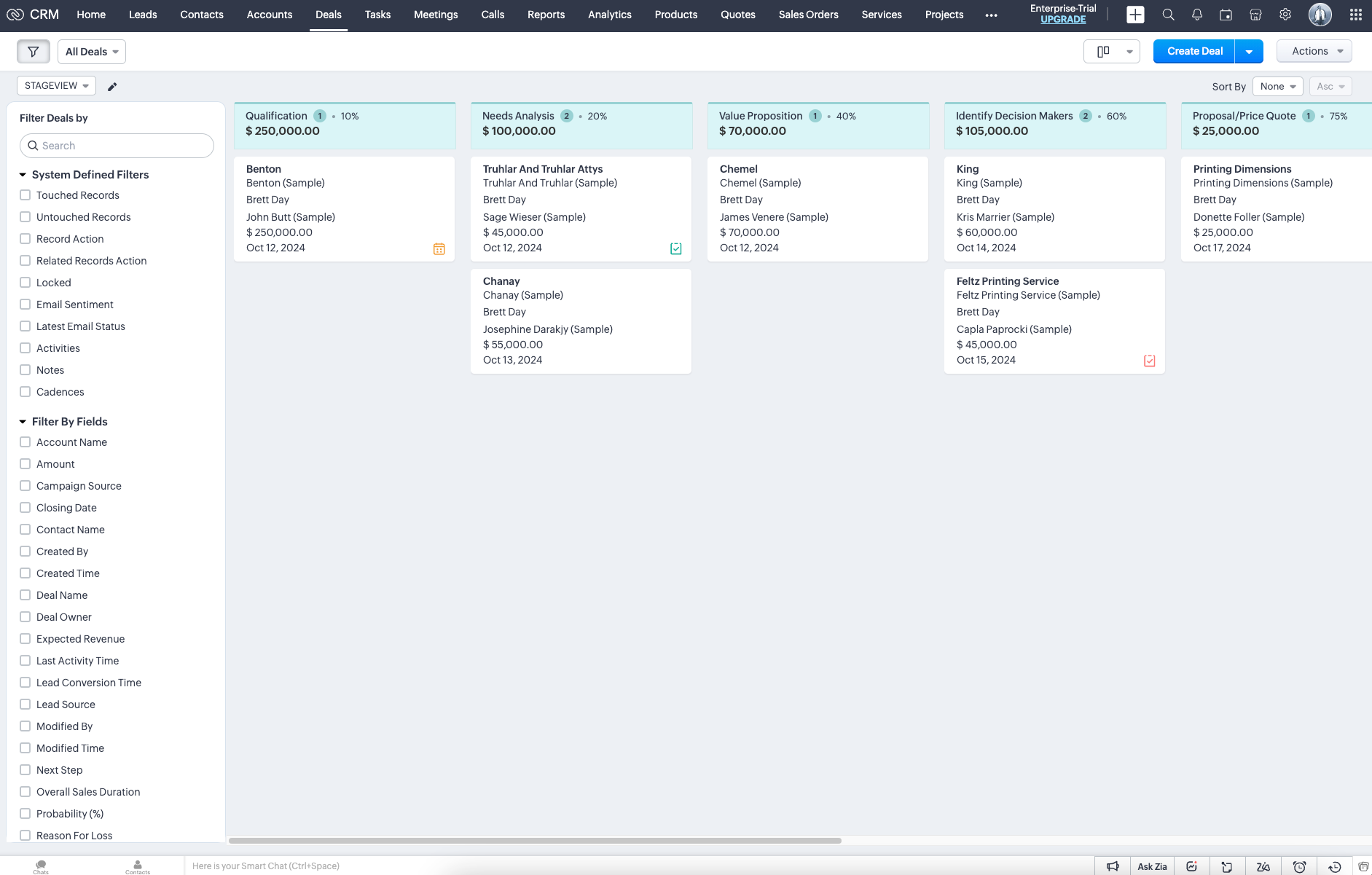 Zoho CRM has a clean user interface and an extensive list of tools.
Zoho CRM also lets SMBs create online catalogs and manage inventories, and thanks to Android and iOS apps, you can stay updated while on the move. Zoho CRM offers a lot of bang for the buck and provides all the tools for SMBs to succeed. There is a limited free plan that supports three users, but the magic begins in the paid plans, which start at $20 per user per month and increase to $65 per user per month (both billed monthly).
Learn more: Read our full Zoho CRM review.
Consumer Sentiment Index
Pros & Cons
- Robust feature set
- Intuitive tools
- Incredibly affordable
- Free plan only supports three users
- Data and file storage limits are on the low side
- Data backup costs extra
OnePageCRM
Best for Mobile Users
OnePageCRM

Free Plan
No free plan, 21-day free trial
Key Features
Mobile apps, sales pipelines, travel logs
No free plan, 21-day free trial
Mobile apps, sales pipelines, travel logs
Expert Take
Taking care of your customers and potential clients from the comfort of your desk is one thing but being able to nurture leads and close sales while you’re on the road, well, that’s priceless. If you like to manage business while you’re out and about and have an iPhone or Android device, OnePageCRM could be the platform for you. The mobile app gives you access to sales pipelines, contact information, action streams, logs, notes and emails. You can communicate with clients, plan routes to meetings, log time on the road and even scan business cards.
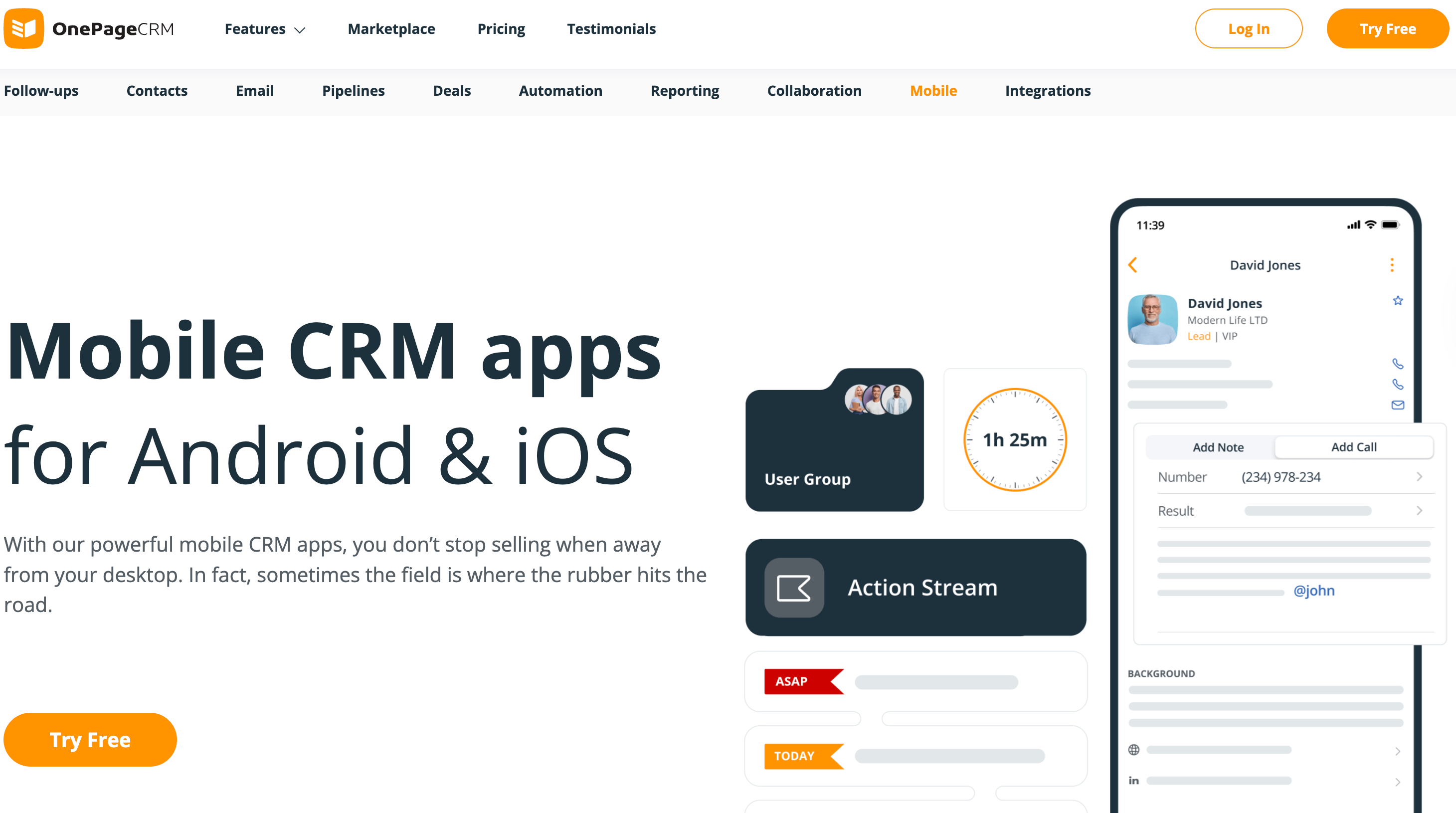
OnePageCRM offers a full-featured mobile application.
Of course, you can still use OnePageCRM on desktop, and you’ll find plenty of other features including, automations, reports, integrations and many tools for collaboration, such as notes and mentions. OnePageCRM is designed to slide seamlessly into your current tech stack so that you can hit the ground running. The only major downside is that customer support on the weekends is limited to email, which could slow down response times. Starting at just $15 per user monthly, OnePageCRM is a robust, affordable CRM for SMBs.
Learn more: Read our full OnePageCRM review.
Consumer Sentiment Index
Pros & Cons
- Affordable paid plans
- Robust mobile applications
- Strong suite of CRM tools
- Support on weekends limited to email
- Professional plan lacks some email tools
- Professional plan only supports on pipeline
Bigin
Best for Teams With A Budget
Bigin

Free Plan
Yes, supports a single user, limited tools
Key Features
Automations, integrations, omni-channel support
Yes, supports a single user, limited tools
Automations, integrations, omni-channel support
Expert Take
If you have a startup business and don’t have a huge budget for CRM software, but you know you’ll need an arsenal of tools, Bigin, which is made by Zoho, should be on your radar. Plans range from free to just $21 per user for the most feature-packed Bigin 360 plan, which offers many of the tools you’ll find in platforms that cost significantly more. Multi-channel support, automations, integrations, sales pipelines, collaboration tools, they’re all here.

Despite its low price, Bigin offers many of the same tools found in more expensive CRMs.
In addition to the above, you’ll find that Bigin offers plenty of customization tools, mobile apps, and it’s GDPR and HIPAA compliant, meaning you can use it safely in healthcare fields. So what’s the downside? Compared to Zoho CRM, Bigin does lack tools that are suitable for complex projects and workflows, and consumer reviews state that customer service is slow, which is about par for the course for Zoho products. Still, if you have a tight budget, Bigin is a solid option.
Consumer Sentiment Index
Pros & Cons
- Plenty of CRM tools
- Good free plan
- Affordable paid plans
- Suitable only for simple workflows
- Users complain about slow customer service
- Not as many customization options as other platforms
Apptivo
Best for End-to-End Workflows
Apptivo
Free Plan
No, only a 14-day free trial
Key Features
Lead and contact management, e-signature
No, only a 14-day free trial
Lead and contact management, e-signature
Expert Take
Apptivo is the ideal platform for SMBs needing to create leads and turn them into paying customers in one swoop. Apptivo excels at lead management and nurturing. You’ll find everything you need to identify opportunities, capture lead information, create quotes, track deals, send invoices, sign documents with e-signatures and accept payments. Apptivo truly is an end-to-end CRM that’s ideal for those in commerce, real estate and many other industries.
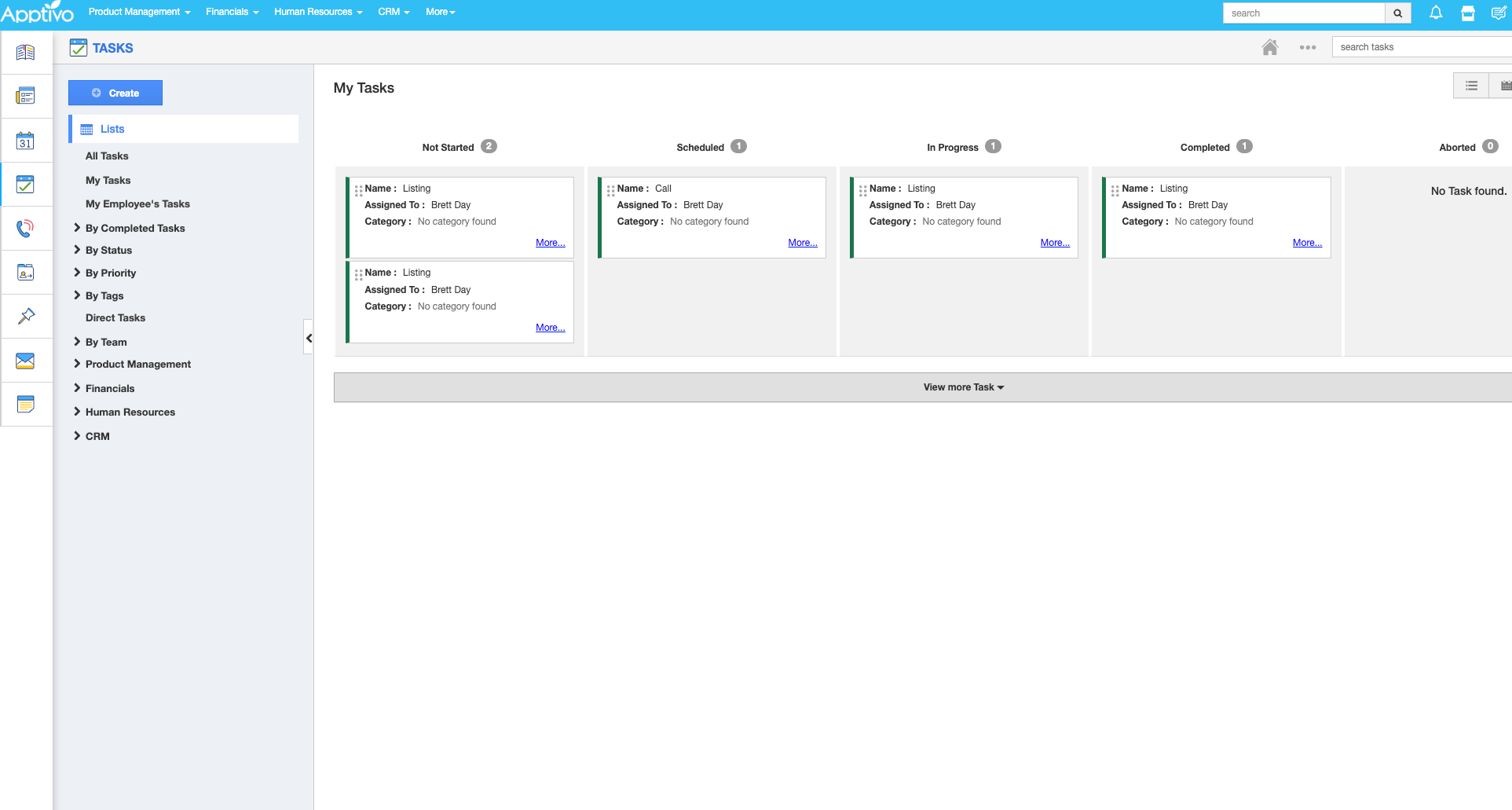 Apptivo allows you to track everything from start to finish.
Dig into Apptivo, and you’ll find integrations, automations, a document management system, dashboards, email campaigns and telephony support using integrations. Apptivo has no free plan, but you can try it free for 30 days. There are four paid plans. The entry-level plan, Lite, costs $20 per user per month, while the high-tier Ultimate plan costs $50 per user per month (both when billed monthly). There’s also an Enterprise plan, but you must contact Apptivo for a quote.
Learn more: Read our full Apptivo review.
Consumer Sentiment Index
Pros & Cons
- Robust lead, contact and deal management tools
- Integrations and automation tools
- Affordable paid plans
- Tools have a steep learning curve
- No free plan
- The interface is not intuitive
Agile CRM
Best for Teams Needing a Free Plan
Agile CRM
Free Plan
Yes, it supports 10 users and 1,000 contacts
Key Features
Pipelines, lead scoring, contact management
Yes, it supports 10 users and 1,000 contacts
Pipelines, lead scoring, contact management
Expert Take
Agile CRM made it into our roundup of the best free CRM software for many reasons. The free plan supports 1,000 contacts and 5,000 branded emails and offers custom data fields, lead scoring, appointment scheduling, email campaigns and email tracking. You’ll also find form and landing page builders, a campaign workflow, one automation and integration, reports and task tracking. As a result, Agile CRM is the ideal tool for SMBs with little to no software budget.
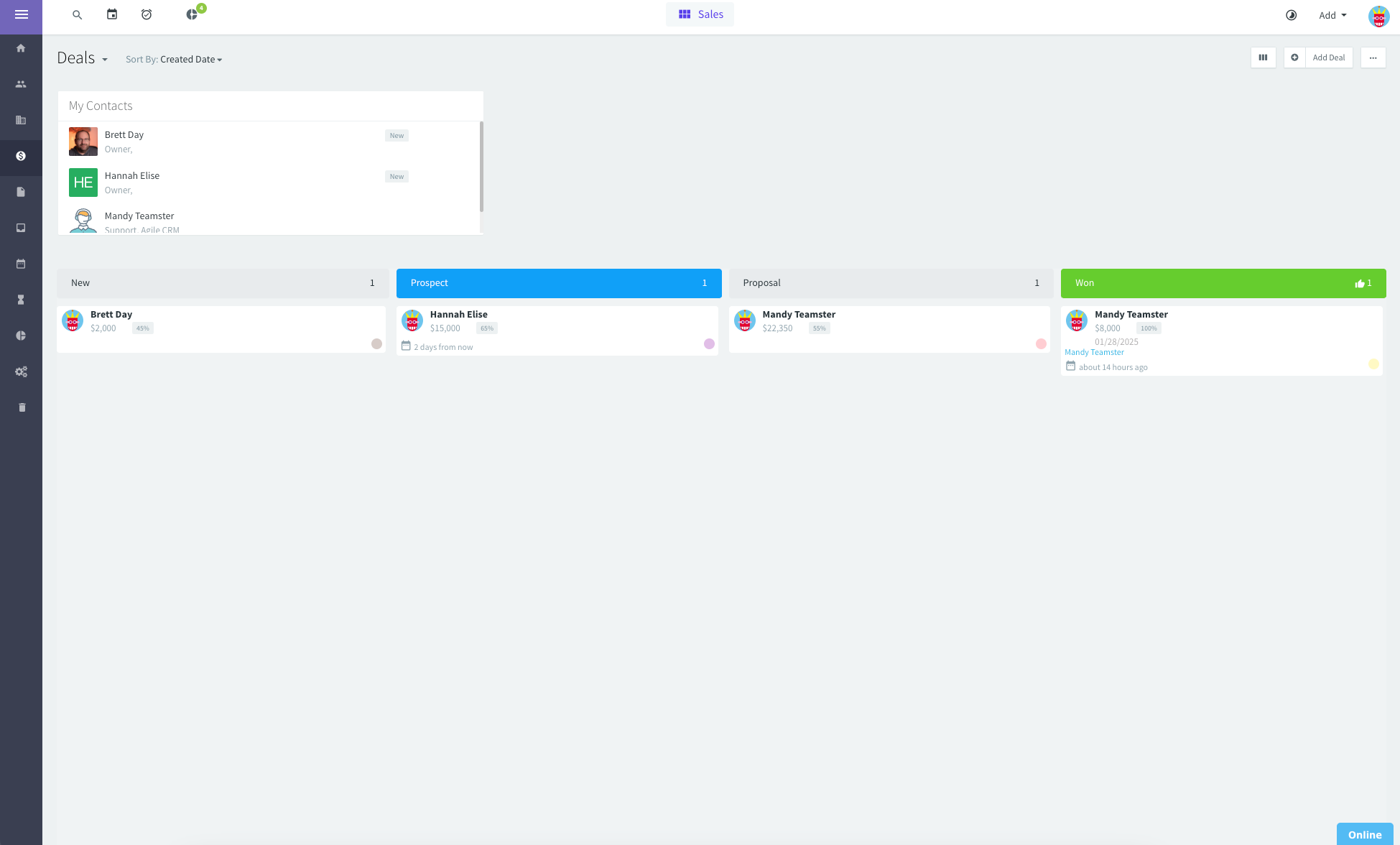 Agile CRM’s interface is on the dingy side of things but is perfectly usable.
Should you outgrow the free plan and can afford to pay, there are three paid plans to choose from, which add advanced features and increase the number of contacts, emails, automations and integrations. The plans start at $14.99 per user per month and increase to $79.99 per user per month when you pay monthly. If you need to save money but still need access to a CRM with an excellent set of tools, sign up for Agile CRM’s free plan.
Learn more: Read our full Agile CRM review.
Consumer Sentiment Index
Pros & Cons
- Feature-packed free plan
- Intuitive tools
- Affordable paid plans
- Access controls only for Enterprise customers
- Outdated user interface
- Limited AI functionality
Salesmate
Best for Customization
Salesmate

Free Plan
No, only a 15-day free trial
Key Features
Customization, inbound and outbound calls, SMS
No, only a 15-day free trial
Customization, inbound and outbound calls, SMS
Expert Take
Thanks to its extensive tool set and customization, Salesmate takes second in my roundup of the best CRMs. No matter what industry you work in, the Salesmate customization tool allows you to create the perfect interface for your needs, which can lead to enhanced productivity. Salesmate offers easy-to-use contact management and AI tools, email and SMS features, marketing and automation tools, integrations, mobile apps and extensive reports.
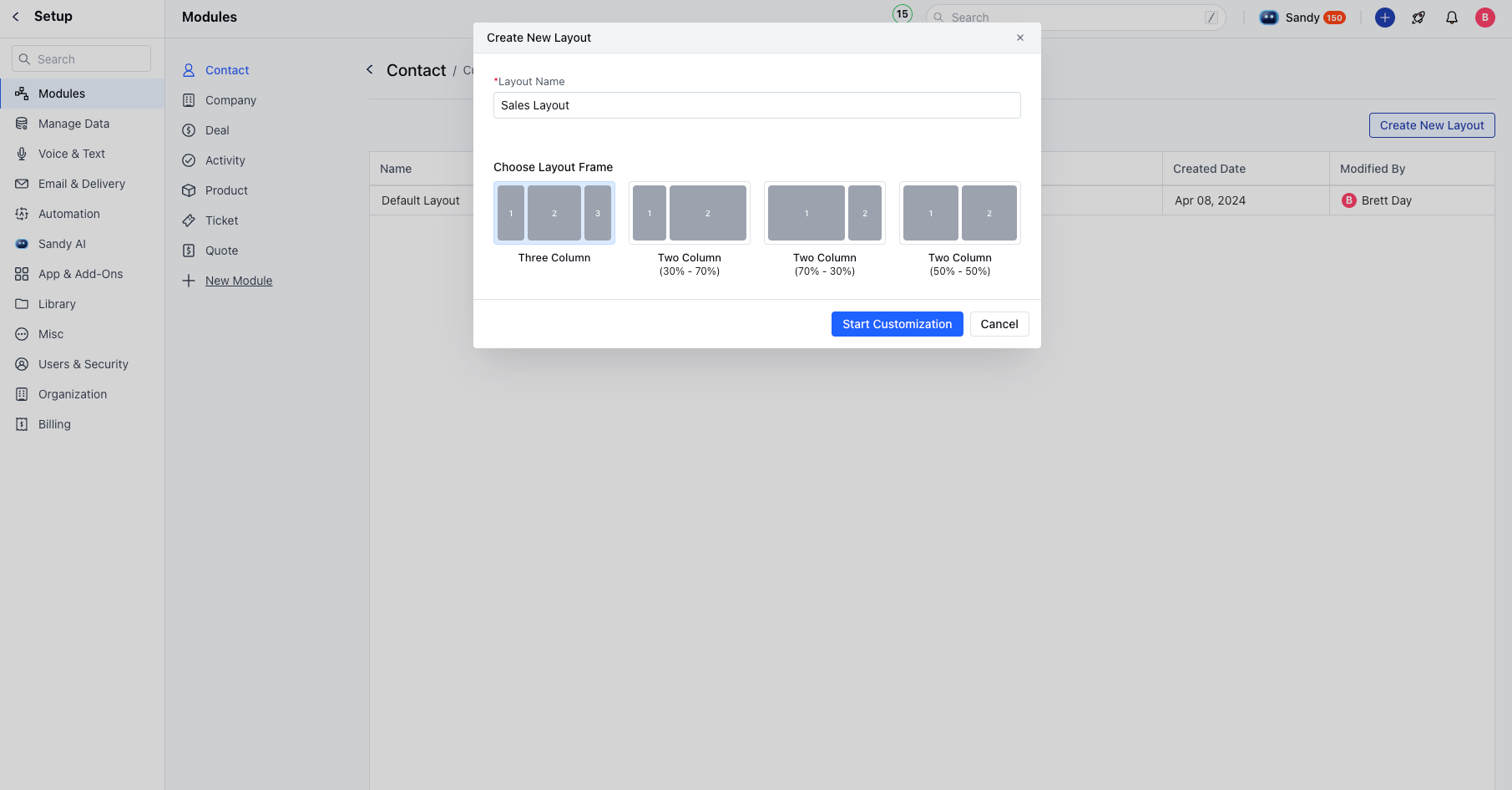 The layout tools let you create the ideal interface for your operation.
The sales component of Salesmate is also robust. Tracking deals, tasks, meetings and inventory is straightforward, as is creating quotes, tracking customer tickets and uploading documents. You can also accept inbound calls and call out. Unfortunately, Salesmate does not offer a free plan, but its paid plans are affordable and within reach of most SMBs. The plans start at $29 per user per month and increase to $79 per user per month (when billed monthly).
Learn more: Read our full Salesmate review.
Consumer Sentiment Index
Pros & Cons
- Highly customizable
- Easy to navigate and use
- Telephony, SMS and email support
- No free plan
- The Basic plan offers limited storage
- Limited marketing tools
Bitrix 24
Best for Analytics
Bitrix 24

Monthly Starting Price
Free, $61 per organization (5 users)
Free Plan
Yes, supports unlimited users, basic tools
Key Features
Reports and dashboards, lead management tools, communication center
Free, $61 per organization (5 users)
Yes, supports unlimited users, basic tools
Reports and dashboards, lead management tools, communication center
Expert Take
As they say, the devil is in the details, and honestly, it can be hard discovering details in a timely fashion, unless, of course, you’re using CRM software. Bitrix 24 prides itself on offering reports and analytics that can help sales teams flourish. You can monitor sales funnels with conversions, research sales plans, determine if individuals and teams are meeting their goals and determine how much each lead is worth, to name a few. With a little time, you can dial in Bitrix 24 to show and visualize the data that’s most important to you.
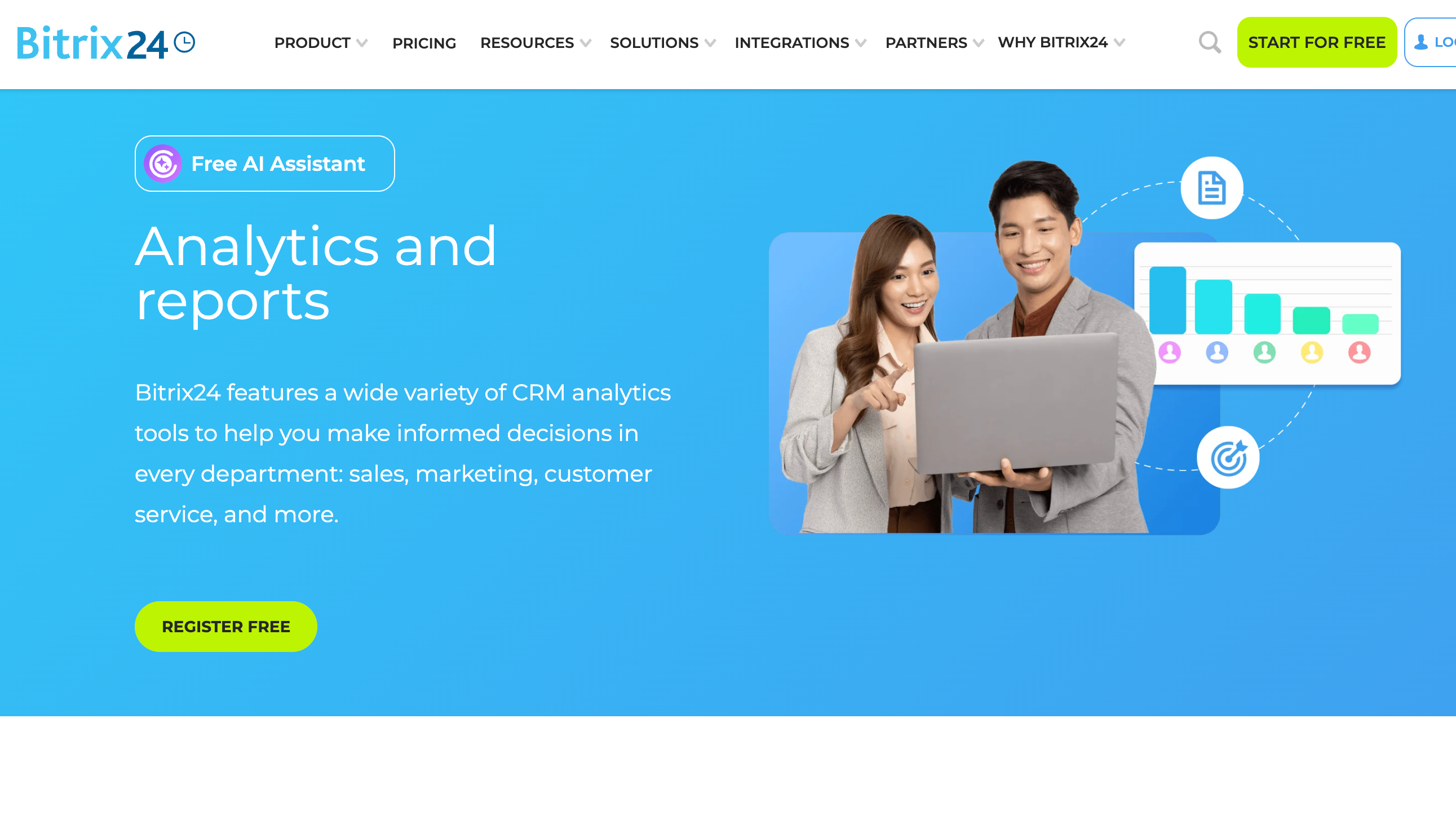
Bitrix provides access to a wealth of data and can visualize it in a manner that’s easy to digest.
Bitrix 24 has tools that enable sales management, integrates with tools in your tech stack and automates tasks. You’ll also find that Bitrix 24 offers nifty marketing tools that support email and social media, and a contact center that lets you communicate with clients over several different mediums, including WhatsApp, live chat, email and phone. The biggest downsides are the cost and support. You will find a free plan that supports unlimited users and basic tools. The paid plans, which support varying amounts of users, range from $61 to $499 per organization monthly. Consumers also complain about poor customer support and technical issues.
Learn more: Read our full Bitrix 24 review.
Consumer Sentiment Index
Pros & Cons
- Detailed reports and data visualizations
- Robust customer and sales management tools
- A good free plan for solopreneurs
- Very costly paid plans
- Basic plan only supports five users
- Complaints about tech and support issues
Monday.com
Best for Startups and New Teams
Monday.com

Key Features
Robust task, deal and lead tools
Robust task, deal and lead tools
Expert Take
Monday.com CRM is one of the most user-friendly platforms you’ll ever use. You’ll find exceptional Kanban boards that can track tasks, easy-to-use boards that can store numerous data types, powerful dashboards, and templates that can get your team up and running quickly. You can also create automated workflows and integrate monday.com with hundreds of other software platforms.
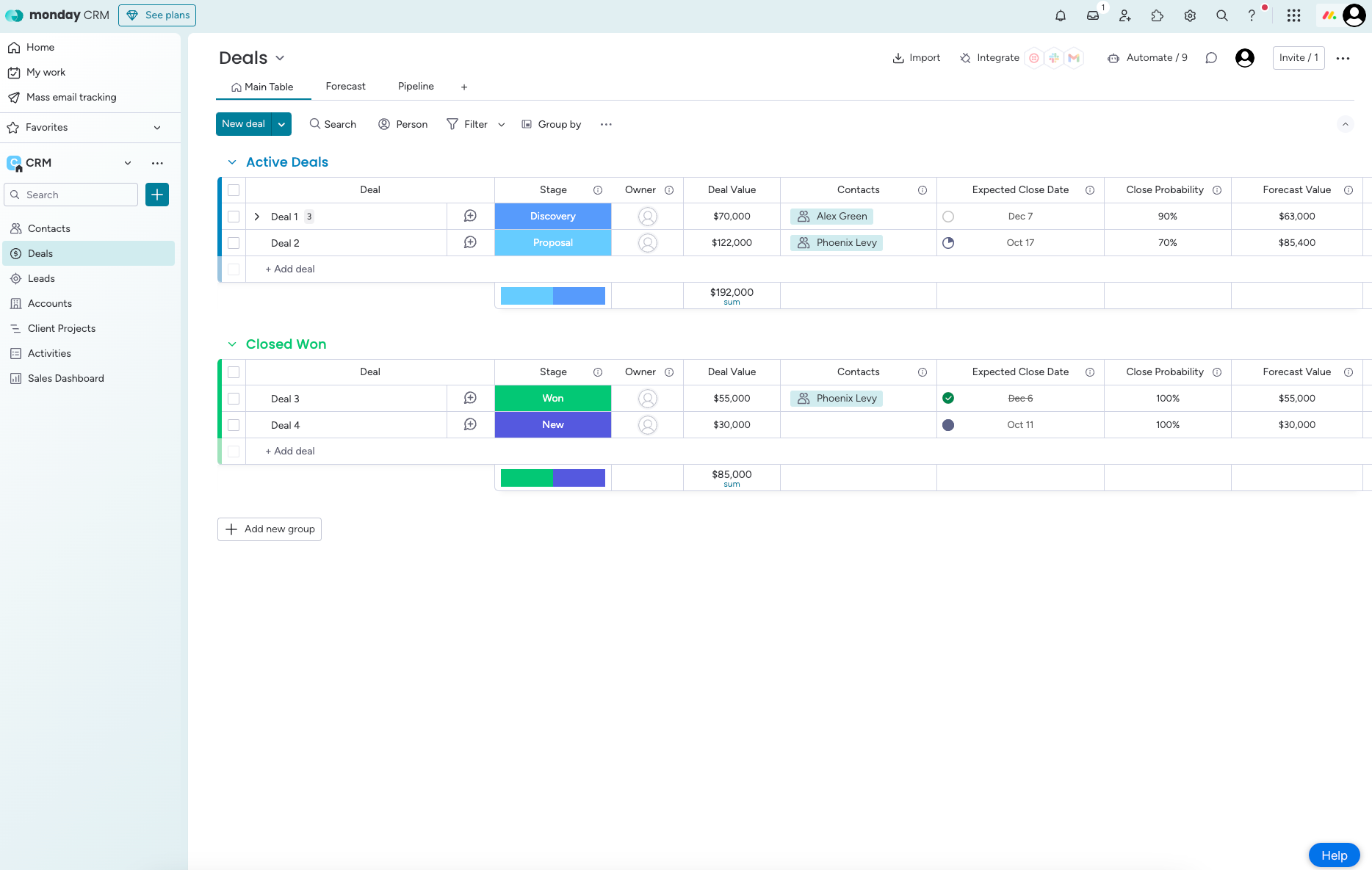 The boards on Monday.com are well-designed and easy to customize.
If you’re worried about the price, don’t be; Monday.com is quite affordable. Paid plans that range from $15 per user per month (billed monthly) to $33 per user per month (billed monthly). There’s also an Ultimate plan for businesses that need extra administration and security tools.
Consumer Sentiment Index
Pros & Cons
- Beautiful, user-friendly interface
- Robust Kanban boards and Gantt charts
- Integrates with hundreds of platforms
- Limited free plan
- Strong security and admin features for top tiers only
- Not as many bespoke CRM features as competitors
HubSpot
Best for Marketing
HubSpot

Free Plan
Yes, supports 2 users, basic tools
Key Features
Marketing tools, artificial intelligence, sales tools
Yes, supports 2 users, basic tools
Marketing tools, artificial intelligence, sales tools
Expert Take
HubSpot is the ideal platform for companies that want to streamline their marketing efforts. You’ll find everything you need to find, capture and nurture leads, segment audiences, manage social media and convert traffic into sales. Most of these tools can be used in conjunction with HubSpot’s AI assistant, which will save you time. You can even use AI to generate email campaigns. When you’re done setting up and putting marketing efforts into motion, you can see how the campaign is performing with robust dashboards and reports.
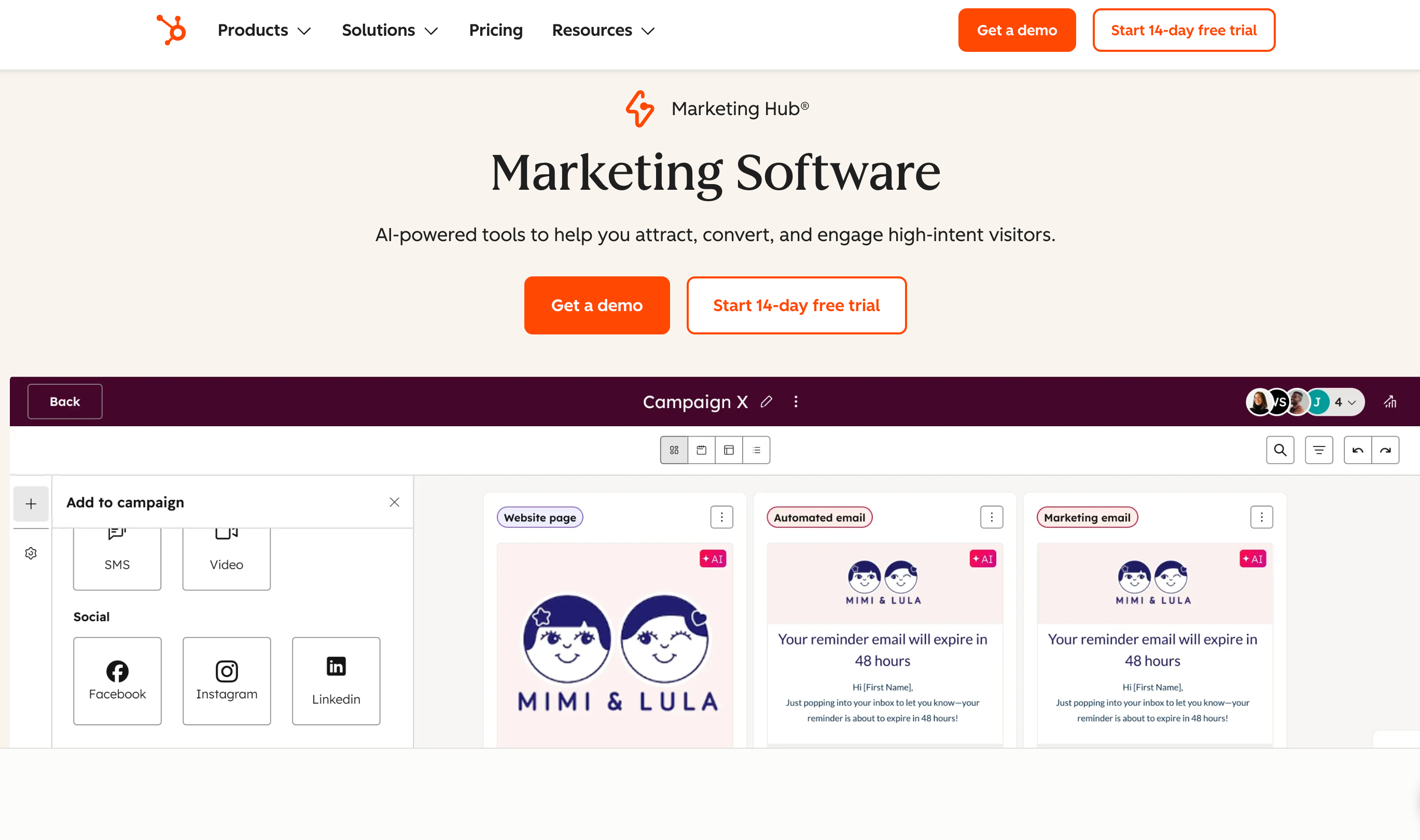
You’ll find marketing tools that can help run successful campaigns in HubSpot.
Additionally, HubSpot provides access to sales pipelines, Gantt charts, kanban boards and calendars, and customizable workflows. The downsides of HubSpot include poor customer service and the fact that many of its tools are segmented into separate offerings needing their own subscriptions. HubSpot’s CRM hub is quite affordable. You’ll find a free plan that supports two users and basic tools, and a paid plan that starts at $10 per user monthly. Just keep in mind that should you need access to other hubs, you’ll have to dig deep into your pockets.
Learn more: Read our full HubSpot review.
Consumer Sentiment Index
Pros & Cons
- Many tools for marketing and campaign management
- Affordable paid plans
- Competent AI assistant
- Extra hubs can quickly run up costs
- Free plan only supports two users
- Consumers are dissatisfied with customer support
Microsoft Dynamics CRM
Best for Microsoft Users
Microsoft Dynamics CRM

Monthly Starting Price
$65 per user per month (billed annually
Free Plan
No free plan, 30-day free trial
Key Features
Integrates with Microsoft products, AI, sales pipelines
$65 per user per month (billed annually
No free plan, 30-day free trial
Integrates with Microsoft products, AI, sales pipelines
Expert Take
If you’re deeply entrenched in Microsoft’s 365 ecosystem, Microsoft Dynamics CRM might be a good option for you. If you’re not already a Microsoft user, the cost of entry, which stands at a whopping $65 per user monthly (billed annually) may be cost prohibitive. Apart from the cost being unreasonable, Microsoft Dynamics CRM is a decent offering. You’ll find sales pipelines, automated lead qualifying, AI-Assisted customer communication tools and sales forecasting features.
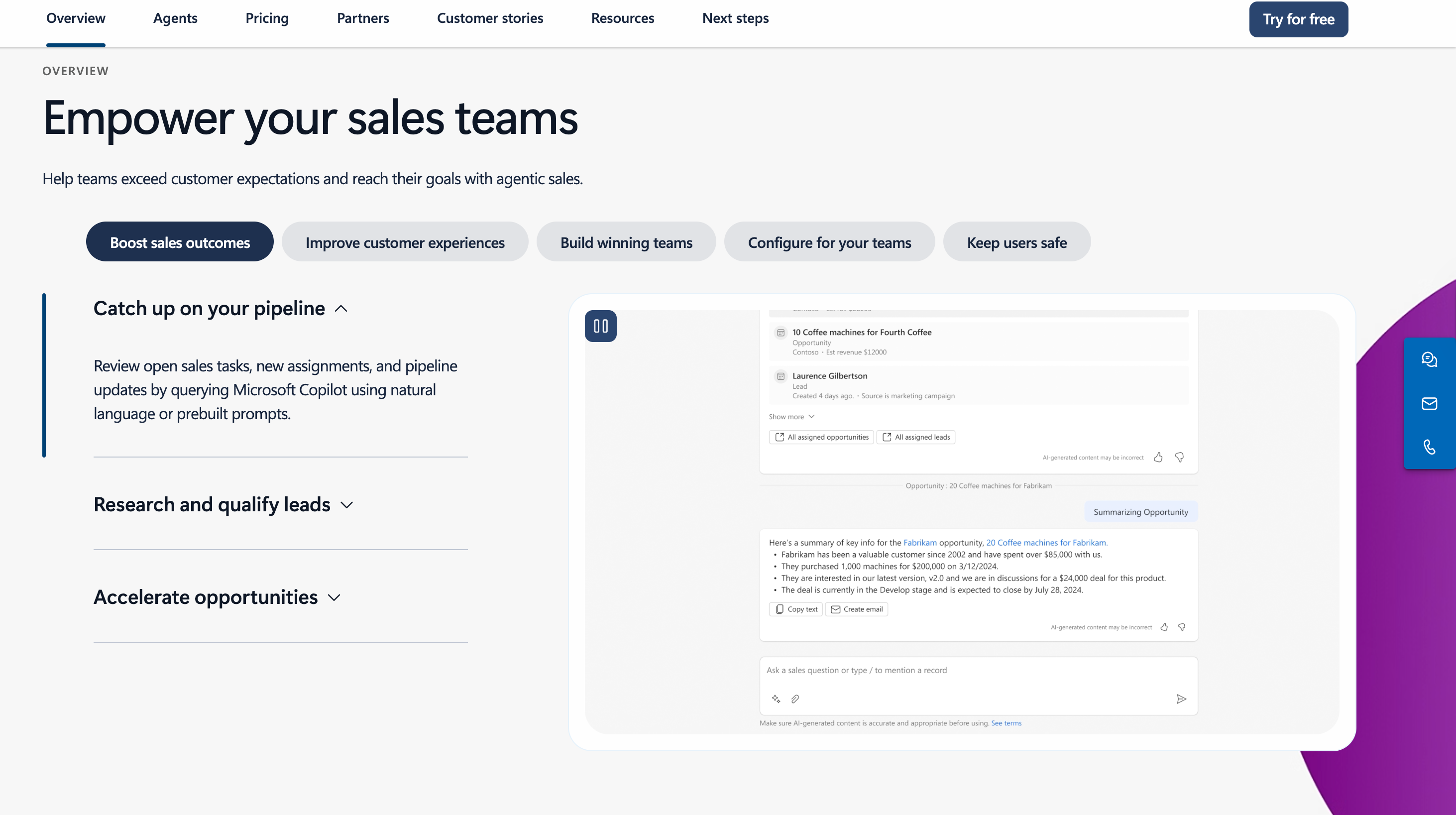
Microsoft Dynamics CRM is included in Microsoft 365 subscriptions, making it ideal for those who already use Microsoft products.
In addition, you’ll also find plenty of reports. The biggest kicker is that to use many of the CoPilot AI features, you’ll need to purchase credits unless you opt for the most expensive Premium plan. The Basic plan is also very light on features, making it a tough sell. Again, if you’re a Microsoft 365 subscriber, you’ll appreciate what Microsoft Dynamics can do; if you’re not, I wholeheartedly suggest you look elsewhere.
Consumer Sentiment Index
Pros & Cons
- Potent suite of CRM tools
- Is part of the Microsoft 365 subscription package
- Integratges with other Microsoft products
- No free plan
- Paid plans are expensive
- AI credits cost extra in low-tier plans
Why Some Companies Didn’t Make the Cut
As mentioned at the beginning, we researched dozens of CRM platforms; however, not all of them can be the best CRMs.But,there are some companies that still deserve recognition. Below, I’ll quickly cover three CRM platforms that just missed out on making the mark but that should still be considered by SMBs looking for a solid customer relationship management solution.
Salesforce
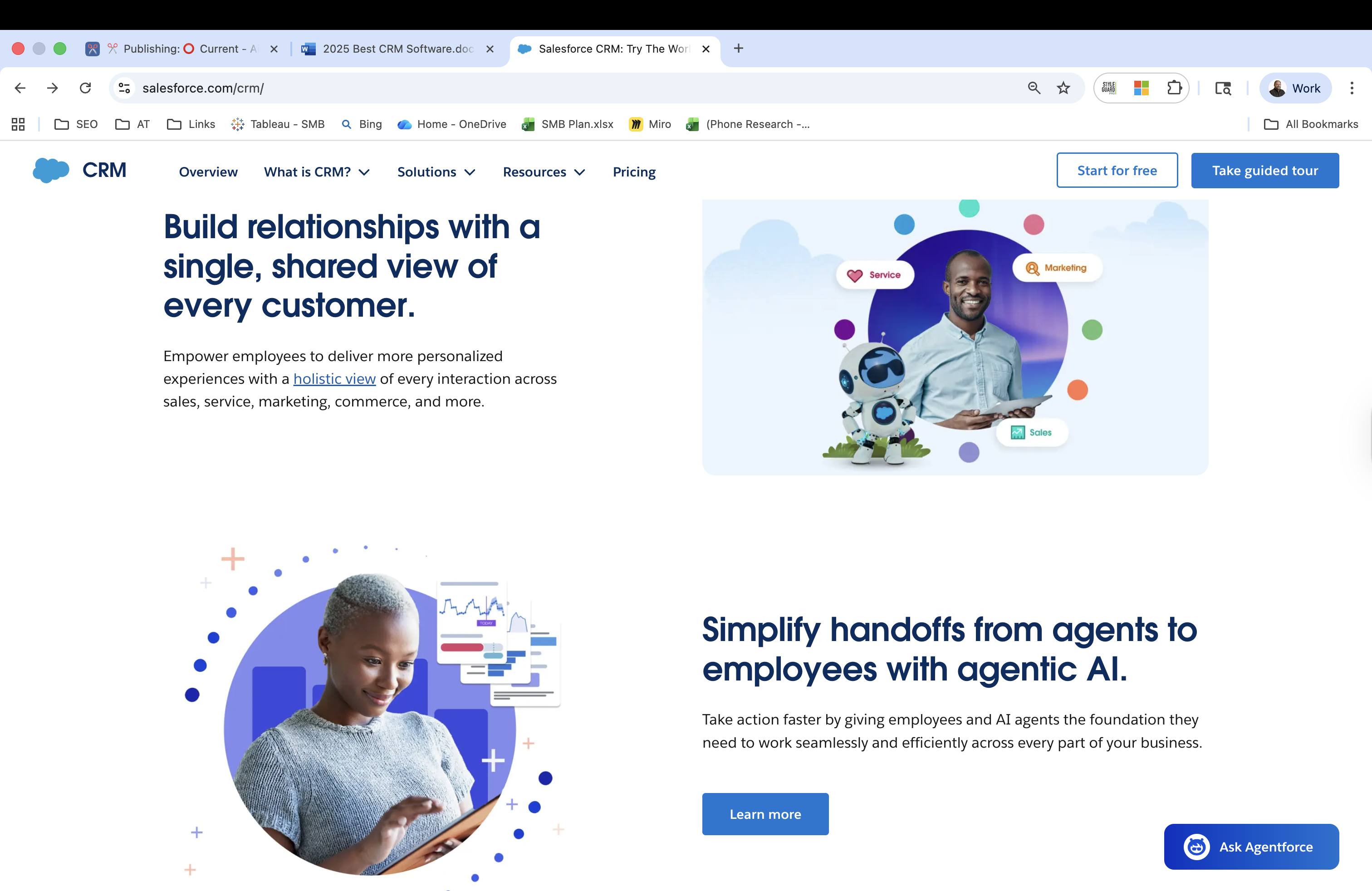
One of the most recognizable names in the CRM space, Salesforce, didn’t make our top 10, but it is still a powerful platform. Salesforce offers a free plan, which supports two users and basic CRM tools, including lead and contact management and simple email marketing tools. Its $25 per person (billed monthly or annually) Starter Suite is a bit beefier and offers dynamic email marketing tools, sales flows and lead routing, while the $100 Pro Suite offers forecasting and great customization tools. It didn’t make the top 10 due to its steeper learning curve. You can learn more in our full Salesforce review.
Pipedrive
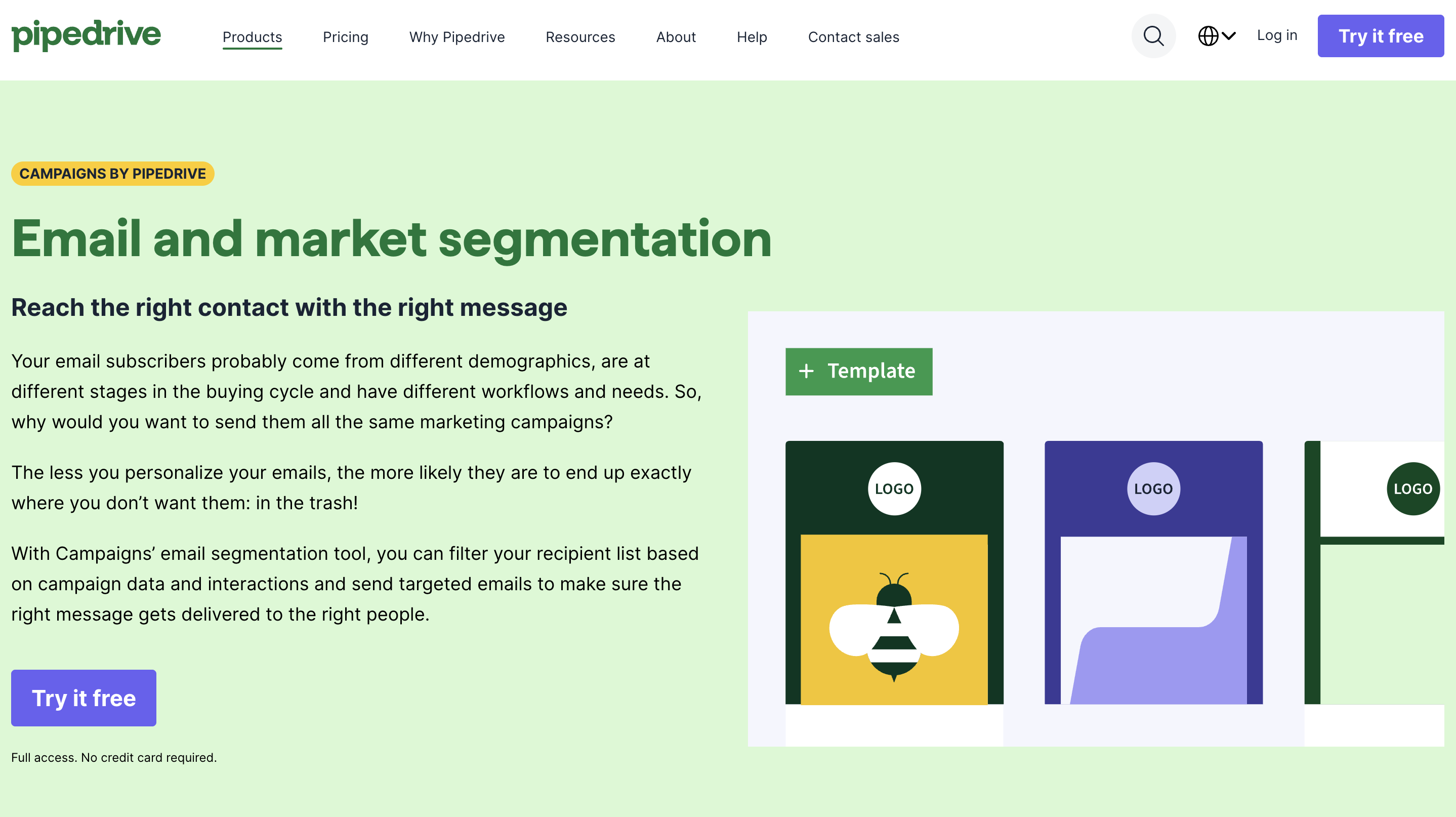
If you need CRM software that can simplify your email marketing efforts, Pipedrive should be on your radar. Pipedrive’s drag-and-drop email builder and email templates can help you get a campaign off the ground in a jiffy.As you’d expect, Pipedrive offers a healthy suite of tools that include pipelines, plenty of integrations,segmentation tools and artificial intelligence (AI). If the cost of entry (plans range from $24 to $99 per user monthly) was lower, it may have crept into the top 10. You can learn more in our Pipedrive vs. Salesforce comparison.
Insightly
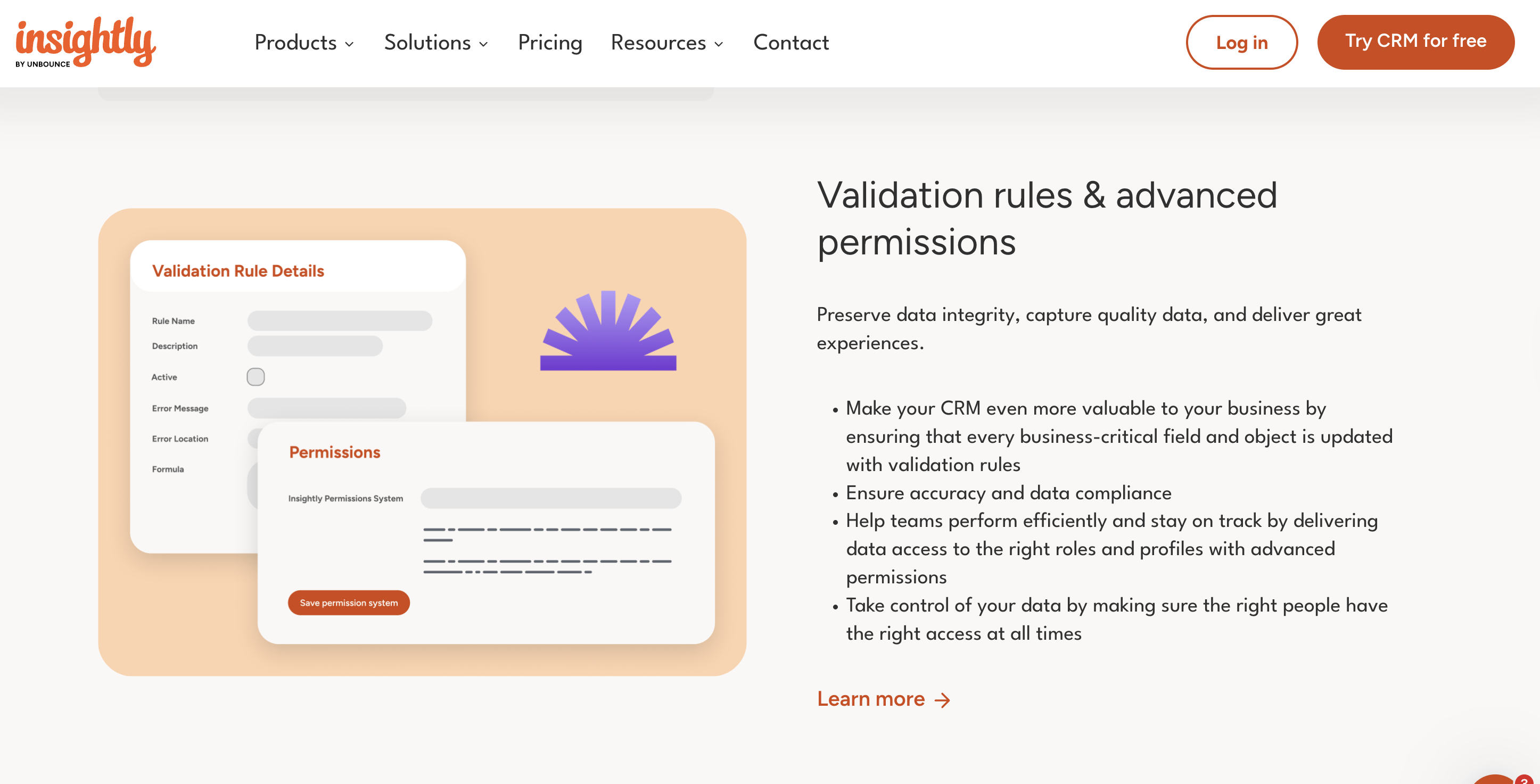
If you work with sensitive data, you might want to consider Insightly, which offers an extensive list of privacy controls and a robust suite of CRM tools. Insightly lets admins control item visibility, set user roles, create permissions and configure single sign-on policies for extra security. It is also HIPAA and GDPR compliant. The biggest kicker is, again, the cost of entry. Insightly’s CRM plans start at $29 per user per month and increase to $99 per user per month (billed annually). However, marketing tools, integrations, automations and service features cost extra, which can dramatically increase expenditure.Learn more in our full Insightly review.
Methodology
Software testing is a serious business. So, to give software platforms a fair trial, we use our proprietary rubric to help rank multiple features and test the top platforms. For the best CRM software roundup, 41 platforms were chosen, and 35 features across seven categories were analyzed. Each CRM was then awarded a final score. In the table below, you can see how each research category was weighted.
How To Choose the Best CRM Software
Now that we have looked at the 10 best CRM platforms, it’s time to determine what you should seek when looking for a customer management relationship software platform. In the following sections, you’ll learn what tools to look for, how to navigate software expenses and how to tell if a particular platform is user-friendly.
Essential CRM Software Features
Before jumping into any old CRM platform, you need to do your due diligence and ensure that critical features are offered. I advise you to visit platform websites to look at feature lists before deciding. Double-check to ensure that the vast majority of features listed below are present.
- Pipelines. CRM software should provide pipelines that allow you to monitor deals and more during every stage of your process. Pipelines are generally visualized on Kanban boards, so ensure they’re offered.
- Task management. Any CRM platform worth its salt will allow users to track important tasks. Make sure that the platform you’re interested in provides calendars, boards or to-do lists so that you can keep track of everything you need to do.
- Automation. To improve efficiency and processes, you should ensure that your chosen CRM can automate workflows and create recurring tasks so that you can save time and money.
- Integrations. SMBs use many software platforms. As such, before picking a new CRM, double-check and ensure it can work well with the software you already use.
- Document management. CRM implementation is a big undertaking, so make sure it offers everything you need, including a document management system (DMS). A DMS allows you to upload files and attach them to tasks, deals and clients, making it easier to track important paperwork.
- Industry-specific features. If you’re looking for a CRM for real estate, marketing a financial advisory company or a call center, ensure that it offers industry-specific features, such as email marketing tools, telephony and portfolio managers.
Value
All SMBs must consider how much value a particular platform offers before signing up for expensive plans. While I can recommend software, ultimately, only you know what tools you need and your budget. Do a little research before taking the plunge to ensure that you have the finances for additional software and that your spend gives you everything you need.
Many platforms offer free CRM tools that can help get you started. These free platforms provide essential tools and are ideal for startups. However, you’ll need to pay to get the most out of any CRM. The cost of entry-level plans can range from $10 to $20 per user per month, while feature-rich top-tier plans can cost in excess of $70 per user per month. Again, check your budget and then determine which plan offers the best bang for your buck for your needs. Our CRM pricing guide can also help you get a handle on what to expect to pay.
Ease of Use
Ease of use is one of the most overlooked features of any software. So, before signing on any dotted line and committing your SMB to an expensive customer management relationship software, I recommend taking any opportunity to test-drive software. Most providers offer free trials ranging from one week to a month, and others offer free plans that let you try some of the tools.
Take advantage of the trials and free plans. Use the software, see how it feels, and ask yourself if it’s easy to navigate and if the tools are user-friendly. I highly recommend digging into the available integrations and automation builders, adding tasks to a Kanban board, creating pipelines and interacting with any critical feature your workflow needs. By doing this, you can make a sound decision that will benefit your company and team.
CRM Partners
Starting Price
Free; $15 per user per month (billed annually)
Starting Price
Free; $12 per user per month for basic features
Starting Price
$14 per user per month (billed annually)
Frequently Asked Questions (FAQs)
CRM software lets business owners and their employees manage process pipelines on Kanban boards, track tasks and interact with clients and potential customers. Thanks to integrations and automations, CRM software can also help increase productivity and improve processes.
How much does a CRM cost?
CRM software ranges in price from free to use to upwards of $70 per user per month when billed monthly. The cost can change based on the features of the selected plan and how many team members need access to the software.
How can an SMB benefit from a CRM?
SMBs can massively benefit from a customer relationship management system as it can help streamline customer interactions, generate leads, work with existing business software to create automated workflows and improve email marketing and drip campaigns.