
The projects listed below have started at Goddard Space Flight Center or have large components managed by GSFC members.
The current projects include:
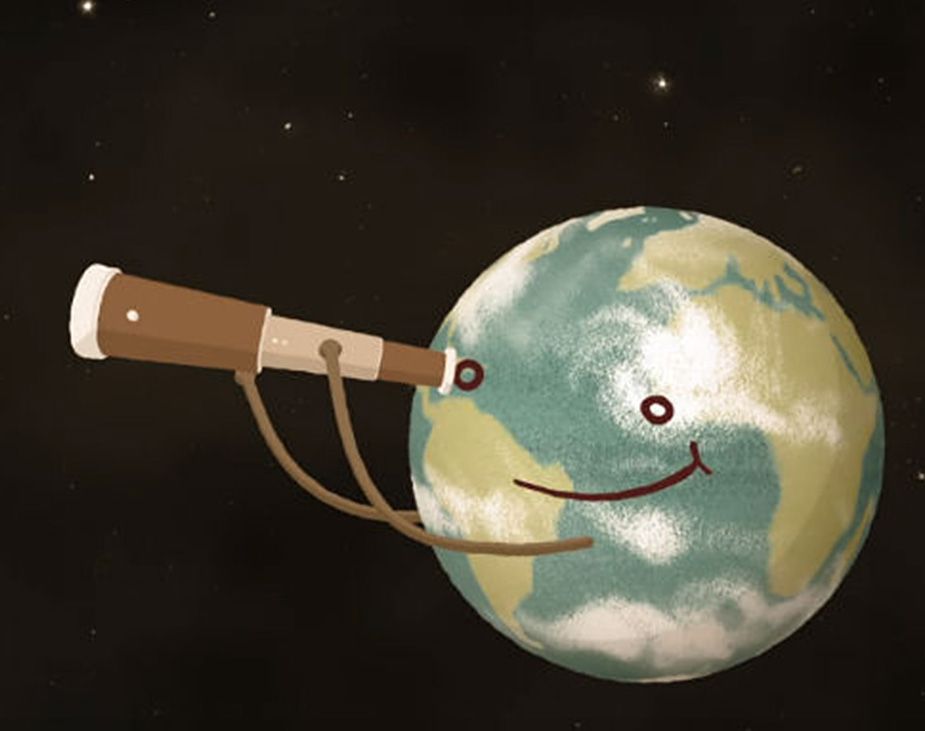
Is there a large planet at the fringes of our solar system awaiting discovery,
a world astronomers call Planet Nine? We’re looking for this planet and for new
brown dwarfs in the backyard of the solar system using data from NASA’s Wide-field
Infrared Survey Explorer (WISE) mission. But we need your help! Finding these dim
objects requires combing through the images by eye to distinguish moving celestial
bodies from ghosts and other artifacts. There are too many images for us to search
through by ourselves. So come join the search, and you might find a rogue world
that’s nearer to the Sun than Proxima Centauri—or even the elusive Planet Nine.
Launched Feb 15, 2017.
Website: http://www.backyardworlds.org/ |
Twitter: @backyardworlds
Contact: Dr. Marc Kuchner (marc.j.kuchner@nasa.gov)
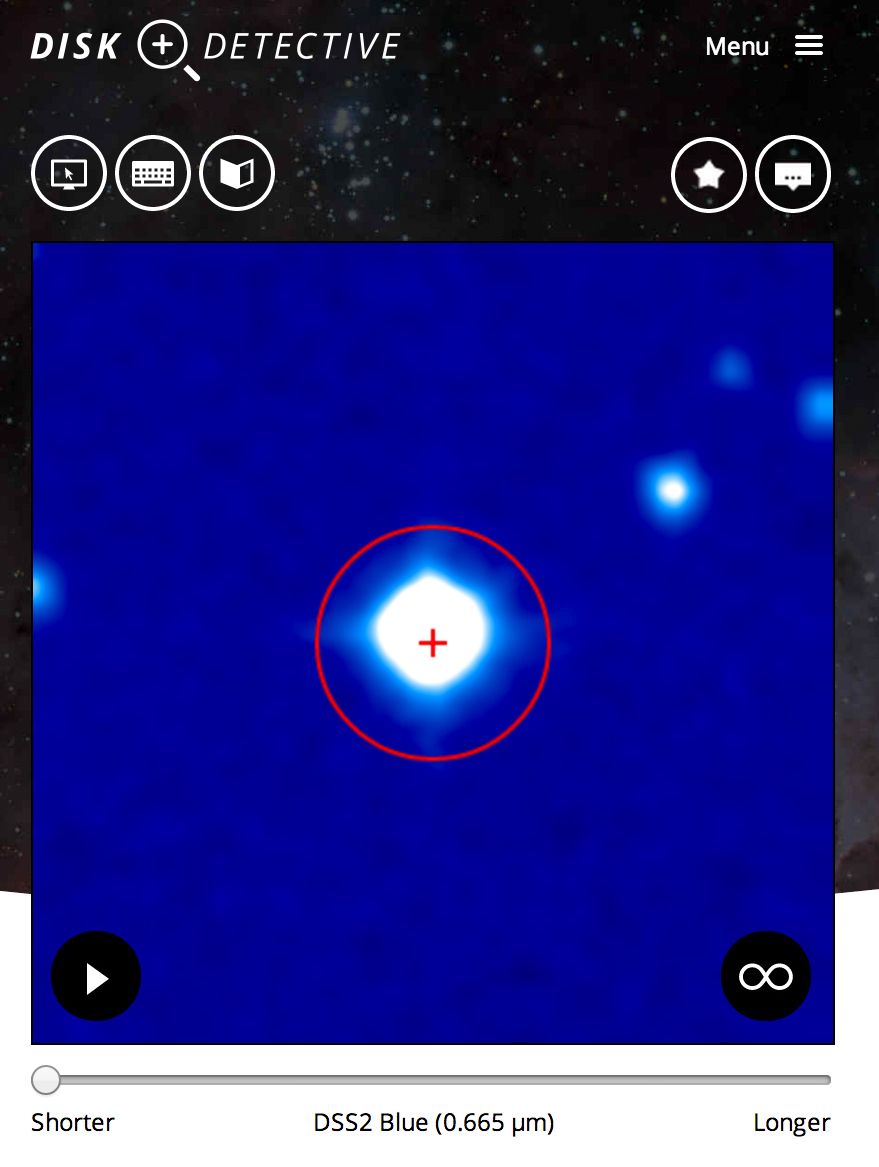
Search for protoplanetary disks in WISE data – WISE is a NASA mission surveying the
whole sky in infrared. This project is looking at stars to find dusty debris disks,
similar to our asteroid field. These disks suggest that these stars are in the early
stages of forming planetary systems. Learning more about these stars can tell us how
our Solar System formed. Computers often confuse debris disks around stars with other
astronomical objects. Disk Detective needs your help to sort out what stars actually
have these disks from galaxies and nebulae. Launched February, 2014.
Website: http://www.diskdetective.org/ |
Twitter: @diskdetective
Contact: Dr. Marc Kuchner (marc.j.kuchner@nasa.gov)
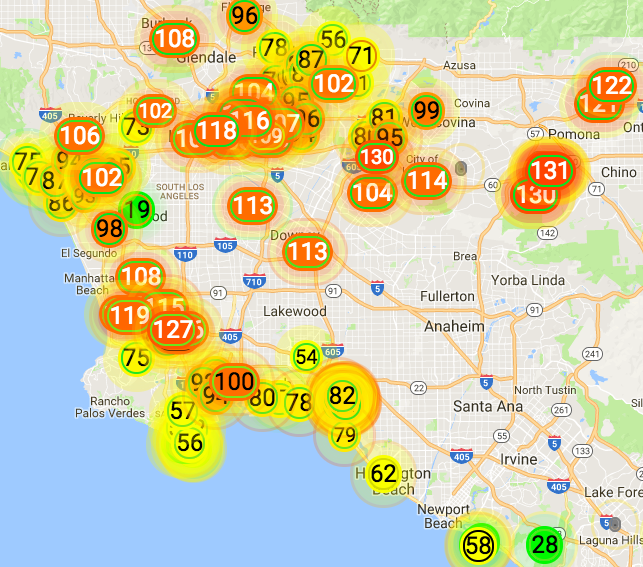
An ongoing study that uses low-cost sensors deployed by citizen scientists to examine the
spatial gradients in surface fine particulate matter (PM2.5) concentrations and compare it
to satellite observations of aerosols. We are performing a prototype field deployment of
about 20 sensors through citizen scientists in the South Coast air basin in the Los Angeles
area and in the inland Riverside/San Bernardino regions of Southern California.
Website: https://aqcitizenscience.rti.org/#/
Contact: Dr. Pawan Gupta (pawan.gupta@nasa.gov) and Dr. Robert Levy (robert.c.levy@nasa.gov)
Data Mining Twitter for Augmenting NASA Precipitation Research and Applications
Project funded by the Citizen Science for Earth Systems Program, NASA ROSES NNH16ZDA001N-CSESP):
This project explores the feasibility of extracting from the Twitter data
stream useful information for application to NASA precipitation research,
in particular, augmenting the existing validation program of the Global
Precipitation Measurement (GPM) Mission. We are engaging with both ‘passive’
and ‘active’ participants to contribute to the project. Our general
crowd-sourcing strategy is to not require participants to sign-up or install
some app to contribute as citizen scientists. This is a more robust approach
to gaining a large source of crowd. Our framework for processing Twitter data
is currently focused on classifying tweets, determining quality, developing a
data model, and co-locating tweets with satellite data. This framework will be
generic, i.e., not specific to a given measurement, social medium, or satellite
mission.
AGU Poster: Enriching the Twitter Stream: Increasing Data Mining Yield and Quality Using Machine Learning
Contacts: Arif Albayrak (rustem.a.albayrak@nasa.gov), Bill Teng (william.l.teng@nasa.gov), and George Huffman (george.j.huffman@nasa.gov)
The Global Learning and Observations to Benefit the Environment (GLOBE) Program is an
international science and education program that provides students and the public
worldwide with the opportunity to participate in data collection and the scientific
process, and contribute meaningfully to our understanding of the Earth system and global
environment. Announced by the U.S. Government on Earth Day in 1994, GLOBE launched its
worldwide implementation in 1995. The citizen science arm of GLOBE is the GLOBE
Observer Program. The GLOBE Observer Program currently accepts cloud and mosquito habitat, land cover, and tree height
observations through the NASA GLOBE Observer mobile app. Since GLOBE Observer is part of the GLOBE program, citizen
scientists working on GLOBE Observer are also providing data for student research,
strengthening science education.
Website: https://observer.globe.gov/ |
Twitter: @NASAGO | Facebook: @nasa.globeobserver
Contact: globeobserverhelp@lists.nasa.gov
Landslides affect nearly all countries, but we still don’t have a clear global picture on where and when landslides occur. Citizen scientists can help NASA scientists save lives and property by helping to build the largest open global landslide catalog, the Cooperative Open Online Landslide Repository (COOLR). The COOLR project seeks to cultivate an open platform where scientists and citizen scientists around the world can share landslide reports to guide awareness of landslide hazards for improving scientific modeling and emergency response.
See all COOLR data in Landslide Viewer on top of other environmental and scientific data, or download all data. Use Landslide Reporter
to submit new landslide events to COOLR.
Website: https://landslides.nasa.gov |
Twitter: @LandslideReport
Contact: landslide_support@nccs.nasa.gov, Dr. Dalia Kirschbaum, Thomas Stanley
Mapping Application for Penguin Populations and Projected Dynamics (MAPPPD)
Over the last several years, penguin biologists have been working hard to find all the penguin colonies in Antarctica using satellite imagery.
However, the massive expanse of the continent and the challenges of finding each last penguin colony leave many likely undiscovered.
This is where you can help! Satellite imagery from NASA and other sources can detect the large guano stains left behind by penguins
nesting in colonies. You can explore satellite imagery and contribute data to join the online expedition to find all of Antarctica’s penguins.
Website: www.penguinmap.com
Contact: Mathew Schwaller
This project gathers real-time data about aurora sightings and sends out
notifications to users when the Northern Lights are likely visible in
their area. Aurorasaurus will significantly improve forecasting of the
aurora using citizen science reports and crowd-sourced (Twitter) ground
truth observations of aurora. Registered users get location-based notifications,
a real-time monitor of space weather activity, the capability to help verify
tweets and search for real sightings, answers to science and aurora questions,
and more. Aurorasaurus was built by scientists for the public. The project
was funded by an award from the National Science Foundation.
Website: http://www.aurorasaurus.org/ |
Twitter: @TweetAurora
Contact: Dr. Elizabeth MacDonald (elizabeth.a.macdonald@nasa.gov)
The Radio JOVE project was first established as an informal education and public outreach project for learning the excitement of radio astronomy of Jupiter,
the Sun, and the Galaxy. Partnering with the NASA Space Science Education Consortium (NSSEC), the Radio JOVE project has been extended to incorporate
citizen science research in heliophysics. By participating in the project, citizen scientists can (1) gain hands-on experience in building and operating single-frequency radio telescopes constructed from inexpensive kits, (2) make radio observations by
operating their basic radio telescopes, and (3) analyze the data obtained by the telescopes they constructed or from remote telescopes through the Internet. More technically capable participants can also set up spectrograph stations in conjunction with
their basic single-frequency telescopes. The NSSEC-Radio JOVE partnership is working toward building a network of low-cost radio telescopes to provide more scientifically valuable data from solar and planetary radio observations to support heliophysics,
space weather, and radio science research.
Website: https://radiojove.gsfc.nasa.gov/
Contact: Shing F. Fun (shing.f.fung@nasa.gov)

The region of space above thunderstorms, middle and upper atmosphere (15-100 km altitude), is home for
various types of atmospheric electrical discharges that are collectively referred to as Transient Luminous Events (TLEs). Although they have different
morphologies, time scales, spatial scales, initiation altitudes, and physical mechanisms, they are all connected to the tropospheric electrical
activity. Sprites are the most observed type, and they are primarily red in color. They occur at the edge of space, and they move with speed so fast
that if you blink, you might miss it. Spritacular project, launched in October of 2022, aims to collect observations of sprites and other TLEs. The
database generated from these observations will lay the groundwork for first-ever crowdsourced event catalog that can be augmented into scientific
studies as a new ground-based observational data source. This database will serve as an invaluable resource for researchers allowing them to find
interesting cases, perform studies in conjunction with other scientific data, and conduct broad statistical studies. This project was funded by NASA
Citizen Science Seed Funding Program.
You can find out more about sprites on the project’s blog. This article provides a great introduction to
sprite-chasing. Here’s a short video from Goddard Glossary explaining sprites. Check out this video to hear why sprite chasers love what they do. See project scientist Dr. Burcu Kosar talking about sprites and Spritacular with Miles Hatfield from NASA Heliophysics Science
Division.
Website: https://spritacular.org | Follow the project on X @Spritacular
Contact: Dr. Burcu Kosar (burcu.kosar@nasa.gov)
The Radio JOVE project was first established as an informal education and public outreach project for learning the excitement of radio astronomy of Jupiter,
the Sun, and the Galaxy. Partnering with the NASA Space Science Education Consortium (NSSEC), the Radio JOVE project has been extended to incorporate
citizen science research in heliophysics. By participating in the project, citizen scientists can (1) gain hands-on experience in building and operating single-frequency radio telescopes constructed from inexpensive kits, (2) make radio observations by
operating their basic radio telescopes, and (3) analyze the data obtained by the telescopes they constructed or from remote telescopes through the Internet. More technically capable participants can also set up spectrograph stations in conjunction with
their basic single-frequency telescopes. The NSSEC-Radio JOVE partnership is working toward building a network of low-cost radio telescopes to provide more scientifically valuable data from solar and planetary radio observations to support heliophysics,
space weather, and radio science research.
Website: https://radiojove.gsfc.nasa.gov/
Contact: Shing F. Fun (shing.f.fung@nasa.gov)