

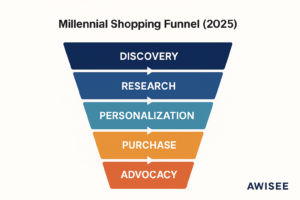
This shift is clearly seen in Millennial online shopping preferences in 2025, which prioritize speed, convenience, and community. It’s no longer about browsing aisles; it’s about scrolling, tapping, and checking out in seconds from a mobile device. Convenience, customization, and community have replaced cash registers and crowded stores.
Millennial online shopping preferences in 2025 show a dramatic shift away from traditional retail. This isn’t a future prediction—it’s a current reality. 70% of Millennials now prefer to shop online rather than in-store, driven by mobile habits and values focused on speed, personalization, and social impact.
In this article, we’ll break down the stats, behaviors, and digital triggers defining Millennial consumer behavior in 2025, explore the gap between Millennials and Gen Z, and offer a data-backed roadmap for retailers to connect with this powerful audience.
The Shift to Digital: Why Do Millennials Shop Online More?
Why do Millennials prefer online shopping over Gen X?
For starters, the convenience is unmatched. 67–70% of Millennials now prefer online shopping over in-store visits. But it’s not just about skipping checkout lines. Millennials use e-commerce to compare products, read reviews, view demos, and explore ethical options—all within seamless apps.
Impulse buying plays a role, too—95.1% admit to making impulse purchases online, often triggered by social media ads and flash sales. This isn’t accidental; it’s algorithmically engineered.
And don’t underestimate personalization. 58% of Millennials are more likely to buy from brands offering tailored shopping experiences, and 55% say they prefer mobile apps over desktops. They’re not just looking for deals—they’re expecting curated journeys that feel built just for them.
Top Statistics: Millennial Shopping Behavior Statistics That Matter
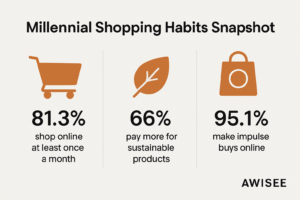
Let’s get into the data that defines Millennial online shopping preferences for brands competing in today’s digital market:
- 81.3% shop online at least once per month, proving they’re not casual browsers.
- 66% are willing to pay more for sustainable products, linking ethics to ROI.
- 72% rely on online reviews before making purchase decisions.
It’s also worth noting that 72% have used AR shopping tools—they want to visualize before they buy. Millennials are not afraid of digital tools. In fact, they’re embracing them to shop smarter and more intuitively.
Convert Mobile Shoppers into Loyal Customers
AWISEE offers customized SEO & influencer marketing solutions for online stores targeting Millennials. Partner with us and–
- Boost your mobile visibility
- Rank higher for shopping intent keywords
- Collaborate with creators who convert
Book your 1-on-1 consultation today
Devices, Discovery & Checkout: Online Shopping Trends Among Millennials
Diving deeper into online shopping trends among Millennials, it’s clear that mobile is king.
55% prefer shopping via mobile apps, not desktop. Why? Mobile apps are faster, more intuitive, and built for on-the-go discovery. Social media drives much of this discovery—60% of Millennials find new products through platforms like TikTok and Instagram.
However, 65% still abandon carts due to high shipping costs, and 52% demand seamless omnichannel experiences. They’ll start on mobile, save items on desktop, and complete purchases from a Facebook ad. If a brand’s experience isn’t connected across platforms, Millennials will move on quickly.
Growth of Mobile App Usage Among Millennials (2018–2025)
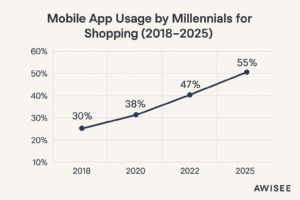
Mobile shopping app usage among Millennials has grown from 30% in 2018 to 55% in 2025, underscoring their mobile-first mindset, rising from 30% in 2018 to 55% in 2025. It underscores the mobile-first nature of modern Millennial shopping behavior.
Social, Sustainable, And Story-Driven: Key Factors Influencing Millennial Online Shopping Preferences In 2025
What drives that final click? The factors influencing Millennial online purchases are less about price and more about purpose.
- 74% are more loyal to brands that support social or environmental causes.
- 68% prefer companies with transparent pricing and strong ethical standards.
- 45% follow five or more brands on social media, signaling a desire for connection, not just conversion.
Add to that the 49% who are drawn to compelling brand stories, and you’ve got a demographic that values narrative as much as necessity. They want to see the mission, the faces behind the product, and the journey, not just the features.
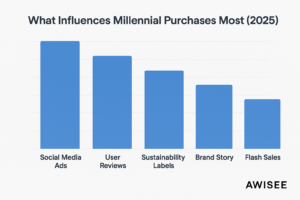
In short, Millennials buy from brands they believe in. Brands that get this right aren’t just selling—they’re building a movement.
If you’re exploring e-commerce expansion through social media, check out TikTok Shop in Latin America: What Countries Offer TikTok Shopping? for key regional insights.
Millennials vs Gen Z: Comparing Shopping Habits Across Generations
On the surface, Millennials and Gen Z may both seem like digital-first consumers. But their buying behavior reveals clear distinctions. These Millennial vs Gen Z shopping habits highlight how two adjacent generations diverge in decision-making.
Let’s begin with Gen Z. They’ve grown up in a world shaped by TikTok, influencer culture, and seamless social commerce. In 2024, over half of Gen Z made purchases directly through social platforms—a full 8 percentage points higher than Millennials.
Millennials, on the other hand, still lead in AR adoption (72%) and value research-based buying. They are deeply driven by ethical sourcing, peer reviews (72%), and sustainability (66%). While Gen Z seeks speed and novelty, Millennials seek values, transparency, and trust.
These differences are at the heart of understanding Millennial online shopping preferences in 2025, in contrast to their younger counterparts.
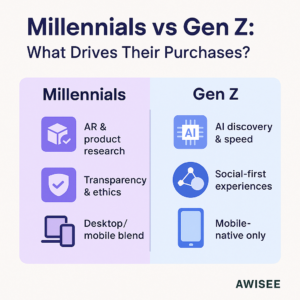
How Do Millennials Differ from Gen Z?
Gen Z leans toward:
- Social-first shopping (70%)
- AI-driven product discovery
- Influencer content
Millennials focus on:
- Transparency and ethics
- Augmented reality (AR) tools
- Detailed product research
These insights reinforce how Millennials shop today—value-first and digitally fluent: they’re value-driven, digitally fluent, and experience-focused.
Shopping Channel Preferences: Millennials vs Gen Z
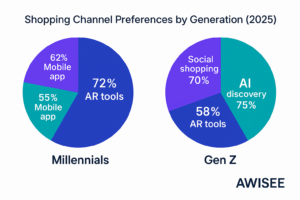
This dual pie chart compares channel preferences between Millennials and Gen Z. Millennials lead in AR tool usage (72%), while Gen Z leads in social shopping (70%) and AI usage (75%).
The Future of Retail: Millennials as Digital Natives with Purpose
If brands want to stay ahead, they must understand this: the future of retail—Millennials are defining it.
- 80% prefer environmentally responsible brands
- 68% reuse or repurpose the products they buy
- 55% prioritize minimalist design
- 79% have purchased from Amazon within the past month
This generation blends efficiency with ethics. Whether it’s live chat over phone calls (61%), AR-based product try-ons, or socially driven content, Millennial online shopping preferences in 2025 reflect a need for intuitive, purpose-led buying journeys.
And customer service? It’s gone digital. Live chat, DMs, and AI assistants are no longer support add-ons. These are baseline expectations. If your brand isn’t offering seamless help across platforms, Millennials will notice—and bounce.
Brands that align with Millennial online shopping preferences are already seeing stronger conversion and loyalty metrics. Because Millennials aren’t just shopping. They’re shaping commerce around their values.
Is Online Shopping More Popular Among Millennials?
Absolutely. 81.3% of Millennials shop online at least once a month, and they spend an average of $600 monthly, making them one of the most consistent and high-spending digital cohorts.
How to Connect with Millennial Shoppers in 2025
So, how do you win with this generation?
- Go mobile-first. They expect responsive, frictionless app experiences.
- Lead with purpose. Sustainability and transparency matter.
- Build social proof. Reviews and UGC influence decisions.
- Get social. 60% discover products on platforms like TikTok and Instagram.
- Support them smartly. Live chat and AI messaging aren’t extras—they’re essentials.
Millennial online shopping preferences in 2025 tell a clear story: this generation wants brands that are ethical, responsive, and digitally engaging. If you’re not adapting to their expectations, you’re not just missing sales—you’re missing the future.