
“15-20 years ago, I’d say we had something like an experience revolution in physical retail – where if you didn’t invest into experience, you would no longer survive on the high street,” says Sophie Frères, CEO and co-founder of LiSA.
“We always had this hypothesis that the same moment would come in ecommerce – where ecommerce becomes so saturated that just selling stuff online and offering the most optimised and convenient shopping experience [wouldn’t be sufficient].
“I think we are probably at that tipping point.”
This theory led Frères, who had an extensive background working in FMCG and luxury retail, to co-found LiSA, a suite of social and live commerce solutions for retailers, in 2018.
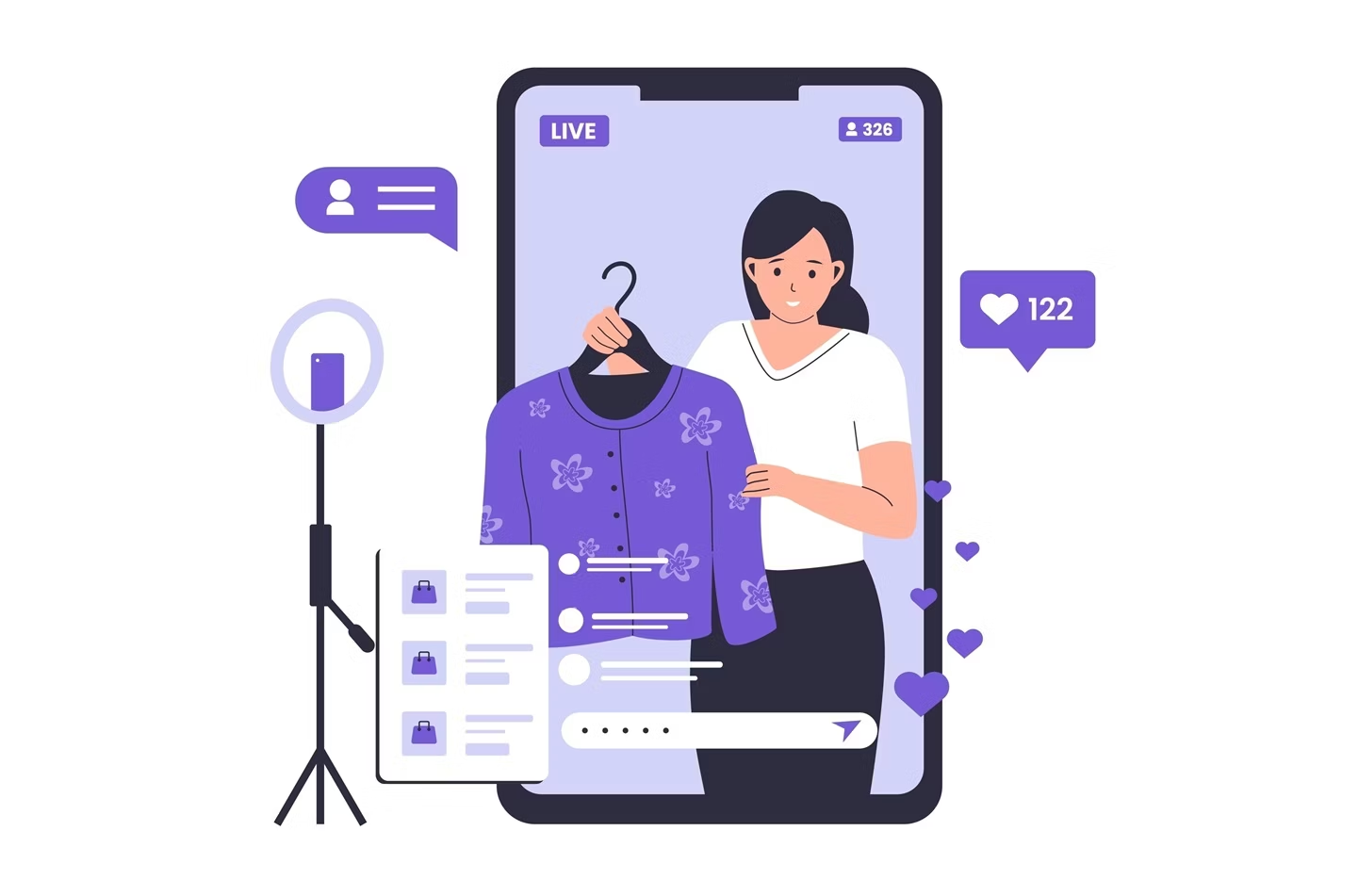
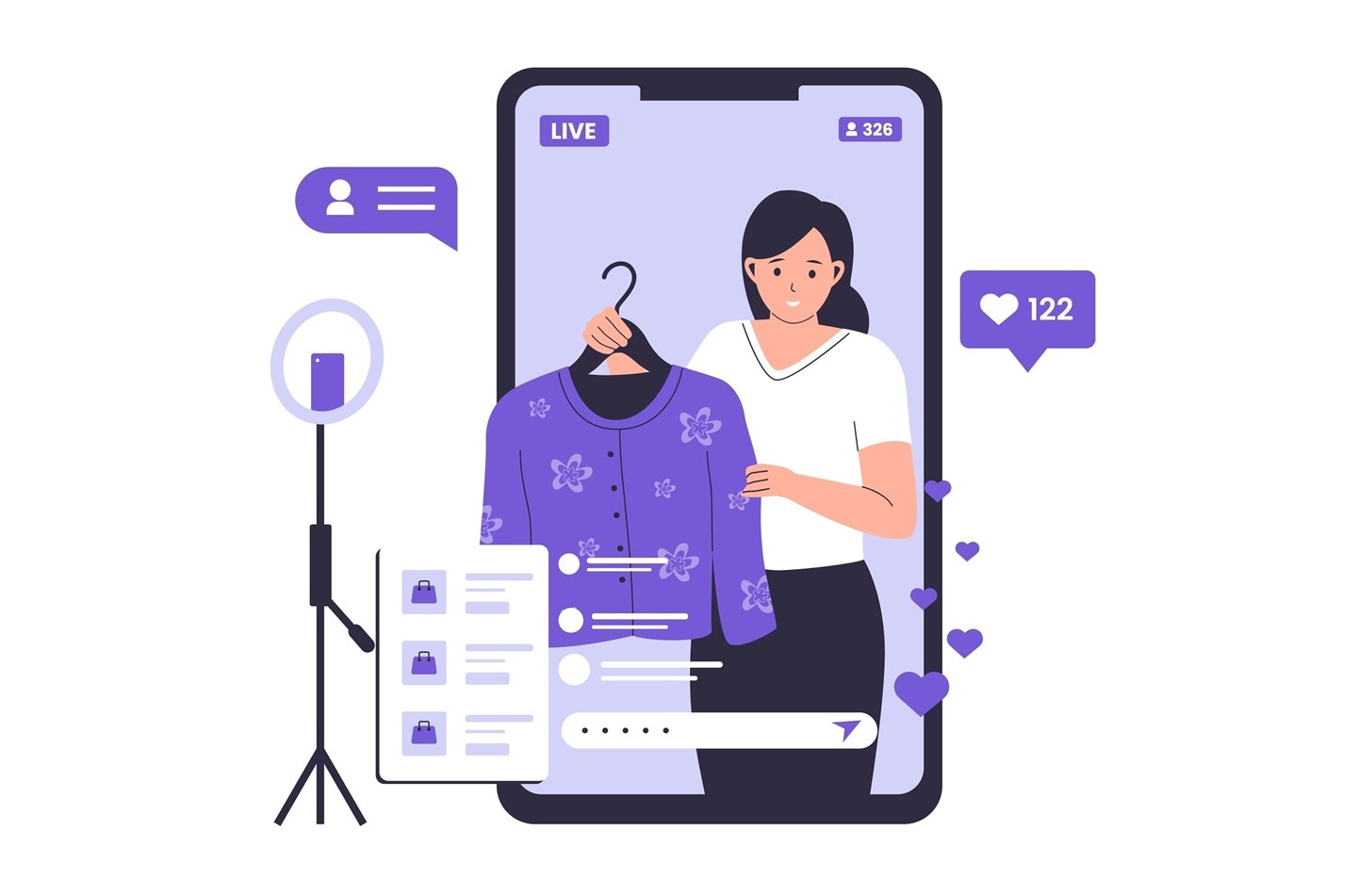
While social commerce has had a number of false starts in parts of the world like North America and Europe, there is a palpable sense of momentum behind it in 2025, with providers like TikTok and Whatnot driving a boom in shoppable social and live shopping that brands are increasingly looking to get involved in.
I spoke to Frères about why social interactivity is becoming key to the online shopping experience, why getting started with social commerce doesn’t need to be a big undertaking for retailers, and why the ‘human touch’ will continue to be vital despite the prevalence of AI solutions.
Why ‘human connection and community’ are coming back to ecommerce
In April 2025, commerce media company Criteo revealed that 73% of consumers (out of 6,000 surveyed) would describe online shopping as “practical, but not exciting” while 79% agreed that online shopping “feels lonely”. Close to a third (29%) of respondents even described online shopping as “a chore”.
“It was always our central hypothesis – that we would get to a point in ecommerce where people are going to really need and desire fun, interactive, social experiences. Because it’s going to become about more than just buying something when you need something,” Frères says.
“…I think innately, what it is, is we’re trying to recreate this sort of human connection and community element – having fun together and discovering together. And ecommerce isn’t designed for that today; social is designed for that.”
Through LiSA’s retail clients, Frères also has data indicating that when retailers introduce interactive and social experiences to ecommerce, they resonate.
M&S, for example, launched live shopping on its ecommerce site more than two years ago, holding regular live sessions and recording them to provide video content that will offer value beyond the end of the session. M&S has found that consumers who participate in live shopping or watch shoppable video will have twice the average order value of a regular ecommerce customer – and will return to the website three times as often.
Another client, Charlotte Tilbury, hosts live virtual masterclasses to showcase its beauty products and has seen conversion rates of up to 37% from its live shopping events.
“I think [live shopping] replicates the in-store experience to a degree in terms of talking to a salesperson, getting better advice, and making a better purchase decision,” Frères reflects. “But I think the element that gets underestimated the most is how important the social proofing is … and just having fun together.
“…It might not be people that you know, necessarily … but … you’re touching on the ‘discovering it together and having fun as a group’ [element of retail] – and I think that’s one of the most underestimated pieces of all of this.”
Why retailers don’t need polish to succeed with live shopping
Many retailers might think of getting started with formats like live shopping or shoppable video as an elaborate undertaking requiring specialist technology and perhaps partnerships with big-name influencers.
However, not only is this not necessary, in Frères’ opinion, but the opposite is in fact true: shoppers respond better to content that feels like it comes authentically from a brand, and at the same time, this lower-lift type of content is easier for retailers to put together and scale.
“We always, from day one, said that we think this needs to become a community-led content creation activity – or it’s not scalable for a retailer,” Frères says. Retailers who set out to create a polished, ‘QVC-style’ live shopping production tend to find frequency hard to maintain, and the result may also be less approachable and appealing to customers.
The same principle applies to partnering with influencers versus getting in-house store staff, buyers and specialists involved. “When you’re going to a live shopping event … and you show up and it’s the same influencer you see or follow on Instagram – that’s actually not what people expect,” Frères emphasises.
“Going to Marks & Spencer live, I expect to see Marks & Spencer … That’s a piece that a lot of brands struggled with at the beginning.” While working with influencers can pay off for certain retailers, depending on their brand identity, this also tends to take the form of a big event rather than having the regularity that Frères says is necessary to establish live shopping as part of a retailer’s offering.
M&S has seen considerable success with employee-generated content – and while experienced presenters bring valuable skills to live shopping, employees also have skills and specialisms they can call on. “They’re very trustworthy – these are the people who actually interact with customers on a daily basis,” she points out. “It’s their buyers, it’s their stylists, they mix it up – it’s very credible, [and] these people really know what they’re talking about.
“They can help you make very good purchase decisions – much better than you would if you were just looking at a picture.”
Getting started with social commerce
For brands and retailers who might be unsure about taking the leap into social commerce, what are the first steps? “All they really need is to get a quick understanding of what their options are – where they want to play, and which kind of content formats they want to create,” says Frères.
That could be live shopping, but it also might be longer video tutorials or short social videos – these can also be added to product pages, “so it becomes this loop of content being used at different stages of the journey”, all of it making the shopper experience more interactive and inviting.
“Are they open to letting their team, or trusted brand ambassadors, just go ahead and create the content?” Frères continues. “All [retailers] really need is some quick guidance [about] the different formats, the different channels, the pros and cons of each – and then, looking at their own marketing strategy and what they’re trying to build, deciding what they want to start and how they want to build it out.”
Frères also noted that despite the appeal of using generative AI solutions, such as AI avatars that present videos and livestreams, as content becomes more heavily dominated by generative AI there will be a competitive advantage in offering a human touch.
“Already as a result [of the rise of generative AI] you can see people are craving real human interaction,” she highlights. “…The question, in a very short time, will become: Have you managed to design a content creation strategy for human-created content that is scalable and that delivers real human interaction and value? … Especially if [you] want to differentiate from the pack.”
Why consumer electronics and DIY could be the next big thing in social commerce
While some verticals have enthusiastically embraced live and social shopping – particularly the beauty industry, with brands from L’Oréal to P.Louise reaping the rewards of the format – for many others its potential remains untapped.
While not every business or even every vertical is the right fit for social commerce, Frères sees particular potential in verticals like consumer electronics, home furnishings, and DIY. She points out that the demonstration element of DIY would be a great fit for live shopping, as would the ability to ask questions of an expert in real-time. Consumers who are planning a future renovation project could tune in, and brands could also showcase fun weekend projects or family activities.
“There’s such an element not only of inspiration, but education, that plays such a big role [in DIY],” Frères says.
As brands in these verticals lean into social, Frères notes that they are already creating the right kind of content, which makes hosting it on their own site and reaping the benefits of the community (and customer data) the intuitive next step.
“There is so much content out there already that would lend itself to this – they have the creators, they have the production capabilities, they have the topics.
“If a DIY retailer has an app, for example, where they can see who are the heavy users – why not start doing live shows for these people around the topics that they’re interested in, just to keep them more and more engaged with the brand?”