



If your business lacks an online presence, you’re missing a huge opportunity to connect with countless potential customers. How can you make that leap? For professionals, the best way to get online is to build a digital storefront, and robust e-commerce software provides all the needed tools to create the most effective online platform possible. Shopify and Wix Stores are our top picks in the e-commerce category, but which should act as your shop’s foundation? I’ve thoroughly tested both services, so check out this head-to-head comparison based on plans, prices, and features before committing to a subscription.
Plans and Prices
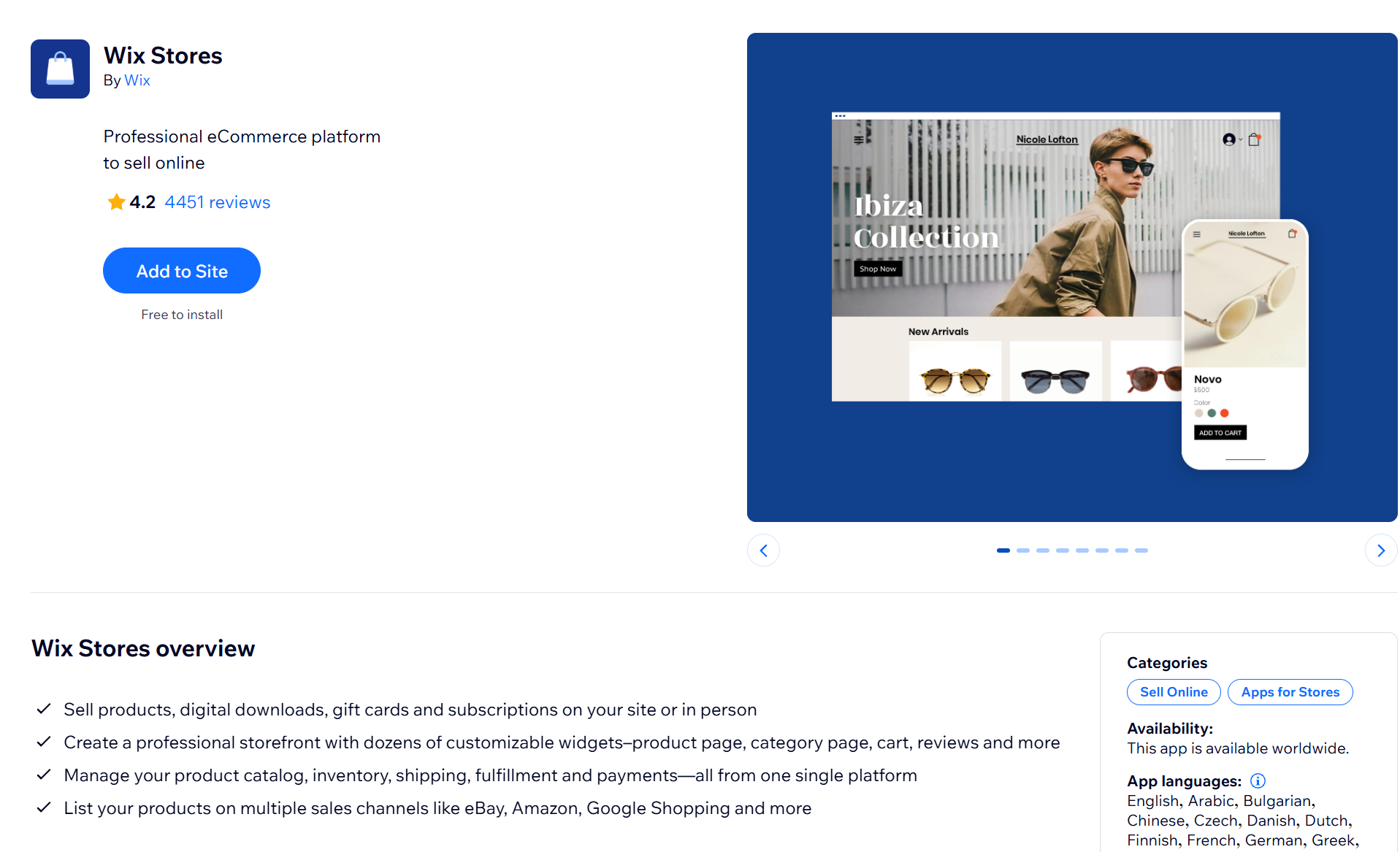
There’s a big reason Wix’s main website builder is so acclaimed: Even the free version offers many useful website-building tools. However, you must subscribe to a paid plan to leverage Wix Stores, the company’s e-commerce arm. It has three tiers: Core, Business, and Business Elite. You can also request a price quote for custom enterprise features.
Core ($27 per month) includes a free domain for a year, 50GB of storage, 50,000 products, drop-shipping options, gift cards, unlimited monthly data transfers, and the ability to sell products via social channels. Moving up the ladder, Business ($39 per month) features 100GB of storage, subscriptions and recurring payments, USPS shipping discounts, user reviews, and the ability to sell in online marketplaces. Business Elite ($149 per month) comes with unlimited storage, loyalty programs, custom reports, and priority customer care.
(Credit: Wix/PCMag)
Meanwhile, all of Shopify’s plans let you sell products because it’s exclusively an e-commerce platform. Shopify’s Basic plan ($39 per month) includes unlimited product listings, unlimited monthly data transfers, an SSL certificate, and the ability to sell products through sites hosted on other platforms. The Grow plan ($105 per month) adds more staff accounts and offers better discounts on shipping and insurance. The Advanced plan ($399 per month) makes those numbers even more attractive, saving you money in the long run as you conduct more transactions.
Unlike Wix, Shopify offers several specialty e-commerce tiers for social media ($5 per month) and retail ($89 per month) businesses. While Shopify’s main plans are comparable to Wix’s, they are, on average, more expensive.
Winner: Wix Stores
(Credit: Shopify/PCMag)
Building an Online Store
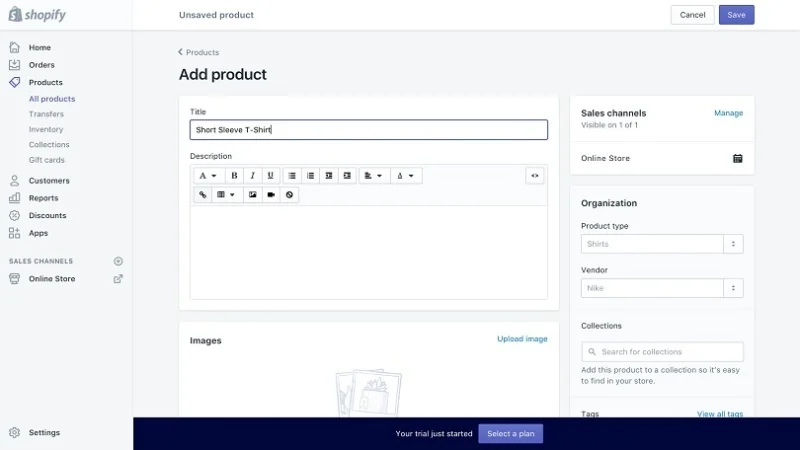
Shopify’s business-focused building tools are so robust that they can be overwhelming for non-professional, more casual users. Its features emphasize expected functionality, such as accounting, email marketing, analytics optimization, and social media campaigns. You’ll also get everything you need to add and manage the products in your inventory. If you don’t see a need for a feature, Shopify’s third-party app store can expand your site with, say, recurring billing or loyalty program add-ons.
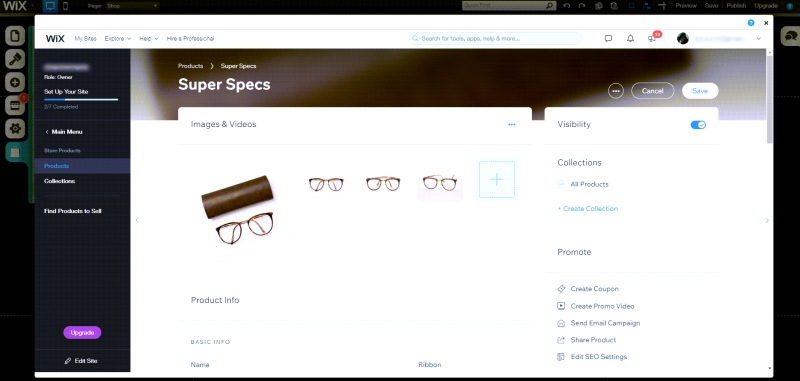
Wix Stores also empowers you to build your own store. The design wizard walks you through the major steps in the process, such as setting up the product database and adding keywords, so your business is more likely to be found by search engines. It has a large stock photo library to draw from, too. Wix Stores is easier for newcomers to navigate, but serious users will still find the advanced tools they need if they search for them.
Although both services let you build attractive stores, Shopify is more flexible, allowing you to switch templates at will; Wix Stores locks you into a look unless you rebuild your site in a new template.
Winner: Shopify

Get Our Best Stories!
All the Latest Tech, Tested by Our Experts

Thanks for signing up!
Your subscription has been confirmed. Keep an eye on your inbox!
(Credit: Wix/PCMag)
Payment and Shipment Options
Shopify’s vast array of payment options includes Apple Pay, PayPal, and more than 100 other money-exchanging gateways. It supports cryptocurrency like Bitcoin as well as good old-fashioned bank deposits, cards, checks, and money orders. There are several Shopify-specific payment options, such as the Shopify Payment gateway and adding a Shopify button to your existing website. Shopify’s own point-of-sale system makes it perfect for in-store retail, and it integrates with DHL Express, UPS, and USPS for shipping.
Wix Stores isn’t quite as expansive, supporting only 80 payment gateways and relying on third-party integrations for more niche functionality, such as cryptocurrency. The company also has its own payment platform, Wix Payments, for online and in-person point-of-sale transactions. Wix Stores partners with USPS for shipping and can work with other partners through third-party integrations. Wix even supports drop-shipping, which lets you send products without maintaining inventory. Of course, Wix Stores accepts payments from credit and debit cards, as well as major brands like Apple Pay, Google Pay, PayPal, Square, and Stripe. Still, Shopify is a bit more robust in its general payment and shipment options.
Winner: Shopify
(Credit: Shopify/PCMag)
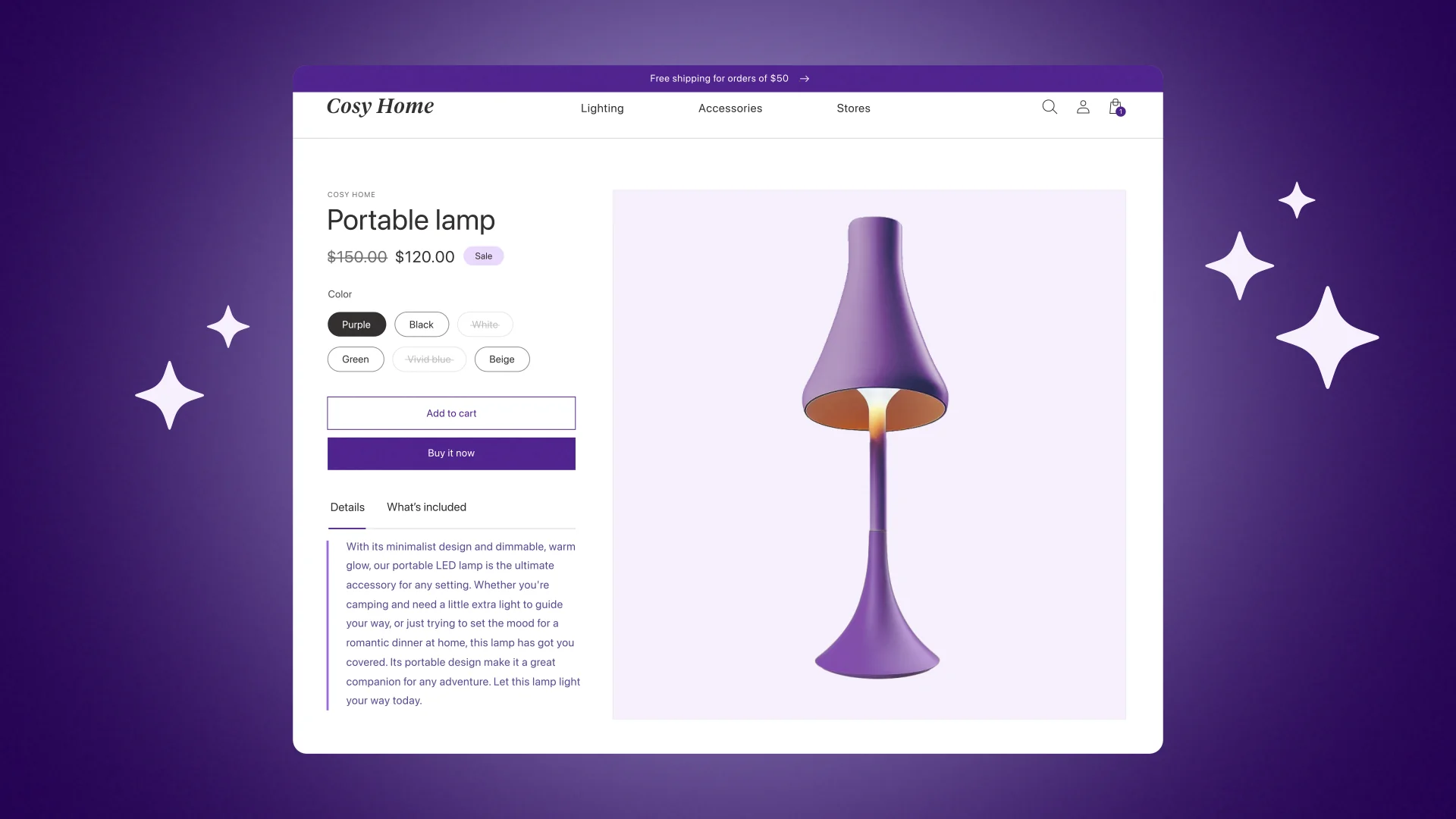
For better or worse, AI tools keep cropping up in all kinds of software, promising to lighten workloads by offloading tasks onto “intelligent” machines. When thinking of ways AI can help e-commerce platforms, Shopify and Wix Stores arrive at virtually identical answers.
Recommended by Our Editors
Shopify and Wix Stores both include business-centric generative AI tools. You can enter prompts to quickly write product descriptions, create and modify product images, and better optimize your marketing emails. AI also powers a chatbot assistant on both platforms. Feel free to experiment with this functionality, but my overall recommendation is to avoid AI tools in website builders, as their results tend to be bland.
Winner: Tie
Customer Service
Building out any kind of online presence can be overwhelming, especially when the stakes are as high as your potential profits. If you run into an issue, don’t understand a tool, or have a question about a feature, great customer service is a must.
Shopify and Wix Stores offer the full suite of expected customer service options. Both e-commerce platforms include 24/7 phone support and live chat. Once you’ve resolved your emergency, check out their respective community forums to dive deeper into topics you’re curious about.
Winner: Tie
And The Winner Is…

Shopify and Wix Stores are both excellent, Editors’ Choice-winning e-commerce services that quickly get businesses ready for online sales. Existing Wix users may be better off with Wix Stores, as it’s a friendly expansion to the already awesome Wix ecosystem. However, for established businesses, big or small, Shopify has the edge due to its template flexibility and rich add-on ecosystem that’s dedicated to e-commerce first and foremost.