
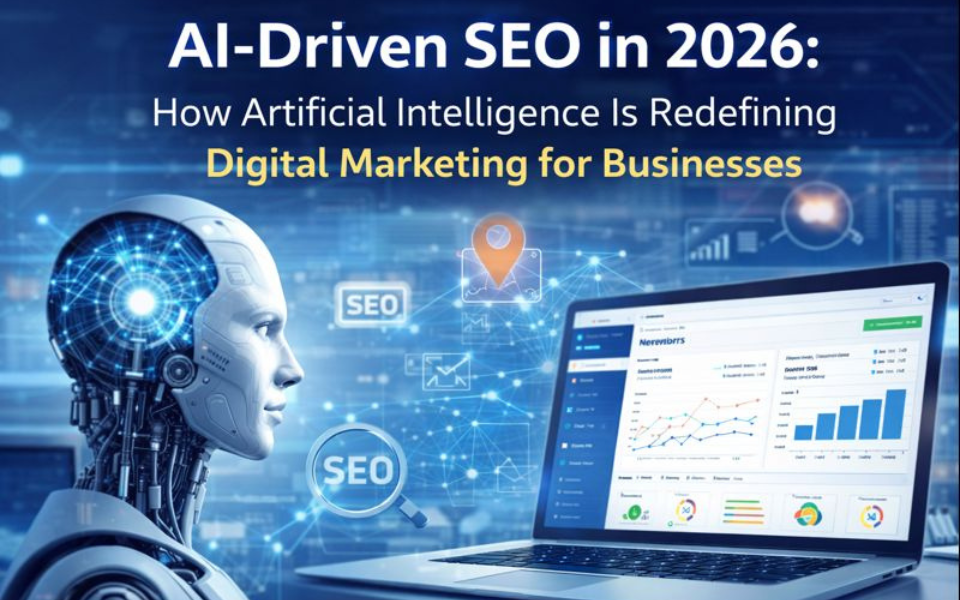
In 2026, search engine optimization is no longer a game of keywords and backlinks alone. It has become a living system shaped by artificial intelligence, user intent, behavioural data, and real-time context. For founders and startup leaders in India, this shift is not merely technical. It is strategic.
AI-driven SEO is fundamentally changing how businesses are discovered, evaluated, and trusted online. As search engines evolve from information indexes into decision engines, digital marketing is moving closer to business intelligence than traditional promotion.
From Search Engines to Answer Engines
Search platforms are no longer rewarding pages that simply match keywords. They prioritize relevance, authority, and usefulness at scale. AI models embedded within search algorithms now interpret intent, predict follow-up questions, and evaluate content quality much like a human reviewer would, only faster and at massive scale.
For Indian startups operating in crowded markets, this means visibility is no longer won by optimization tricks. It is earned by clarity of value, depth of expertise, and consistency across digital touchpoints.
AI systems analyse how users interact with content: time spent, engagement patterns, bounce behaviour, and even micro-signals such as scroll depth. SEO in 2026 is therefore inseparable from user experience, brand positioning, and content intelligence.
The Rise of Predictive SEO
Traditional SEO reacted to trends. AI-driven SEO predicts them.
With machine learning models analysing search behaviour, seasonal demand, and emerging queries, businesses can anticipate what their audience will look for before demand peaks. This predictive capability is especially valuable for Indian founders navigating dynamic sectors such as fintech, healthtech, edtech, and SaaS.
Rather than optimising for what worked last quarter, AI allows businesses to align content strategies with future intent. This reduces wasted effort and improves the return on digital investment, a critical concern for early-stage and growth-stage startups.
Content Is No Longer Written for Keywords
In 2026, AI evaluates content the way readers do. It looks for coherence, depth, originality, and contextual relevance. Thin content created to satisfy algorithms is increasingly filtered out.
This has shifted the role of content from volume to value. Thoughtful explainers, practical insights, and domain expertise now outperform generic blog posts. For founders, this presents an opportunity to use SEO not just as a traffic tool, but as a credibility engine.
A modern digital marketing agency no longer measures success by rankings alone. It measures how content influences perception, trust, and decision-making throughout the customer journey.
Hyper-Personalization at Scale
AI enables search experiences that are personalized by geography, device, past behaviour, and even inferred business needs. Two users searching for the same term may see different results based on intent signals.
For Indian businesses serving diverse regions and languages, this is particularly significant. AI-driven SEO supports localisation beyond translation. It aligns content with cultural context, regional demand, and user maturity levels.
This is redefining how digital marketing agency approach segmentation. Instead of one national strategy, businesses can deploy adaptive content frameworks that respond to user context in real time.
SEO Meets Brand Intelligence
In 2026, SEO is no longer a standalone function. It sits at the intersection of brand, data, and product communication.
Search engines increasingly reward brands that demonstrate consistency across platforms: website, social presence, reviews, and third-party mentions. AI cross-verifies signals to assess authenticity and authority.
For founders, this means SEO success depends on how clearly the business story is told everywhere, not just on landing pages. A digital marketing agency today must therefore operate as a strategic partner, aligning search visibility with brand narrative and business goals.
The Decline of Manual Optimization
Manual keyword tracking, repetitive audits, and static reports are giving way to autonomous optimisation systems. AI tools now continuously monitor performance, detect anomalies, and recommend adjustments in near real time.
This allows marketing teams to focus less on execution and more on strategy. For startups with limited bandwidth, this efficiency is transformative. It reduces dependency on large teams while increasing precision.
However, automation does not eliminate human judgement. AI handles scale and speed; humans provide direction, ethics, and creativity. The most effective SEO strategies in 2026 balance both.
What This Means for Indian Founders
For India’s startup ecosystem, AI-driven SEO represents a levelling force. It rewards clarity over capital and insight over influence. Startups that deeply understand their audience can outperform larger competitors by aligning with how AI interprets value.
Founders must now ask different questions:
- Are you creating content that genuinely answers user problems?
- Does our digital presence reflect our business credibility?
- Are we using data to anticipate demand, not just respond to it?
Choosing the right digital marketing agency is no longer about who promises rankings. It is about who understands AI-led search behaviour, business context, and long-term brand equity.
Looking Ahead
By 2026, SEO has matured into an intelligence discipline. Artificial intelligence has not replaced marketers, but it has raised the bar. Digital marketing is now less about visibility and more about relevance, trust, and sustained value creation.
For businesses willing to adapt, AI-driven SEO is not a disruption. It is an advantage.