

In brief
- E-Commerce is entering a new phase where Artificial Intelligence reshapes discovery, conversion, and retention—often without a traditional click.
- AI agents are evolving from “chat” to “do,” acting as personal shoppers that compare options, place orders, and manage returns through connected services.
- Agentic payment protocols are emerging to govern trust, authorization, and accountability when software makes purchases.
- Social commerce is accelerating as virtual influencers and livestream formats turn TikTok, Instagram, and Facebook into full retail funnels.
- Digital Retail is blending with physical stores: “phygital” experiences, automation, and flexible fulfillment are redefining Consumer Behavior.
- Regional Market Growth signals broad Global Expansion, led by North America and Europe, with strong momentum across Asia Pacific and MEA.
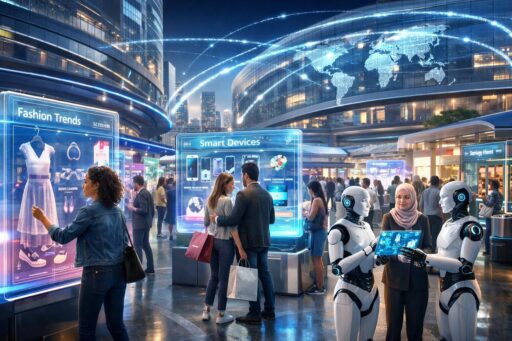
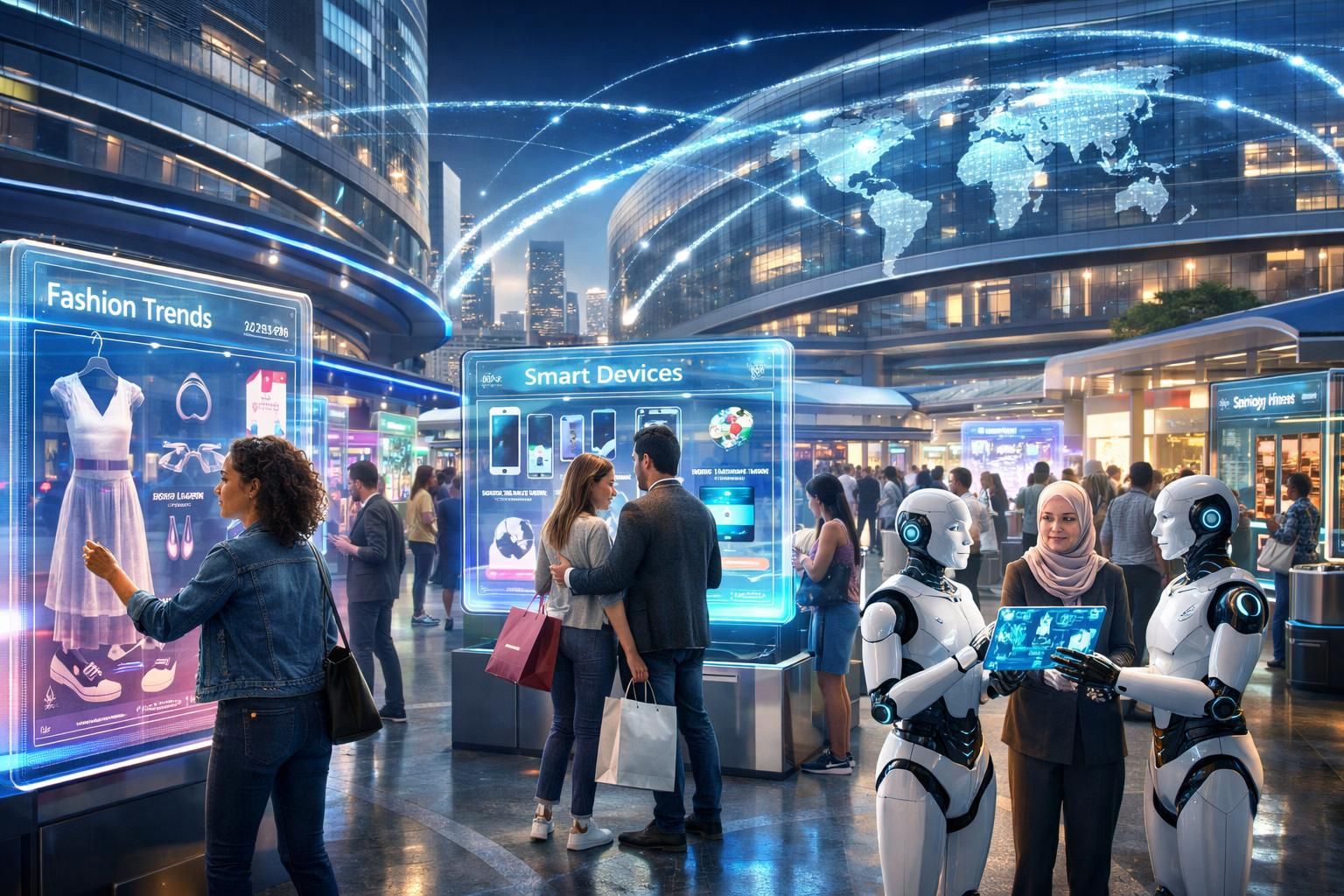
The next chapter of commerce is being written in real time, as shopping shifts from browsing to delegating. In 2026, the most competitive retailers are not simply “online” or “in-store”; they operate as connected systems that predict intent, personalize at scale, and remove friction from payment to delivery. That shift is powered by AI Technology that no longer sits quietly behind recommendation widgets—it speaks, negotiates, and increasingly executes purchases through agentic workflows. Meanwhile, the storefront is no longer a website alone. Social platforms now behave like malls with embedded checkout, and physical locations are being redesigned as experience hubs and fulfillment nodes. The result is a more fluid economy where discovery can happen in a chat window, a livestream, or a voice request, and where brand trust is measured by speed, transparency, and post-purchase care. This is not just a story about tools; it’s a story about changing Consumer Behavior, shifting power in distribution, and the new playbook brands need for durable Market Growth in a zero-click world.
E-Commerce Market Growth Forecast: AI at the Forefront of Global Expansion
The strongest Forecast signals in the E-Commerce market are increasingly tied to Artificial Intelligence rather than simple channel migration. For years, retailers won by buying traffic, optimizing conversion rates, and expanding catalog breadth. Now, the advantage is moving toward those who can interpret intent and deliver the “right product, right moment, right message” experience—often automatically. Analysts tracking AI-enabled commerce estimate the sector at roughly $9B in 2025, and many projections point to steep acceleration through the next decade, with some models implying tens of billions in value as agentic interfaces and automated decisioning mature.
To see how that plays out in practical terms, consider a hypothetical mid-market brand—“Northwind Outfitters”—selling outdoor apparel across the US and Europe. Two years ago, Northwind’s growth engine relied heavily on paid social and seasonal email. In 2026, its executives are watching something new: shoppers arriving already “pre-decided” because a conversational agent summarized reviews, compared durability claims, and recommended the best jacket for a customer’s climate and budget. When decision-making happens upstream of the website, the brand’s edge becomes data quality, product truthfulness, and machine-readable merchandising.
How AI-driven demand reshapes Digital Retail economics
AI is not just adding incremental sales; it is changing the cost structure of retail. Customer support is increasingly automated, merchandising is optimized through predictive modeling, and marketing spend shifts from broad targeting to content and feed engineering that helps algorithms understand inventory. Reports suggest that nearly nine in ten retailers are already using AI in some capacity or testing it through pilots, which makes adoption less of a novelty and more of a baseline expectation. The competitive question becomes: who is using it to merely reduce costs, and who is using it to create differentiated experiences?
Consumer data signals provide another clue. Retail analytics and seasonal benchmarks increasingly emphasize how shopping peaks are shaped by smarter personalization and better attribution. For context on how analytics-based narratives are influencing planning cycles, retailers often reference market reporting like retail sales insights from Adobe Analytics to understand how demand spikes align with promotions, shipping cutoffs, and device usage patterns.
Regional momentum and why “global” no longer means “one playbook”
Global Expansion is not evenly distributed, and the AI layer amplifies regional differences. North America remains the largest AI-in-commerce arena, fueled by capital, mature logistics, and customers who expect integrated experiences. Europe is moving quickly as retailers modernize to stay competitive across fragmented languages and regulations. Asia Pacific’s growth is propelled by mobile-first behavior and infrastructure investment, while South America and the Middle East & Africa are scaling through improving connectivity and fast-evolving marketplaces.
|
Region |
AI in eCommerce Market Size (2024) |
Projected Size (2033) |
What’s driving the shift in 2026-era Digital Retail |
|---|---|---|---|
|
North America |
$3.05B |
$12.63B |
High demand for integrated shopping, strong investment, rapid agent adoption |
|
Europe |
$2.39B |
$9.89B |
Competitive pressure, sophisticated personalization, regulatory-aware AI deployment |
|
Asia Pacific |
$1.64B |
$6.78B |
Mobile commerce, infrastructure upgrades, public initiatives supporting e-commerce |
|
South America |
$0.70B |
$2.89B |
Rising internet access, expanding middle class, marketplace-led growth |
|
Middle East & Africa |
$0.72B |
$3.00B |
New logistics corridors, payments innovation, accelerating platform penetration |
These numbers matter less as trivia than as strategy: if your catalog, policies, and content are not localized and structured for machine interpretation, the next wave of shoppers may never “meet” your brand. The next section explores the core mechanism behind that shift: AI agents that shop, not just chat.
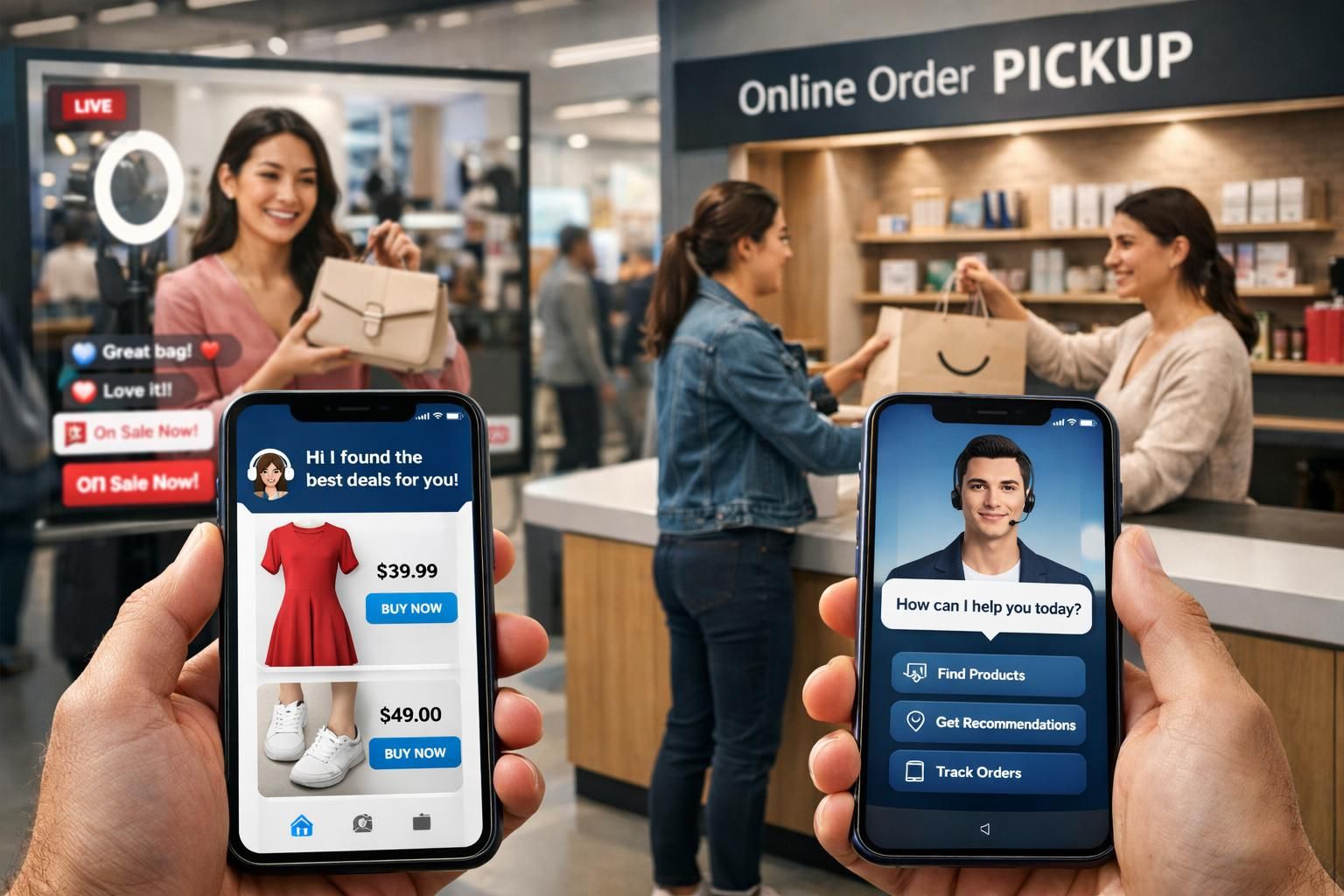
For much of the web era, discovery meant a consumer typed queries, scanned results, clicked through product pages, and compared options manually. In 2026, a growing share of discovery is mediated by Artificial Intelligence that summarizes, recommends, and increasingly executes actions. The difference is subtle but decisive: conversational tools are turning into “agents” that can interact with third-party services—adding items to carts, applying coupons, scheduling deliveries, and initiating returns. This is the practical engine behind new Market Trends such as “zero-click commerce,” where the consumer’s journey compresses into a single assisted decision.
Northwind Outfitters sees this when a customer asks an agent: “Find me a waterproof jacket under $200 for spring hikes in Scotland, and make sure returns are easy.” The agent doesn’t just list options; it compares seam sealing specs, checks delivery times, and filters by return policy clarity. If Northwind’s product data lacks structured fields (fabric, waterproof rating, care instructions, warranty terms), the agent may skip it in favor of a competitor whose listings are more machine-friendly. This is not a branding failure; it’s a data readiness failure.
Agentic payment protocols and the trust problem
Delegated buying raises an obvious question: if software is purchasing, how do consumers stay in control? The emerging answer is the rise of agentic payment protocols—rules and frameworks that define authorization, spend limits, identity, and accountability. Payment networks and technology vendors are building methods for “bounded autonomy,” meaning the agent can act, but only within constraints the shopper sets. Think: “You may spend up to $120 on groceries weekly, prefer store pickup, and never use a new merchant without confirmation.”
From a retailer’s perspective, this changes checkout design. Instead of optimizing a visual funnel, teams must ensure compatibility with programmatic checkout flows, clear policy endpoints, and fraud controls that can assess agent-driven patterns without penalizing legitimate automation. The winners will be merchants who treat trust as a product feature: transparent substitutions, predictable refunds, and real-time order status that agents can relay back to customers.
Voice interfaces as a gateway to agent-led commerce
Agents become even more powerful when paired with voice. A commuter asking a smart speaker to reorder pantry staples is essentially delegating. That makes voice adoption a meaningful leading indicator for where agent-led Online Shopping will grow fastest. Retailers tracking this shift often look to consumer usage patterns like voice assistant adoption trends to understand how quickly voice moves from novelty to habit.
Voice ecosystems also shape which retailers get recommended first. For example, households already using platform assistants may default to integrated commerce pathways; a practical lens on that ecosystem is captured in how Alexa is influencing e-commerce behaviors. For brands, the takeaway is not “build for one assistant,” but “ensure your inventory, pricing, and policies can be expressed clearly in conversational contexts.”
Operational implications: customer service, returns, and accountability
When agents place orders, they also generate new kinds of customer service inquiries. A return might be initiated by an agent that detects a sizing mismatch based on user feedback. A complaint might arrive as a structured log of what the agent was promised versus what was delivered. That can be uncomfortable—but it is also an opportunity. Structured disputes are easier to resolve, and proactive fixes can be scaled across the customer base.
Retailers who thrive will build “agent-readable” customer support: policy pages with clear conditions, shipment tracking endpoints, and consistent SKU naming. In a world where the buyer might be software, clarity becomes conversion. Next, the spotlight shifts to the channels where discovery is increasingly emotional and entertainment-driven: social commerce and virtual influencers.
Social Commerce and Virtual Influencers: Digital Retail Where Culture Drives Consumer Behavior
If agent-led shopping compresses decision-making, social commerce expands persuasion. In 2026, platforms like TikTok and Instagram are not merely marketing channels; they are end-to-end retail environments with integrated checkout, creator storefronts, and algorithmic discovery that can outperform search. The novelty is not that people buy from social media—it’s that social platforms are now where preferences are formed in the first place. A customer might not be “shopping” at all; they are watching a creator test a product live, then buying in two taps because the story felt authentic.
Virtual influencers intensify that dynamic. Unlike human creators, AI-powered personalities can operate continuously, localize content instantly, and maintain consistent brand messaging across markets. For a retailer, that means campaigns can be orchestrated as always-on entertainment: nightly livestreams, rapid reaction to micro-trends, and shoppable narratives that respond to comments in real time. It also raises a question: what does authenticity mean when the “face” of the campaign is synthetic? The answer is transparency and value. Consumers will tolerate artificiality if the utility is real—clear sizing guidance, honest demos, responsive Q&A, and fair pricing.
TikTok-style storefronts and the new path to purchase
Social commerce is often described as impulse-driven, but the best executions are structured. Northwind Outfitters, for instance, uses a livestream format to compare jackets in a “rain room” demonstration. Viewers ask questions; the host pins product links; checkout happens without leaving the app. When done well, this isn’t a gimmick—it is a high-signal environment where objections are handled instantly.
Retail strategists who want to understand the mechanics behind these conversions often follow reporting like TikTok Shop eCommerce trends, because it highlights how entertainment, creator economics, and logistics integration combine into a new retail machine.
Brand voice in an era of AI-generated content
As content velocity increases, brands face a different risk: dilution. If product descriptions, captions, and scripts are generated at scale, tone can become inconsistent, and trust can erode. Leading teams are responding with brand voice systems: lexicons, banned phrases, compliance rules, and review workflows that keep messaging coherent across channels and languages.
For marketers, the practical challenge is aligning speed with identity. Guidance on maintaining consistency while using automation is discussed in resources such as how AI writing can preserve brand voice, which reflects a wider industry push to treat language as a governed asset rather than disposable copy.
Measurement, attribution, and the “invisible assist” problem
Social commerce complicates measurement. A customer might discover a product via a virtual influencer, ask an AI agent for the best price the next day, and finally purchase through a marketplace app. Traditional last-click models misread that story, leading to underinvestment in the channels that created desire.
Retailers are adapting by tracking “assist signals”: view-through engagement, save-to-wishlist events, repeat exposure, and post-purchase surveys that ask what sparked interest. The insight is not purely analytical; it affects creative strategy. If your audience is learning through demonstrations, you need fewer polished ads and more proof—durability tests, fit comparisons, and transparent reviews. From there, the journey continues into the physical world, where stores are being reinvented to match digital expectations.
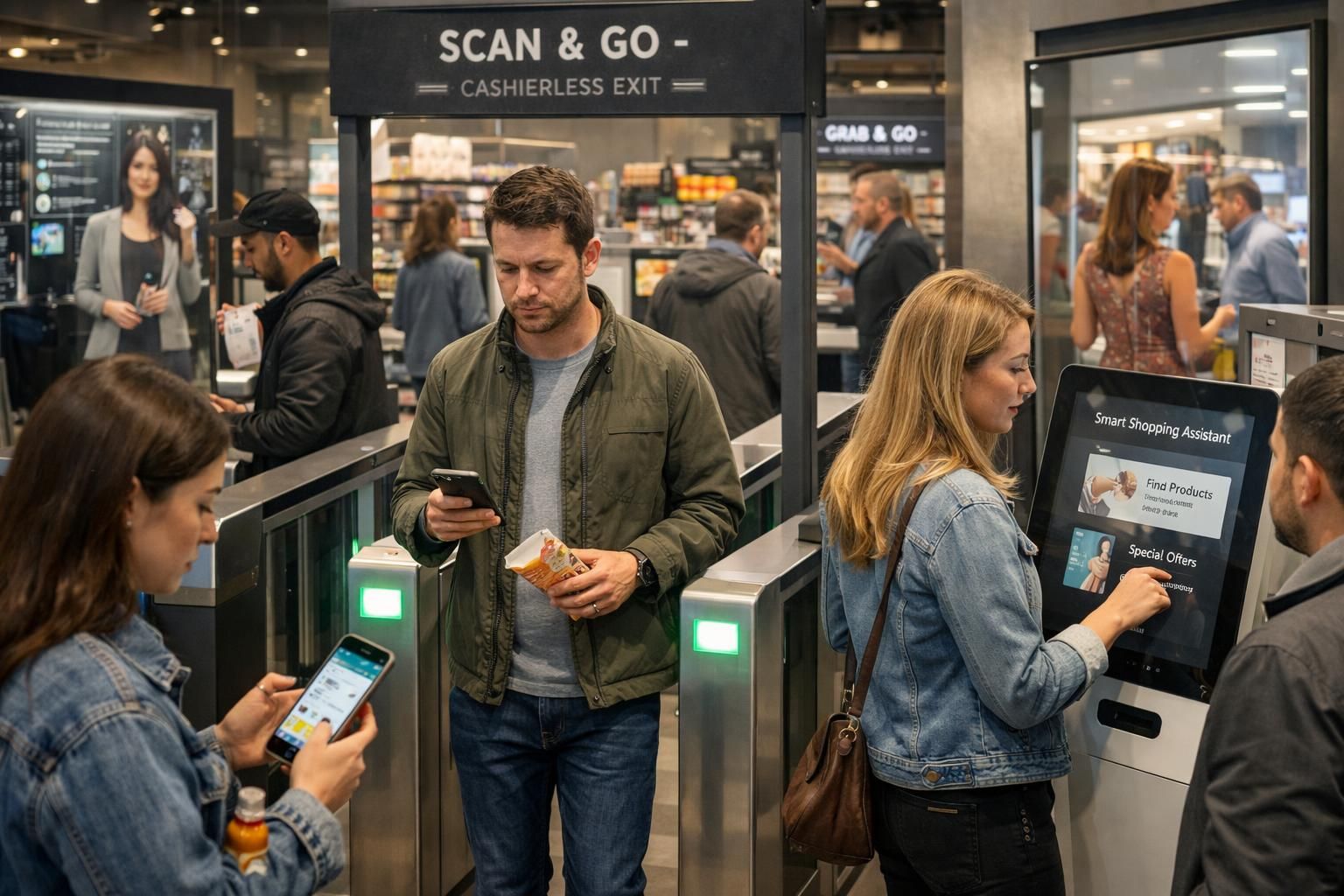
The old retail debate—online versus offline—has largely been replaced by a design problem: how do you build one continuous experience across screens, shipping lanes, and storefronts? In 2026, consumers expect flexibility by default. They want to browse on mobile, try in store, ship to home, and return anywhere. That expectation is not a luxury; it is now a baseline shaped by marketplaces and omnichannel leaders. The brands that win treat stores as experiential spaces and operational assets at the same time.
Northwind Outfitters illustrates the shift by turning its city-center location into an “experience studio.” Customers can test waterproof gear under simulated rain, scan QR codes to see material sourcing, and order out-of-stock sizes for home delivery. Meanwhile, the back of the store functions as a micro-fulfillment node, speeding local delivery. The store becomes both theater and logistics.
In-store automation and frictionless shopping
Automation is removing pain points that used to feel inevitable: long lines, missing sizes, inaccurate inventory. Cashierless concepts, smart shelves, and computer vision audits help ensure product availability matches what the app promises. The strategic detail is staffing: the most forward-looking retailers are not simply cutting labor, they are reallocating people to higher-value roles—fit consultations, community events, and post-purchase care—areas where human empathy still creates loyalty.
Grocery is an especially revealing case because it is frequency-driven and operationally complex. Retailers pushing the boundaries of digital-to-physical integration often resemble the models discussed in Walmart’s online grocery strategy, where pickup, substitutions, and delivery windows shape repeat behavior more than flashy branding ever could.
Zero-click commerce meets the physical world
Zero-click doesn’t only mean “no website visit.” It can also mean “no aisle browsing.” A shopper might ask an agent to assemble a “weekend camping kit,” then simply pick it up curbside. In that model, the store is the last mile of an algorithmic decision. Retailers must therefore treat store inventory as real-time publishable data, not an internal spreadsheet. If inventory accuracy slips, the agent’s trust collapses, and the customer blames the brand, not the software.
Returns, repairs, and sustainability as experience
Experiential retail is not only about discovery; it is also about aftercare. Sustainability pressures are pushing circular programs—trade-ins, repairs, and resale—into mainstream expectations. When those services are available in-store, they become tangible proof of values. A customer who brings in worn boots for repair is not just reducing waste; they are creating a relationship moment that increases lifetime value.
As consumers become more selective and less patient, the retailers that thrive will be those who make the entire lifecycle feel effortless—purchase, pickup, service, and resale. That operational excellence depends on logistics, which is where the next section turns: supply chain modernization and the infrastructure enabling global scale.
AI Technology, Logistics, and B2B Infrastructure: Building a Scalable E-Commerce Market
Behind every seamless shopping moment sits an unforgiving reality: inventory, shipping, and systems integration. In 2026, customers judge brands on reliability as much as creativity. Missed delivery windows, inaccurate tracking, and poor return experiences can erase the gains of personalization. That is why AI Technology is being applied not only to marketing and service but to the operational core—demand forecasting, inventory placement, warehouse orchestration, and fraud detection. The modern E-Commerce stack is becoming less like a storefront and more like an adaptive network.
Northwind Outfitters learned this the hard way during a holiday spike when a viral social video drove demand for a specific jacket colorway. The marketing team celebrated; the operations team panicked. The brand’s new approach is predictive: it uses signals from social engagement, agent queries, and pre-orders to reposition inventory before the surge hits. That reduces split shipments and protects margins, which is essential when ad costs rise and consumers expect free or low-cost delivery.
Fulfillment consolidation and why speed now competes with price
Logistics providers are consolidating capabilities—warehousing, parcel optimization, returns processing—because brands want fewer integrations and more predictable service levels. Industry moves that highlight this trend include coverage like Stord’s acquisition of Shipwire, which reflects a broader push toward unified fulfillment platforms. For merchants, the implication is strategic: a better logistics partner is not just a cost center; it’s a growth lever that makes two-day delivery and easy returns feasible across more geographies.
B2B commerce modernization and the rise of hybrid buyers
The E-Commerce market is not only DTC. B2B buying is becoming more consumer-like: buyers expect transparent pricing, self-serve reordering, and fast customer support. That shift forces wholesalers and manufacturers to upgrade portals, catalog structures, and approval workflows. For a sense of how platforms are evolving, retailers and distributors track updates like recent B2B commerce improvements from Cloudfy, which speak to the wider modernization of procurement experiences.
Hybrid buyers—people who purchase for work and personal use—also blur expectations. They might discover a product on social, check compliance details through an agent, and place a bulk order through a B2B portal. If those systems are disconnected, friction returns and competitors win.
Holiday demand, AI-assisted spending, and operational resilience
Peak seasons remain the stress test for every retailer. In 2026, the added variable is that AI will influence not only what shoppers see but when they buy—through proactive reminders, deal monitoring, and automated replenishment. That can compress demand into sharper spikes, making forecasting and staffing harder.
Many executives look to seasonal behavior analysis, including perspectives such as how AI is shaping US holiday spending, to plan inventory buffers and promotional calendars. The operational lesson is clear: if agents accelerate purchasing decisions, retailers must accelerate replenishment decisions too.
A practical checklist for AI-ready commerce operations
- Structured product data (attributes, policies, warranty, sustainability claims) so agents can compare fairly.
- Real-time inventory accuracy across stores and warehouses to prevent broken promises in zero-click flows.
- Programmatic checkout compatibility aligned with emerging agentic payment rules and identity controls.
- Returns as a designed experience, with clear timelines and easy drop-off options to protect trust.
- Localization at scale for language, regulation, sizing norms, and delivery expectations across regions.
The E-Commerce market’s next stage of Market Growth will be captured by retailers who treat AI not as a feature, but as a connected operating model—one that ties discovery, persuasion, fulfillment, and aftercare into a single resilient system.