

An author website is like an enhanced business card: It gives readers crucial information about your work and how they can contact you. But it can also provide deeper insights into why you write what you do, helping them better connect to your brand. The right author website design can also help drive sales, increase brand recognition, and build momentum for speaking engagements and media appearances.
Read on to learn what to include on your site, with tips from Shane Vigeant, a seasoned web designer and head of digital strategy at Book Launchers. You’ll also find examples of successful author website design from both fiction and non-fiction writers.
What is an author website?
An author website is a website dedicated to the work of an individual author working in fiction or non-fiction. These websites are used to publicize new books, provide background information on the author, post lists of upcoming events, and provide preferred methods for contact and general outreach. Author websites can resemble professional portfolios, or they can have an ecommerce component for book and merch sales.
Why author websites are important
Author websites are more than window dressing. They play an important role in a greater marketing strategy. A few of the key benefits include:
Centralized storytelling
As an author, your website acts as a single source of truth and home base outside of social media platforms. You can present yourself exactly the way you intend and host up-to-date information in service of your brand. If your book is an offshoot of another business, a dedicated author page also allows you to target new audiences.
Better search rankings
Maintaining your own website allows you to establish credibility with online search engines. This is especially true when you’ve optimized your site for organic search with high-ranking keywords via elements like a detailed bio, a comprehensive bibliography, and a site blog.
Email sign-up
A robust email list generates the highest return on investment (ROI) of any marketing tactic. Most of these subscriptions come through website sign-up forms. Once your readers are in your network, they’re a powerful engine for word-of-mouth referrals and a built-in audience for future projects.
Revenue stream
Author websites can also function as ecommerce platforms and a way for authors who self-publish to sell directly to their readers. Doing so on an owned-and-operated website, instead of exclusively through other retailers, provides customer data and relationship-building opportunities you would not get on a third-party platform. Books aren’t the only thing you can sell; merchandise, event tickets, and signed editions are also helpful ways to generate revenue.
Essential elements of an author website
What you include as you create your own website may differ from another author, depending on your industry and individual goals, but all have a few key components in common:
Author bio
A professional bio covers the highlights of your career and background: your relevant professional experience, accomplishments, and recognitions. Aim for one to two tight paragraphs that bring new readers up to speed on what you offer. Ensure it is written with a style that reflects who you are and is likely to appeal to your target audience—your author bio may be their first impression of your writing.
Book pages
Book pages are dedicated product detail pages featuring a high-resolution image of your book cover, a synopsis, and a clear path to purchase. That could be through links to third-party retailers or, if you’ve decided to add ecommerce functionality to your website, an on-site cart.
You may also choose to feature reader reviews or testimonials here, if you have them. Each book should have its own page, and can be grouped under one dropdown menu for easy browsing. If you have a sequential series, you can add a series page as well, so readers can see the books in order.
Upcoming events
Readings, signing events, and speaking engagements related to your book are excellent opportunities to connect with your target audience in real life. Not only do events allow you to gauge what resonates most about your work (and sell more books), they also provide insight into other subjects you might tackle in the future. Keeping an up-to-date calendar on your website helps interested readers know when and where they can find you.
Media
If media appearances are a key piece of your larger book marketing strategy, be it interviews or keynotes, create a space for your best clips on your homepage to give visitors a sense of your speaking style.
Testimonials or reviews
An author website might be centered on the author in question, but there’s another voice that most readers look for: the voice of the public, or their peers. The right examples of social proof build trust and credibility. The most effective style depends in part on how you want to be perceived and the type of books you write.
If you’ve written a book about a proprietary methodology, for example, testimonials endorsing that method are key. If you write science fiction, then quotes from published reviews are more effective. If you’re hoping to book more speaking engagements, featuring logos from companies that have hired you in the past can help.
Contact
Finally, create a standalone Contact page or add a contact form somewhere on your homepage. You can choose one or multiple forms of outreach: a direct email address, a contact form, or links to your social media pages.
Tips for designing an author website
As you set out to create a modern and professional author website design, remember these tips from Shane Vigeant, head of digital strategy at Book Launchers:
Let your goals direct design
You might be tempted to think of a proper author website as something akin to a résumé, but Shane advises a more targeted website strategy for best results.
“Websites need to be intentional,” he says. “Figure out your biggest goal first, then build from there.”
Those goals might look something like:
Book sales
“If the goal is to sell the most amount of books possible, an author will likely be doing lots of promotion through their own channels and through online advertising, driving lots of traffic to the site,” says Shane.
In that case, Shane says, he’d ensure that every page is as optimized for conversion as possible, with calls to action (CTAs) and clear paths to purchase.
Speaking engagements
Authors looking to develop a career as a keynote speaker require a website crafted around any existing clips and easy options to contact them.
Thought leadership
“Showcase social proof right away,” Shane says.
That means company logos showing your partnerships or media coverage, popular podcast interviews and social posts, and excellent book reviews from prominent figures.
Shane advises his authors to take cues from their readers, too. Consider:
-
Why might they visit your website in the first place?
-
Is it to look for more books?
-
Send you a message or question?
-
See where your next live reading event or book signing is?
Whatever it may be, make sure that your design makes it easy for them to find answers to those questions.
Give your author photo prominence
Shane recommends placing an image of the author above the fold, along with a powerful message directed right at their readers.
“This establishes a personal connection right away, and clearly tells them what to take action on in the website before they bounce and go somewhere else,” he says.
It’s an important moment, and it’s worth hiring a professional photographer (or tapping a talented friend for help) for fresh assets you can use. Think lifestyle photos related to your book’s topic, standard professional headshots, or pictures of you with your book.
Showcase your personality
An author website is one element of a personal brand, and it’s important that everything on it, from the photography to the copywriting and reviews, captures the person behind the brand. Infusing your website with brand personality, whether that’s go-getter energy, relentless curiosity about a broad variety of subjects, or deep expertise in just one, will help readers know if you’re a good fit for them.
“You’re trying to create a relatable experience for website visitors and connect with those who will really resonate with your message,” Shane says. “Your book, merch, coaching, speaking isn’t for everyone—it’s for the people who will really connect with who you are. So showing some personality on the page will help it stand out from the others.”
Speak to your audience directly
A unique value proposition is equally as important on an author website as it is for any business or brand. For fiction writers, this is mostly about community and fandom, commitment to genre or certain storytelling styles that unite disparate readers under the same umbrella.
For non-fiction writers, this becomes more about communicating how your book, or overall perspective, addresses exactly the problem or opportunity your readers may be facing. In these cases, it’s important to position your book as the solution.
Shane suggests a variation of this formula to direct your messaging:
-
If you’re a [type of person here] struggling with [insert acute problem here], I want to let you know you’re not alone. I’ve written [insert book title] to show you everything I wish I knew before experiencing [pain or frustration point here].
And once your website is live, be sure to consistently deliver that message across social media, in media coverage, and speaking engagements. You want to become known for something specific in the minds of your readers, something only you can offer them. The key to that is clarity and consistently delivering on that promise when they seek you out.
5 author website design examples
Looking for inspiration? Here are a few examples of author website design from both fiction and non-fiction writers:
Rupi Kaur
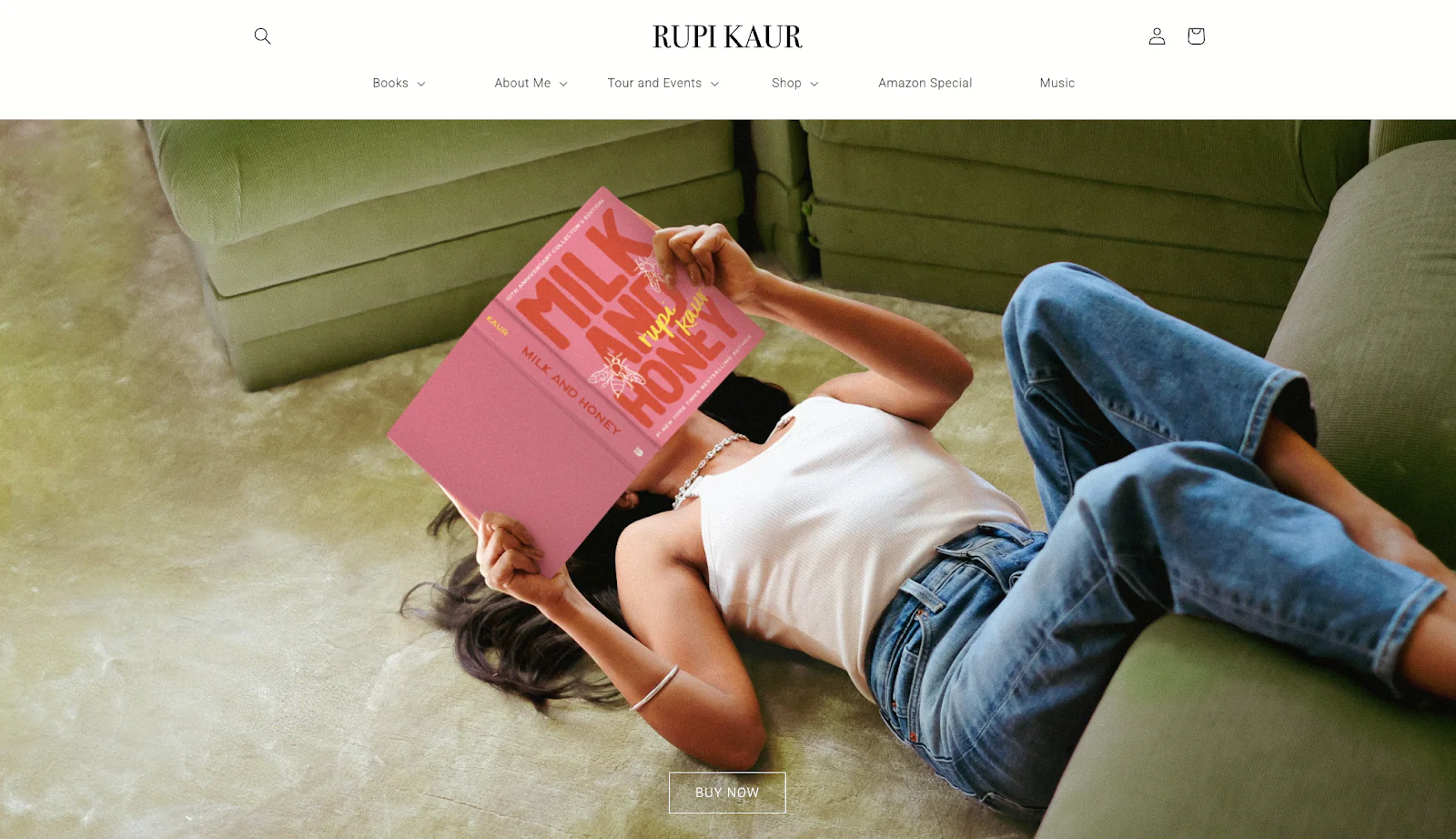
Poet Rupi Kaur rose to prominence through the early days of social media, cultivating a loyal audience throughout her self-publishing journey. She’s also known for flouting conventional publishing pathways in the name of independence.
Her website is designed to reflect that. The aesthetics are more in line with fashion imagery than what most readers might expect from a poet. Her online shop features everything from her books to merchandise and temporary tattoos featuring lines from her work. The featured hero image celebrates the 10th anniversary edition of her poetry and prose collection, milk and honey.
Colleen Hoover
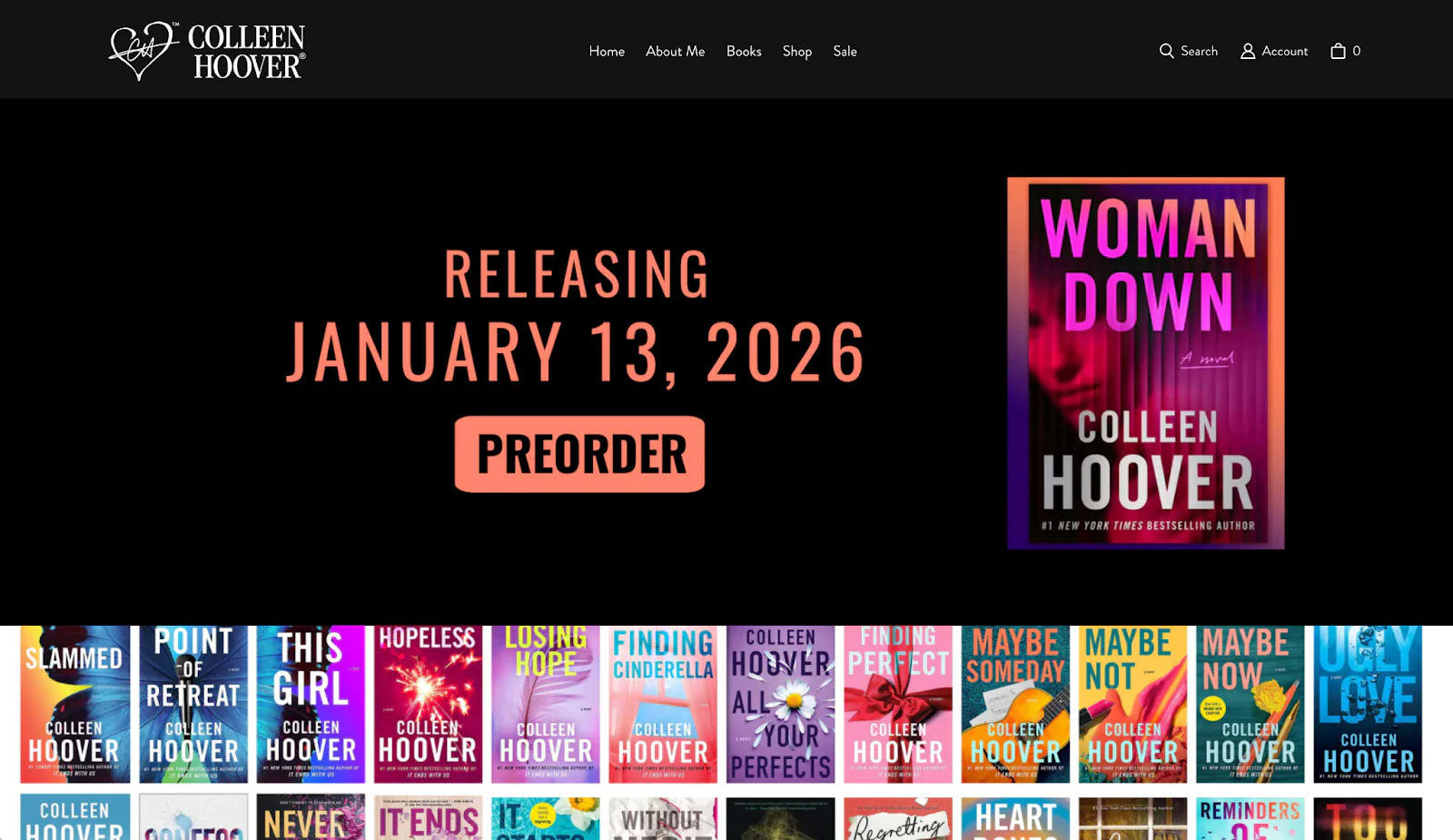
Romance novelist Colleen Hoover is known for her prolific bibliography, and her website puts that reputation front and center, instead of an author portrait. Notably, Hoover’s website autoplays media below the fold, prompting visitors to scroll and find a trailer for an upcoming film adaptation of one of her books. This interactive play serves to hold viewers on the page for longer, before moving them onto information about bestsellers and advice on which books to begin with.
Morgana Best
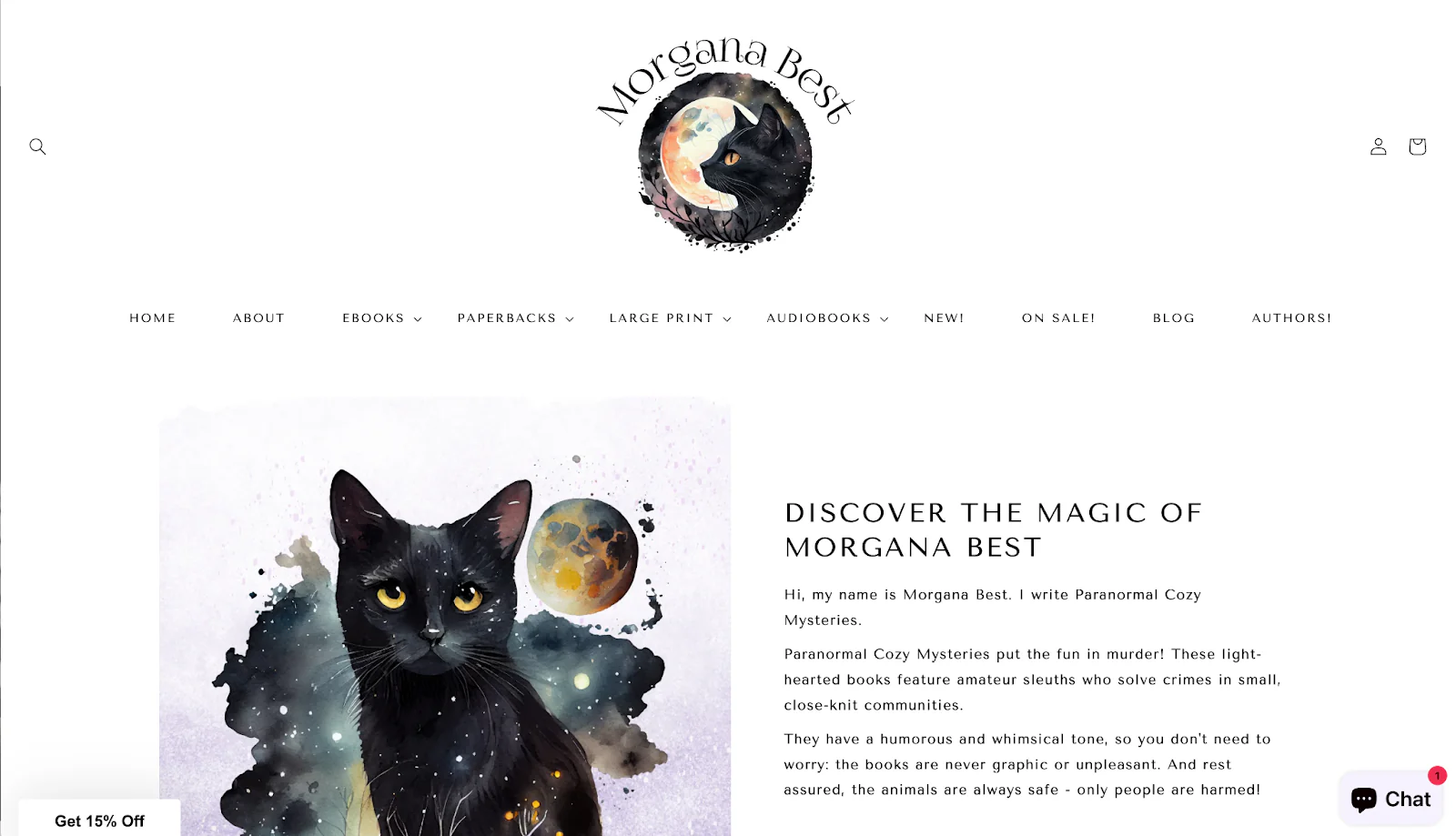
Self-described writer of “paranormal cozy mysteries,” Morgana Best also eschews an initial author portrait in favor of imagery that immediately communicates her genre. This allows site visitors to know in a matter of seconds if her work is for them.
The primary focus on Best’s site is the range of reading formats she offers, from ebook bundles to paperbacks and audiobooks. This is a sign that she knows what her readers prefer—and what is most likely to convert.
Julie Broad

Shane was the designer behind author (and founder of Book Launchers) Julie Broad’s website, which opens exactly the way he advises other authors to. Julie’s website features a professional portrait and copy that captures the core value behind Julie’s work (your book could change someone’s life, the way hers will likely change yours). It also has a bio supported with media mentions that underscores her credibility as an expert in the space. The page’s primary call-to-action—ordering her latest release—occupies the top banner spot, increasing the chances site visitors will see it and convert.
Tim Ferriss
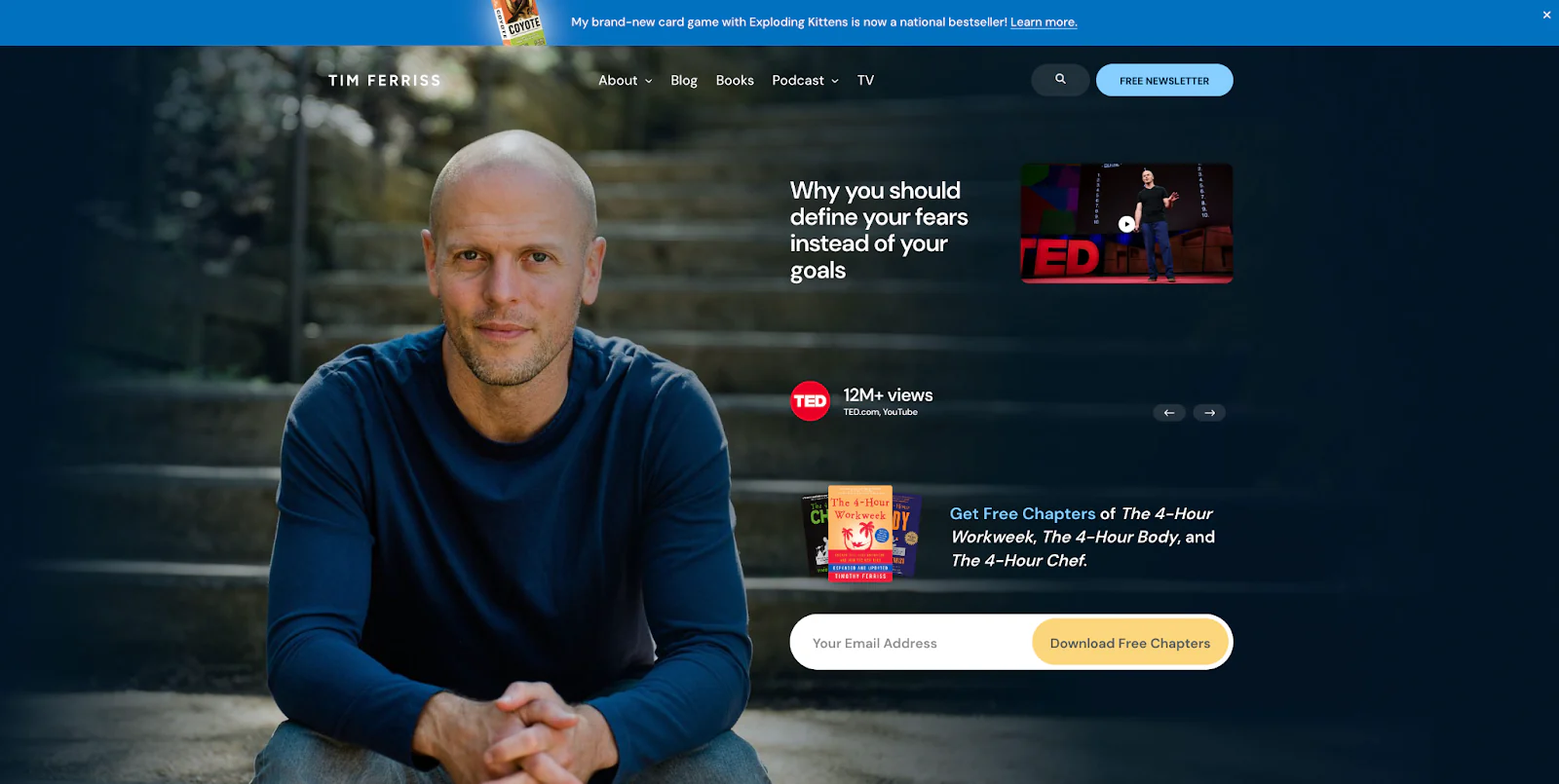
Podcast host and author Tim Ferriss’s website doubles as a portfolio, keynote speaker highlight reel, and podcast episode portal—with an announcement banner highlighting the release of his new card game. A carousel of media mentions or important clips appears above the fold beside the portrait, anchoring everything that site visitors will encounter to a single person.
The primary CTA here is also a lead magnet: free downloads of selected chapters from Ferriss’s bestselling works. There are many ways to engage throughout the site, allowing audiences to self-select into the aspects of the brand they’re most interested in, be it the newsletter and blog, the media content, or the books.
Author website design FAQ
How do I create an author’s website?
Depending on the complexity of your goals and comfort level with digital tools, you can design an author’s website by using any number of drag-and-drop website builders, like Shopify’s artificial intelligence (AI) store builder, to register a domain and create a modern, functional, high-performing website. You can also hire a freelancer who specializes in professional portfolios and author website design services to help you craft everything from the visitor experience to the copy.
What should an author’s website include?
An author’s website should include a short author biography, contact information, product pages dedicated to individual books that detail their selling points, and ways for customers to purchase them, either through third-party retailers or through your site directly. Additionally, you can add elements that highlight your brand goals. For example, if the goal is to book more speaking engagements, include video of recent talks or media appearances.
Is an author website worth it?
Yes, an author website can have significant payoffs. Maintaining your own site makes it easier for your ideal audience to find and engage with your work.