

Featured Partners
Starting Price
$17 per month
E-commerce (low-priced plan)
Yes

Starting Price
$29 per month
Active Deal
3 days free + First Month for $1
Standout Features
Drag & drop editor, AI Tools, Customize with 8k+ apps, Sell everywhere

Starting Price
$2.99 per month

Compare the Best Content Management Systems of 2025
BigCommerce
Best for Managing Multiple Storefronts
BigCommerce

Expert Take
Almost every small business owner I talk to about getting online is interested in e-commerce, so I think it’s important to include e-commerce CMS programs in our best list. BigCommerce’s interface isn’t as sleek as Shopify on the front end, but it makes up for it with flexibility, customization and the ability to manage multiple stores from one account for a discounted extra fee.
BigCommerce offers a ton of flexibility and scalability that lets e-commerce stores invest without worrying about hitting a roadblock later on as their needs increase.
With attractive entry-level pricing that includes a lot of features others charge extra for, such as POS integration, blogging and unlimited file storage and bandwidth, BigCommerce plans grow with your sales. However, that does mean that when you hit sales caps, you’ll have to upgrade plans even if you don’t need the extra features.
Learn more: Read our full BigCommerce review.
Pros & Cons
- POS integration starting with entry-level plan
- Unlimited file storage and bandwidth
- Blogging built-in
- Plans have sales caps
- Limited themes
- Slightly steeper learning curve
Specs
Testing Insights
 Reminiscent of WordPress.org’s page builder, BigCommerce has a minimal learning curve to set up a store.
I was impressed with how simple tasks like setting up conditional offers were with BigCommerce, and the learning curve is minimal for getting a shop set up. I especially appreciate the automatic payment testing feature that is preset to help new shop owners during shop creation.
The only quirky thing that may trip some up is that some theme features, such as carousels, are edited in a different section than the main design editor, similar to how some WordPress themes operate, instead of how you might expect a graphic-based editor to work.
WordPress.org
Best for Third-Party Tools
WordPress.org

Expert Take
WordPress.org powers around 40% of the web because it is an outstanding generalist that can work with almost all business types. However, that doesn’t mean it is right for everyone. I recommend WordPress very often (but with caveats) because small businesses can use it to DIY on a budget, and it has the potential to power the company through every growth stage.
For example, hosting is not included, and it requires more technical work than a website builder (which is a type of CMS itself), but the learning curve is quite manageable for most.
WordPress.org’s flexibility and easy integration with third-party tools through plugins is also its Achilles heel. Code bloat, dueling plugins that don’t play nice with each other, security holes and developer-abandoned tools are just some of the problems the reliance on external tools brings.
If you aren’t careful about what plugins you choose, it is very easy to slow your WordPress website to a crawl, introduce errors, give hackers a superhighway into your site, use all of your host memory and even break your site completely.
Learn more: Read our full WordPress.org review.
Pros & Cons
- Enormous ecosystem of third-party tools
- Strong community support and widely available tutorials
- Core system is free
- Controls vary by theme
- Extra costs for third-party plugins to expand capabilities
- Reliance on plugins can lead to lower performance
Specs
Testing Insights
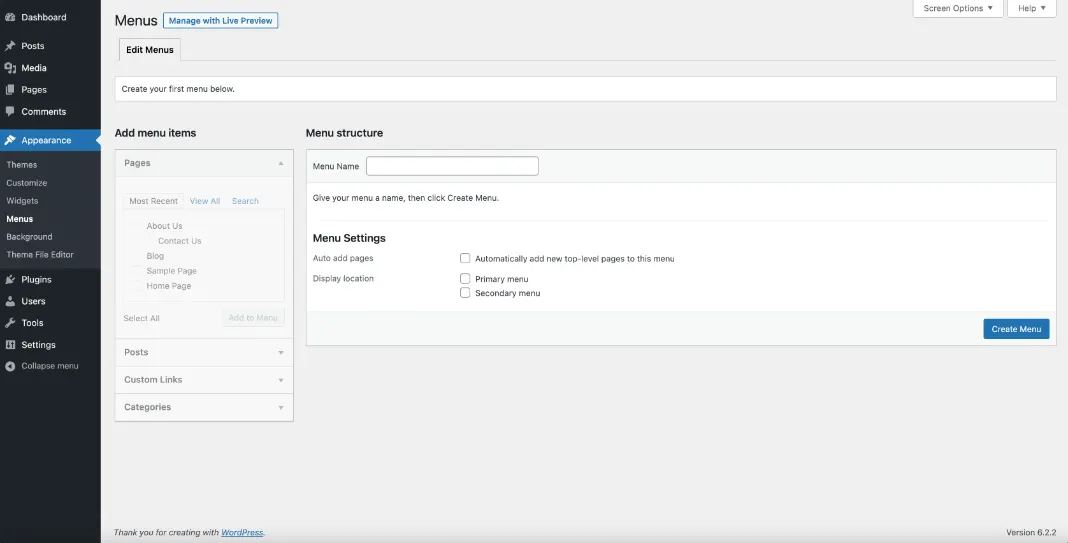 Some controls in WordPress can be theme-dependent on how they are customized.
I’ve used WordPress in building many websites and the biggest things that always strike me are how absolutely clunky the text editor is, how many back-and-forth menu jumps I have to make for some tasks and how almost nothing can be done without plugins.
A part of that is that much of how you work within a theme (that is, where you edit certain parts and some of the content management) is controlled by the theme developer and the tools they used in building the theme, so there isn’t any standardization.
While WordPress.org is a powerhouse, it is definitely not an open-and-run-with-it option. There is absolutely a learning curve that tends to get glossed over in many reviews—perhaps because it is so popular, people are afraid to point out the downsides.
HubSpot CMS
Best for Community Building
HubSpot CMS

Expert Take
HubSpot’s CMS is part of its larger ecosystem of business tools geared toward marketing and growing your audience, as such, it has some great features that other CMSs tend to lack. For example, I really love that it includes SEO recommendations, analytics and live chat built-in even on the introductory free plan.
Beyond the basics of creating and managing content, HubSpot CMS (part of the Content Hub module plan set) really shines in helping you build your audience and grow your business. That focus on business means a higher level of services in many cases, such as 99.95% uptime guarantee, being able to connect a custom domain even on the free plan and a business email inbox.
However, e-commerce is one arena where it falls a bit short, and many users wind up integrating outside e-commerce specialist platforms to make up that shortfall.
Overall, as part of a family of modules, it gives small businesses a way to add on services as they grow, rather than being stuck between choosing an affordable platform and a fully featured one. HubSpot is a great best-of-both-worlds option for many SMBs.
Pros & Cons
- Custom domain pointing available on free plan
- Large integrations library
- Strong marketing tools
- Lack of e-commerce tools
- Compatibility issues with some CSS coding
- Closed system
Specs
Testing Insights
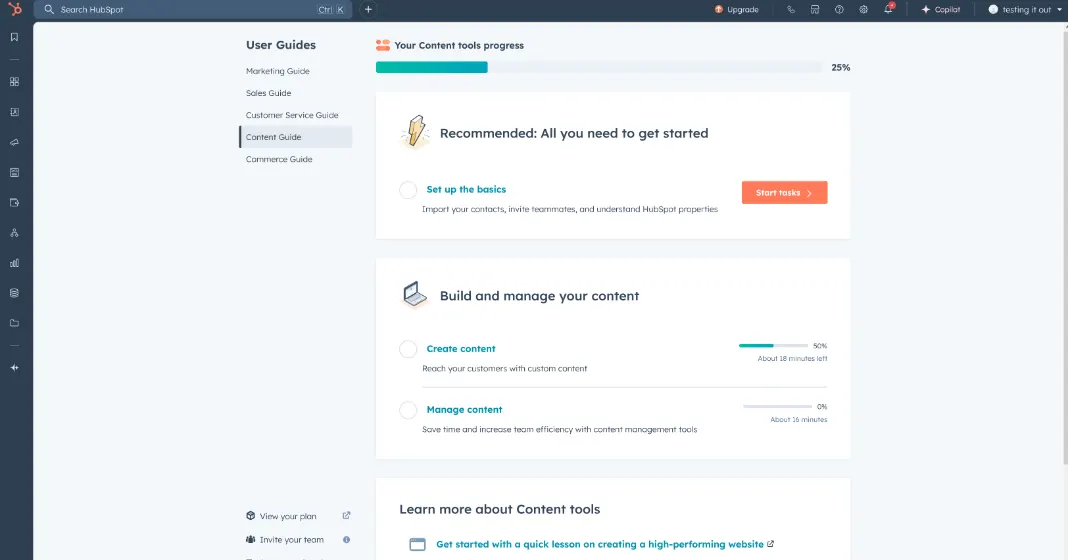 HubSpot includes a well-laid out content management dashboard suitable for beginners and experts.
Clarity is one of the best ways to describe working with HubSpot. I don’t spend a lot of time guessing where to go next anytime I start working with a new module. For the Content CMS, I especially like how easy it is to add HubSpot features to other channels such as live chat to social media channels or other platform websites.
Shopify
Best for E-Commerce Integrations
Shopify

Hosting Included?
Yes, except on Starter plan
Yes, except on Starter plan
Expert Take
Shopify focuses primarily on e-commerce, but it also includes supplemental content management for blogging. While it includes powerful e-commerce content management for just about any type of business imaginable, including creating your own print-on-demand and custom order marketplace, customizing the look of your shop can be restrictive.
The drag-and-drop visual editor is important for shop owners without technical teams, but most Shopify shop owners I know need to hire development help more and more frequently as their shops grow to handle even small customization situations.
That said, for smaller shops, the vast library of extensions provides functionality hard to find elsewhere and makes it possible to connect other e-commerce tools so small shop owners can compete against bigger stores.
Learn more: Read our full Shopify review.
Pros & Cons
- Robust integrations library
- $5 starter plan has very limited features
- Strong marketing automations
- Transaction fees for third-party payment processors
- Heavy dependence on integrations
- Limited non-e-commerce features
Specs
Testing Insights
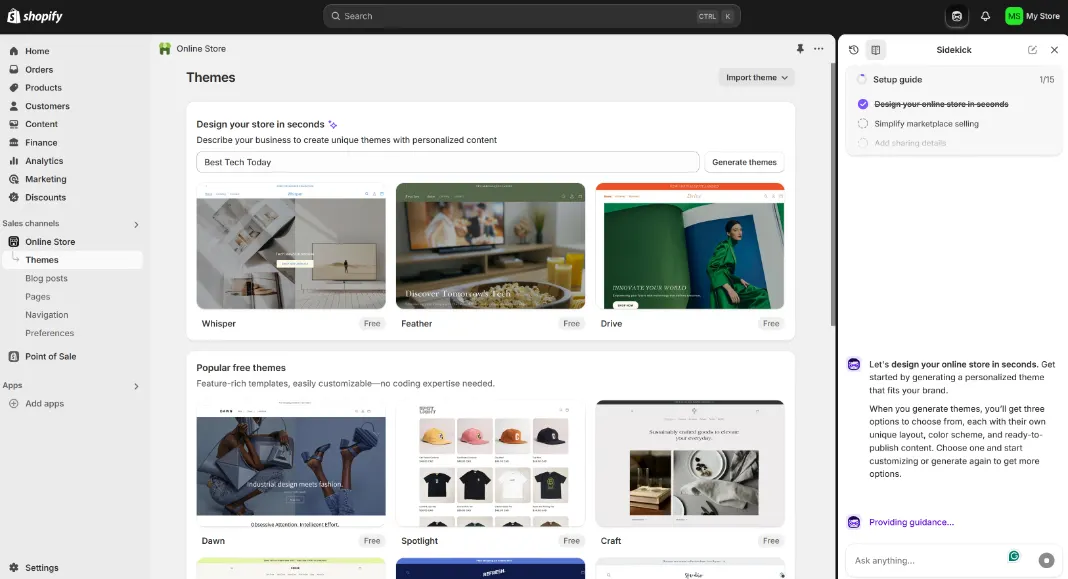 While Shopify’s setup process includes a helpful guide, the controls don’t always function properly or intuitively.
Testing Shopify always feels like a mixed bag. Setting up a basic product catalog and connecting a payment processor gateway is straightforward and to the point. However, anything that doesn’t quite fit the mold can be problematic to customize.
For example, one shop owner I’ve worked with allows others to create their own profiles and upload designs the shop will sell and print for them. That feature winds up with very restrictive file size limits that the shop’s other print-on-demand (POD) offerings for individuals aren’t limited by.
Squarespace
Best for Simple E-Commerce Stores
Squarespace

Starting Monthly Price
$25 plus transaction fees
$25 plus transaction fees
Expert Take
One of the website builder-style CMSs on my list, Squarespace focuses on e-commerce but has plenty of features for blogging and supporting website pages as well. Like most website builder-style CMS platforms, you don’t see many back-end controls; instead, it focuses on drag-and-drop editing on a “what you see is what you get” (WYSIWYG) graphic interface.
Designed to take the technical skill requirements out of e-commerce, Squarespace is accessible for anyone regardless of website or e-commerce experience. However, because it is a mostly free-form design environment, it’s easy to miss important supporting steps. For example, new online shop owners might miss the need for filling out SEO metadata, alt text for images and not optimize image sizes for web use.
Likewise, it isn’t portable. While you gain the freedom from installing software on a web host and dealing with cPanel, you lose the option to migrate to another web host, so cost over time could be a concern. Similarly, you may have problems with development if you need customization outside the included extensions and functions.
Learn more: Read our full Squarespace review.
Pros & Cons
- Transaction fees on some plans
- Limited customization
- No phone support
Specs
Testing Insights
 Squarespace controls generally simplify most tasks for beginners.
Every time I work in Squarespace, I wind up scratching my head over the lack of customization. I love how usable it is for those with no coding experience, but the limitations on adjusting layouts seem arbitrary when compared to other website builder CMS platforms such as Showit. However, I do like the ease of setup for the e-commerce features, which is Squarespace’s main focus.
Joomla!
Best for Agencies
Joomla!

Expert Take
Joomla is a powerful, scalable CMS, but it does require a good bit of tolerance for technical work, and the interface is not remotely as user-friendly as WordPress. If WordPress has ever made you feel overwhelmed, Joomla is not a good choice for you. However, if you are a small design agency and need something more flexible than WordPress.org, Joomla can be a great option.
I especially like the combination of better security and a robust user community, where most CMS platforms seem to fall into one or the other without being able to bring both sides together. There is a well-laid-out dashboard to handle back-end tasks, and built-in tools such as caching are robust. However, front-end design isn’t as fleshed out, so you’ll often find yourself resorting to manual coding or using extra tools to add design shortcuts until things are set up.
While I don’t recommend Joomla for a DIY solution, it is a powerful WordPress alternative for agencies working with clients that need in-depth customization and better security.
Learn more: Read our full Joomla! review.
Pros & Cons
- Dedicated security strike team
- Scalable
- Large community of third-party tools
- Steep learning curve
- Requires more coding than other systems
- Limits on backwards compatibility
Specs
Testing Insights
 Joomla’s dashboard is well laid out for some tasks but others require drilling down into less-organized menus.
Joomla is admittedly not my favorite CMS to work with. A big part of that is Joomla’s setup is very different from the workflow of CMS platforms I use more frequently, and swapping between logic sets can be time-consuming.
If someone is brand new to CMS, I would never recommend Joomla as the first system to try. That said, for developers and designers, Joomla documentation to help you through is top-notch, and once you get into the swing of it, the flexibility is absolutely worth the initial effort.
Ghost
Best for Blogging
Ghost

Expert Take
Ghost is more a digital publication CMS than a full website CMS. That said, it does digital publication and newsletters very well. While there are great, easy-to-use options to customize basic colors, fonts and styles, most site page customization is limited to how your header and footer look.
Where Ghost shines is blogging and newsletter publishing. The text editor is truly a work of art compared to “standard” editors from platforms such as WordPress, and formatting is quickly accessible without a cluttered interface.
Plus, built-in analytics, membership management and Stripe integration make it easy to manage paid content successfully. However, while you can technically self-host or load it on other hosting, most will probably use the paid plans, and costs can rise quickly because they’re based on your number of subscribers.
While that shouldn’t be an issue with paid content, if you are gathering subscribers with free content, costs could become an issue without that income to support the new higher rates.
Pros & Cons
- Fabulously full-featured text editor
- Powerful newsletter tools
- Built-in membership management
- Plan prices change based on number of members
- Page design is extremely limited
- Not well-suited for full websites
Specs
Testing Insights
 Ghost offers limited customization of your main page, but blogging content controls are well done.
Sleek and modern probably best sum up the interface for Ghost. In testing, I found the interface intuitive and uncluttered, so it was easy to find what I needed fairly quickly without having to resort to help files.
The writing editor is my favorite of any blogging tool I’ve seen recently, with what first looks like a giant blank page quickly becoming customized through formatting and special content blocks accessed from the + as you type.
TYPO3
Best for Multilingual Sites
TYPO3

Expert Take
There’s a lot of room to grow with TYPO3, and in some ways, it is easier than Joomla, but there is still a good bit of technical skill needed to get it set up. Documentation is fairly well done (although some content is in German), so it’s certainly a viable option if you are comfortable following the illustrated steps and don’t mind the extra time.
In particular, it handles multiple languages and user access controls for content quickly and simply from within the content you are publishing, so it’s a great low-cost option for small companies needing to quickly swap between languages. However, the content editor is absolutely bare-bones, and many may find it doesn’t offer enough formatting options without using HTML.
Plus, even though TYPO3 is an open-source CMS, its ecosystem is smaller, with fewer extensions and themes available, so you are likely to need developer help at some point to customize features and integrations with external tools.
Pros & Cons
- Built-in multilingual support
- Strong user access controls
- Great customization options for developers
- Steep learning curve
- Fewer themes and extensions available
- Lack of e-commerce support
Specs
Testing Insights
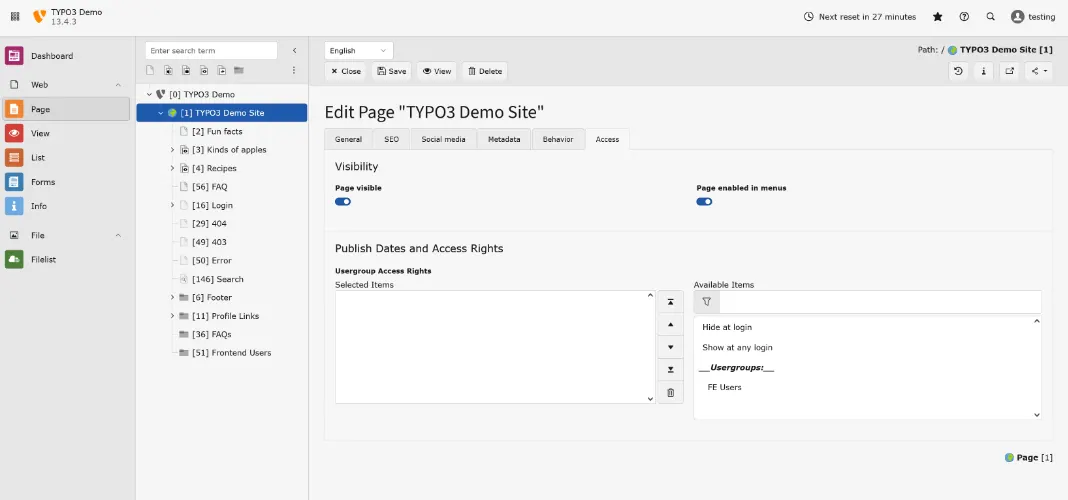 While initial setup for TYPO3 can be complex, user controls and other content-specific controls are well done.
When testing TYPO3, I was impressed with how well laid out the tutorials were, but I was less impressed with what felt like unnecessarily complicated steps to set up the shell and theme of the website.
Plus, the actual interface for entering content and designing a page felt cumbersome. While I liked the tab system to get to different tasks surrounding content, it felt disconnected from the design. Overall, I wouldn’t recommend it if you have any hesitancy around the technical side of web hosting.
Concrete CMS
Best for Security
Concrete CMS

Expert Take
Many open-source CMS platforms have a security problem. Concrete CMS takes a proactive approach to security and is ISO:27001 certified plus SOC 2 and HIPAA compliant right out of the box. So, if you are dealing with sensitive information, Concrete CMS absolutely bears serious consideration.
While the community and third-party tools available are much smaller than other popular CMS software, Concrete CMS includes many features that others rely on outside plugins for. The editor is drag-and-drop (although it is much more involved to edit than something like Wix), there are extensive analytics and error reporting built in, user permissions and security controls are easily adjusted and multilingual support is built in.
While powerful enough for large enterprises, it’s not out of reach for small businesses without tech teams. In spite of the sometimes spotty or out-of-date support docs, it’s more straightforward to get started with than many other CMS platforms, and hosting packages are available, so you can skip the often frustrating part of figuring out how to install a CMS on third-party hosts if you prefer.
That said, do bear in mind that the smaller ecosystem of extra tools may mean you need to hire development help later on for specific customizations.
Pros & Cons
- Powerful security and compliance
- Multilingual support
- Multisite management
- Spotty support documentation
- Add-ons can get pricey quick
- Fewer third-party resources available
Specs
Testing Insights
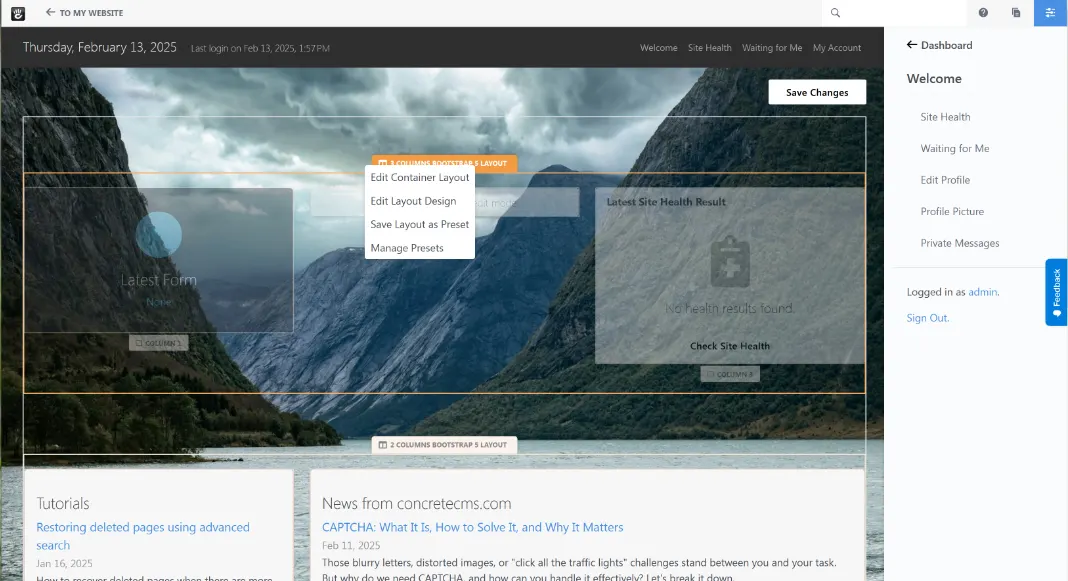 Concrete CMS takes considerable time to build out your website layout, but security is top-notch.
In testing, I really liked the step-by-step guided setup for parts of Concrete CMS, but at some points, things were less clear. For example, it tends to dump you onto a blank website page instead of taking you directly to the dashboard, and the page editor gives you content placeholders that you then have to fill with specific content types.
However, once the logic behind the system clicks with you, it becomes intuitive fairly quickly, even though your initial page design will be a slow process with significant time investment.
Methodology
Building a best-of list always starts with input from subject matter experts with industry expertise and then follows through with in-depth data collection and analysis from our dedicated data team. From there, finalists are tested for performance and accuracy before finalizing recommendations.
How To Choose the Best CMS
We’ve all heard it. Content is king. The king is dead. All hail the king. The popular pundits and SEO gurus scream a confusing litany of conflicting advice on how much content you need and what type of content you need for your SMB to survive. The only constant is that you need to create content and have a way to manage that content.
CMS is a big category, with platforms ranging from generalists, to e-commerce (BigCommerce), to blogging (Ghost), to marketing (HubSpot). Finding the best CMS for your company and building your small business website depends on your focus and needs. In some cases, you may find yourself beginning to build a tech stack by using multiple CMSs. For example, you might use Shopify to handle e-commerce but integrate HubSpot CMS for the marketing tools.
Essential CMS Features
Because content management systems cover such a wide variety of content types, features vary widely. However, there are some basic features that cross specialties to make content management easier.
- Powerful Intuitive Dashboard. The control center for managing the CMS. It should be simple to navigate.
- Themes and Customization. Themes and the ability to adjust the look and layout of those themes help make your website fit your branding.
- Asset Management. A storage area, optimization tools and access controls help organize and make the best use of graphics, videos and photos.
- Built-In Editor. Even if you prefer writing outside of a CMS, you need a way to format and arrange your text and other content to work within layouts.
- Content Staging. The ability to create pages, posts and products without immediately publishing them or overwriting existing content. This allows you to work on new designs or special pages for holidays without affecting your live content.
- Scheduling. Whether you are blogging, adding e-commerce products or just changing out seasonal imagery, being able to schedule when content is published is a core need for all content management systems.
- Backup Capability. Automatic backups are preferable, but some form of backup capacity, or backup plugin should be available in a CMS to protect your content for disaster recovery and protection against cybercrime such as ransomware.
- Migration. Migration means moving your website and/or content from one platform or host to another. While you often lose the design features of how a website looks in migrations, you should at least be able to migrate your actual content in some form.
Some outstanding CMS for features in their specialties include BigCommerce, HubSpot and WordPress.org once you factor in third-party tools.
Value
CMS price ranges start at $0 and grow upwards to enterprise levels, with many averaging about the cost of a fast-food lunch each month. That said, you will need to spend a little bit each year to keep a reasonable website online, including paying for a domain name and hosting, so be sure to include that in your budget. Also, remember that using the free first-year domain name from a host might not be as cost-effective as using a third-party domain registrar due to inflated renewal costs.
For most SMBs, value is all too often about trying to punch above your weight on a shoestring budget. However, your website is valuable and should be invested in. I’ve seen far too many new businesses fail after spending money they couldn’t afford to make a physical location look great and then put zero effort into their online presence so no one even knew they were there.
Choose a CMS based on a combination of features and pricing, not just what’s cheap. The time savings alone of a more fully featured CMS often make it a more affordable solution when you realize how much it costs you to take time away from running your business to struggle with a too-cheap piece of tech.
When looking for a CMS that brings value to the table, BigCommerce and HubSpot are standouts. WordPress.org also packs a lot of value, but the extra hosting costs plus reliance on third-party tools can mean unexpected investments that lower value over time.
Ease of Use
I look at products through the lens of SMBs, and a whopping 49% of SMBs are one-person shows. That means ease of use is a limiting factor. Some of the big names out there offer amazing products, such as Drupal and Adobe Commerce (formerly Magento), but they generally just aren’t feasible for a single person to manage without a tech team.
Of course, if your business is tech-heavy, such as design and development, then your threshold for tech requirements skews higher.
For low-tech requirement ease of use, Ghost tops the list. If you are more technically experienced, Concrete CMS and Joomla are great options.
Security
Cybersecurity needs will never decrease. Cybercrime continues to climb, and SMBs are becoming more frequent targets for everything from DDoS attacks to business email compromises to ransomware. Picking a CMS with built-in security features makes your life a bit easier. While your web host should include server-side security, you still need site-side security tools.
For more complete security, look for features such as global password resets, password strength settings, automated logouts, content approval routines, email verification pair and security reporting such as login history and audit trails.
Concrete CMS is a standout in CMS security, with many security features and certifications such as HIPAA compliance.
Content Management
That’s what it’s all about, right? Content creation, editing, formatting, scheduling, publishing and ongoing management of that content is the core functionality of a CMS. There are big differences in the depth of these tools, such as multilingual content support and whether you can easily publish content to different platforms in custom formats.
The goal isn’t to have all the toys, though; it’s to pick the content management tools that match your needs. For example, if you are the only person working on content, collaboration tools to manage a team’s access won’t be of much use to you, but the ability to publish to social media and your website from one dashboard would be a big help.
HubSpot’s focus on marketing creates a great connected ecosystem with strong content management tools across platforms.
Integration
Don’t let the sales literature fool you; no CMS is an island. In fact, if you look at the tech stacks for bigger companies, you’ll see familiar names like WordPress.org and Blogger, but you’ll rarely see them alone. As companies grow, they often add on other software to handle specific needs. For example, Starbucks is powered by Drupal and WordPress.org but also uses Salesforce and SharePoint.
For SMBs, that point when you have to add extra software platforms can be delayed by choosing a CMS with plenty of integrations for tasks such as analytics, SEO, team access and controls, security features and third-party tool integrations.
For example, WordPress.org offers plugins to integrate thousands of third-party tools, and HubSpot includes some CRM tools from other modules as part of the Content Hub packages.
Analytics
Guessing about your content performance is the same as asking a Magic 8 Ball about your business’s future. While reports and analytics never tell you the full story, the more information you can gather, the clearer the picture is.
Traffic levels for your whole site and individual posts, bounce rates, viewer location, viewer device type and even eye maps to show where people look on a website page help you measure what content resonates with your audience and where it falls short.
HubSpot excels in reports with custom report generation throughout the sales funnel, and Shopify offers strong e-commerce reports, even tracking fraudulent order concerns.
Featured Partners
Starting Price
$17 per month
E-commerce (low-priced plan)
Yes
Starting Price
$29 per month
Active Deal
3 days free + First Month for $1
Standout Features
Drag & drop editor, AI Tools, Customize with 8k+ apps, Sell everywhere
Starting Price
$2.99 per month
Which CMS Is Best for Your Business?
Choosing the best CMS for your business starts with knowing what you want to accomplish with your content and what types of content you need to manage. For example, e-commerce content management has very different needs than blogging content management. Likewise, content teams have different needs than single-person content management.
CMS use case examples:
- E-commerce with multiple product lines. If you are using multiple storefronts to better target diverse audiences, BigCommerce makes it much more affordable with the ability to add extra storefronts to a single plan at discounted rates.
- Focusing on marking efforts to support an existing website. HubSpot is hard to beat when it comes to the marketing side of CMS, and the ability to add extra modules as needed lets your tools grow as your needs and budget grow.
- Creator building a monetized blog. Ghost’s robust membership tools and sleek interface let you focus on creating content instead of fighting with plugins to get the functionality you need.
- Just getting started online and you aren’t sure what you need. Look at WordPress.org due to its vast third-party tool library and relatively low technical knowledge needs.
- Web design agency. WordPress.org gets all the glory, but Joomla or Concrete CMS offer more flexibility and control over time.
- Medical office. If you work with sensitive information, Concrete CMS is the hands-down best-qualified CMS for security right out of the box.
Frequently Asked Questions (FAQs)
A CMS (content management system) is a piece of software designed to help you work with online content. Generally, it includes a page builder of some sort, the ability to use design templates, an asset storage system, a content editor, scheduling features and user controls. CMS platforms can be a generalist or specialize in specific types of content such as blogging or e-commerce.
What content does a CMS manage?
CMS platforms work with many kinds of content and some platforms specialize in specific types. Common content types include text, website pages, media assets such as photo and video, contact lists, e-commerce product listings, newsletters, blogs and database information such as patient data.
How can I see what CMS another website is using?
There are a few free services where you can usually find out what CMS another website is using, such as What CMS and BuiltWith, that help you see what’s powering your competitors. However, bear in mind that when you are looking behind the curtain of enterprise-level companies, you’ll likely see a large tech stack that might involve three or four different CMS platforms powering different aspects of the website.

![The Best Website Builder In Australia [5 Builders Tested & Ranked]](https://www.dotdesh.com/wp-content/uploads/2025/12/best-website-builder-australia-512x384.jpeg)