


At its peak, Cyber Monday 2025 generated $16 million in ecommerce sales every minute, on average, from 8 p.m. to 10 p.m. EST, data from Adobe Analytics shows.
In total, consumers spent $14.25 billion in ecommerce sales on Cyber Monday 2025, according to Adobe. That continued a trend in which each year since 2022, Cyber Monday has set records for the most ecommerce sales in a single day. Its online sales outperformed Black Friday ecommerce sales by $2.45 billion.
And compared to Cyber Monday 2024, 2025’s online sales increased 7.1%. That exceeded Adobe’s initial projection of 6.3% growth, which would have resulted in $14.2 billion in sales.
“U.S. retailers leaned heavily on discounts this holiday season to drive online demand,” said Vivek Pandya, lead analyst at Adobe Digital Insights.
Globally, consumers spent $53 billion in online sales during Cyber Monday, according to data from ecommerce platform provider Salesforce. Its data indicates that result constitutes 7% year-over-year growth worldwide.
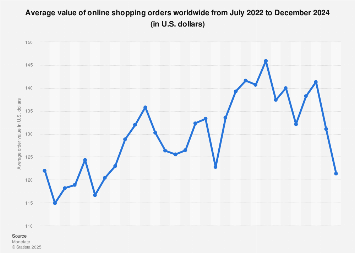
Salesforce also found that products’ average selling price increased 6% year over year, both in the U.S. and globally, on Cyber Monday.
Adobe Analytics data is based on more than 1 trillion visits to U.S. retail sites, 100 million SKUs and 18 product categories, according to the company. 215 online retailers in the Top 2000 use Adobe Analytics for their web analytics, and more than 130 use it as an ecommerce platform.
Salesforce draws on global shopping data from billions of consumers through its Agentforce Commerce, Marketing and Service platform. In North America, 78 of the Top 2000 online retailers use Salesforce as their ecommerce platform.
Online vs. in-store shopping on Cyber Monday
The National Retail Federation data indicates that Cyber Monday came second to Black Friday in terms of the number of consumers shopping online. It found that 75.9 million U.S. consumers shopped online on Cyber Monday 2025 (up from 64.4 million in 2024).
On Black Friday, though, 85.7 million consumers shopped online. That’s down from 87.3 million on Black Friday 2024.
Furthermore, the NRF found that Cyber Monday’s online shoppers increasingly browsed through their mobile devices. 46.9 million consumers shopped online through their mobile devices on Cyber Monday, up from 40.4 million in 2024.
The NRF and Prosper Insights & Analytics conducted a survey of 3,099 consumers between Nov. 26 and Nov. 30.
NRF president and CEO Matthew Shay said consumers during the Cyber 5 in 2025 are focused on value and respond to compelling promotions. The Cyber 5 refers to the five-day period from Thanksgiving through Cyber Monday.
“Consumers continue to take advantage of the extended holiday shopping weekend with online deals on Cyber Monday,” said Phil Rist, executive vice president of strategy at Proper. “While mobile devices now lead as the most popular way to shop online for Cyber Monday, laptops also remain popular.”
Rist added that seasonal gift-buying remains a driving force.
“Whether it’s new clothes or shoes, the season’s top toy, a new video game or a classic novel, shoppers are looking for that perfect gift for loved ones,” he assessed. “They will continue to shop across the devices and destinations that best fit their needs throughout the busy holiday season.”
Cyber Monday ecommerce sales trends in 2025
Consumers’ usage of buy now, pay later (BNPL) and artificial intelligence (AI) tools continued to increase year over year.
Cyber Monday 2025 marked the first time in ecommerce sales history that consumers used BNPL options for more than $1 billion’s worth of purchases in a single day, Adobe found.
U.S. consumers spent $1.03 billion using BNPL, which is 4.2% growth over Cyber Monday 2024. And 79.4% of those BNPL transactions occurred on mobile devices. A November survey Adobe conducted with more than 1,000 consumers indicated respondents were most likely to use BNPL for electronics, apparel, toys and furniture purchases.
Generative AI-powered platforms “are making their mark on the holiday season,” according to Adobe. On Cyber Monday, traffic from generative AI platforms to U.S. retail sites increased by 670% year over year. And from Nov. 1 through Cyber Monday — which landed on Dec. 1 in 2025 — traffic from such platforms has increased 760% year over year.
“While the base of users remains modest, the uptick shows the value AI can deliver as a shopping assistant,” according to Adobe.
It noted that consumers used generative AI platforms most when shopping for video games, appliances, electronics, toys and personal care products.
Meanwhile, Salesforce data shows generative AI and agents influenced $9.3 billion in global online sales on Cyber Monday. In the U.S., that figure was $2 billion, according to Salesforce. It also found that the share of both global and U.S. traffic from third-party AI agents (which include platforms such as ChatGPT and Perplexity) tripled compared to the same time in 2024.
Additionally, global agentic customer service conversations on Cyber Monday increased 67% versus the prior week.
How mobile commerce and social media played into Cyber Monday 2025
U.S. consumers spent $8.2 billion through their mobile devices on Cyber Monday, Adobe data shows. That’s 8% year-over-year growth and accounted for 57.5% of all digital sales on Cyber Monday.
It’s also nearly as much — in one day — as consumers spent using BNPL on their mobile devices in a month. From Nov. 1 through Dec. 1, U.S. consumers spent $8.3 billion in BNPL mobile transactions.
In 2020, mobile devices’ share of Cyber Monday ecommerce sales was 41.4%. On Thanksgiving this year, mobile’s share of ecommerce sales crossed the 60% mark for the first time, according to Adobe.
“This is driving more impulse shopping and boosting holiday season growth as a result,” Adobe said.
Adobe called social media “the standout this season” when it comes to marketing channels driving conversion. Its share of revenue on Cyber Monday 2025 reached 3.6%. That marked 54.5% growth over 2024, when social media’s share of revenue was 2.3% (after having grown 4.5% over 2023).
Within that sphere, revenue share from affiliates and partners — which includes social media influencers — was 21.8%. That was 7.4% more than it was in 2024, when it reflected a 20.3% share of revenue (up 6.8% over 2023).
“While major channels such as paid search and email continue to be reliable drivers of traffic and sales online, consumers are increasingly turning to social media to discover and learn about new products,” Adobe said.
Salesforce data found that social media platforms drove 14% of all global traffic to retailers’ websites. In the U.S., that was 15%. And in both cases, that’s a 12% year-over-year increase.
Click here to read last year’s update on Cyber Monday ecommerce sales.
Do you rank in our databases?
Submit your data and we’ll see where you fit in our next ranking update.
Sign up
Stay on top of the latest developments in the online retail industry. Sign up for a complimentary subscription to Digital Commerce 360 Retail News. Follow us on LinkedIn, X (formerly Twitter), Facebook and YouTube. Be the first to know when Digital Commerce 360 publishes news content.