
E-commerce is constantly evolving to keep pace with consumers’ on-demand expectations. From groceries and gourmet meals to fashion and electronics, over the last few years, e-commerce deliveries have caused a sharp increase in urban logistic services.
In 2023, 82 per cent of Australian households made an online purchase and online spending increased to $63.8 billion from $17.3 billion in 20151.
For many retailers, the logistics supply chain makes up a large proportion of their carbon footprint. The demand for fast delivery and free returns makes it harder for retailers to decarbonise and meet their net zero targets. And the rise of ‘returns culture’ adds extra pressure on urban logistics. Approximately 30% of all online purchases are returned, with 30 per cent of these not able to be resold2. Emitting millions of tonnes of CO2, impacting retailers’ margins and sending 2.5 million tonnes of waste to landfill each year3.
However, consumers are becoming more conscious of the impact of their purchasing decisions. This behavioural awareness is reflected in the growth of the electric vehicle market, increasing demand for recycled and second-hand products and a tendency towards buying locally.
This scenario poses an important question: do retailers continue to prioritise on-demand deliveries, or can they influence consumers to make sustainable choices?
Can retailers decarbonise logistics?
Retailers have an essential role to play in decarbonising urban logistics. By changing and decarbonising their operational model, retailers can reconfigure supply chains to support sustainable outcomes. To decarbonise urban logistics, retailers can use the following hierarchy of measures4, ranging from most to least effective.
Managing consumption: Influencing consumer purchasing patterns to be less immediate and more carbon conscious can reshape the logistics task and improve planning for other emissions-reducing measures. Retailers should also consider the impact of gift-with-purchase deliveries. Gifts incentivise purchases and add more goods movements from centralised locations, further increasing the carbon cost.
Consolidation: By pooling inventory, retailers can consolidate the point of sale and share assets and inventory between retailers. They can also increase vehicle loads and share carbon emissions between deliveries.
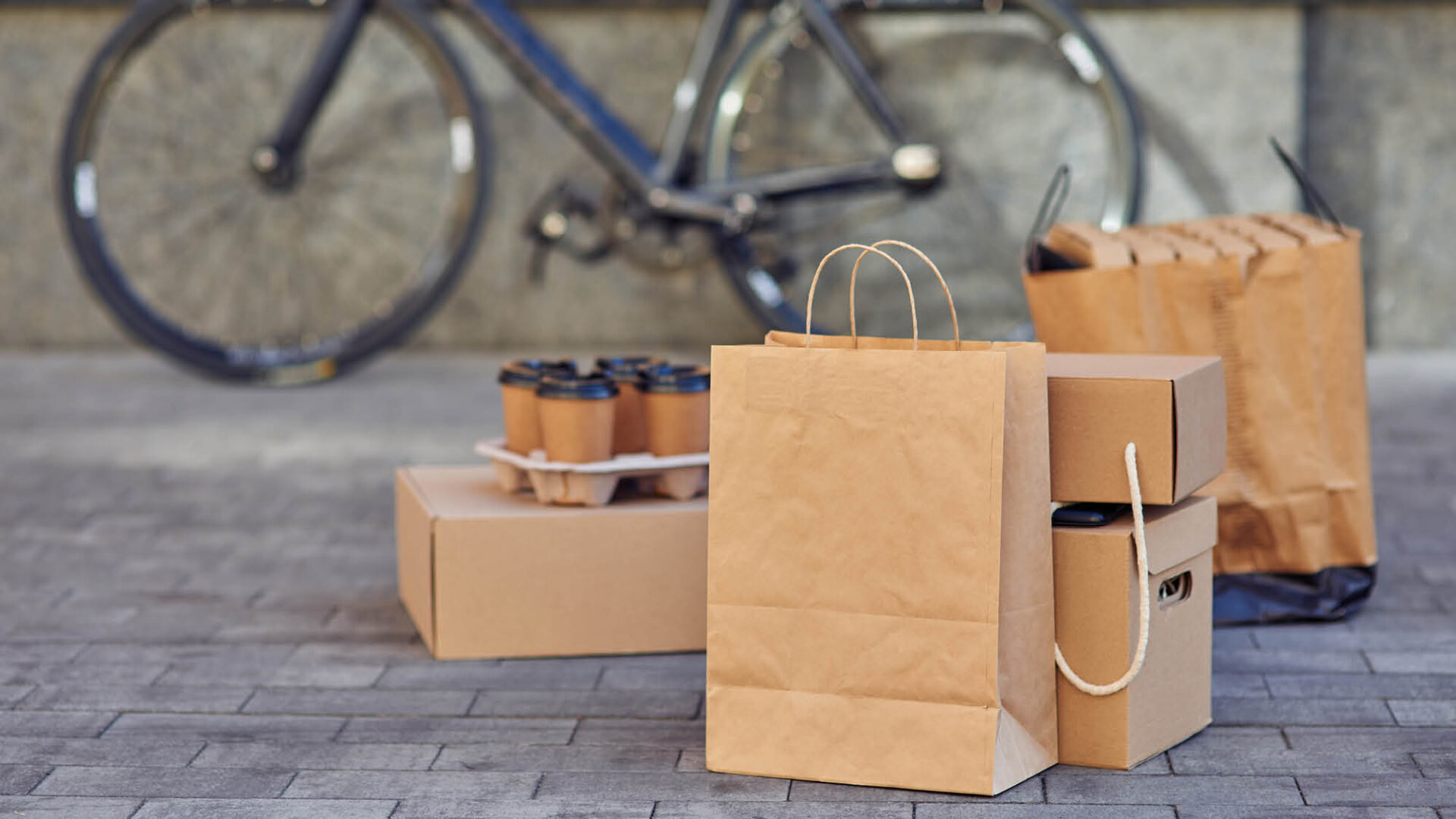
Mode shift: For many last-mile deliveries, from the retailer to the consumer’s doorstep, e-bikes or other micro mobility devices are a viable option. These also use less road space, can deliver faster and do not impact air quality.
Low-carbon fuels: Transitioning fleets to greener fuels, i.e., battery technology for smaller vehicles or liquid-based fuels such as biodiesel or hydrogen.
Routeing optimisation: Data can be analysed to avoid congestion, re-time deliveries, and upskill drivers to operate more fuel efficiently.