
Artificial intelligence (AI) is transforming the manufacturing industry by enhancing efficiency, precision and adaptability in various production processes, particularly within the context of Industry 4.0.
Applying AI technologies, such as machine learning, computer vision and natural language processing (NLP), improves various aspects of production processes. AI can analyze large volumes of data from sensors, equipment and production lines to optimize efficiency, improve quality and reduce downtime. By using algorithms to identify patterns in data, AI can anticipate potential issues, suggest improvements and even autonomously adapt processes in real-time.
One of AI’s most impactful applications is in predictive maintenance. AI systems analyze data from sensors on machinery to forecast failures before they occur, reducing unexpected downtimes and maintenance costs. AI also powers advanced quality control through computer vision systems, which scan products in real time to identify defects.
Generative AI (gen AI) creates new content like text, images and code by learning patterns from data and previous prompts. In industry, it has a variety of uses for product searches, document summarization, customer service, call processing and more. Designing and prototyping applications helps engineers explore new design options quickly and adapt to changing production needs. In supply chain management, gen AI is used for content generation, scenario modeling and advanced automation that enhance flexibility and communication within the supply chain.
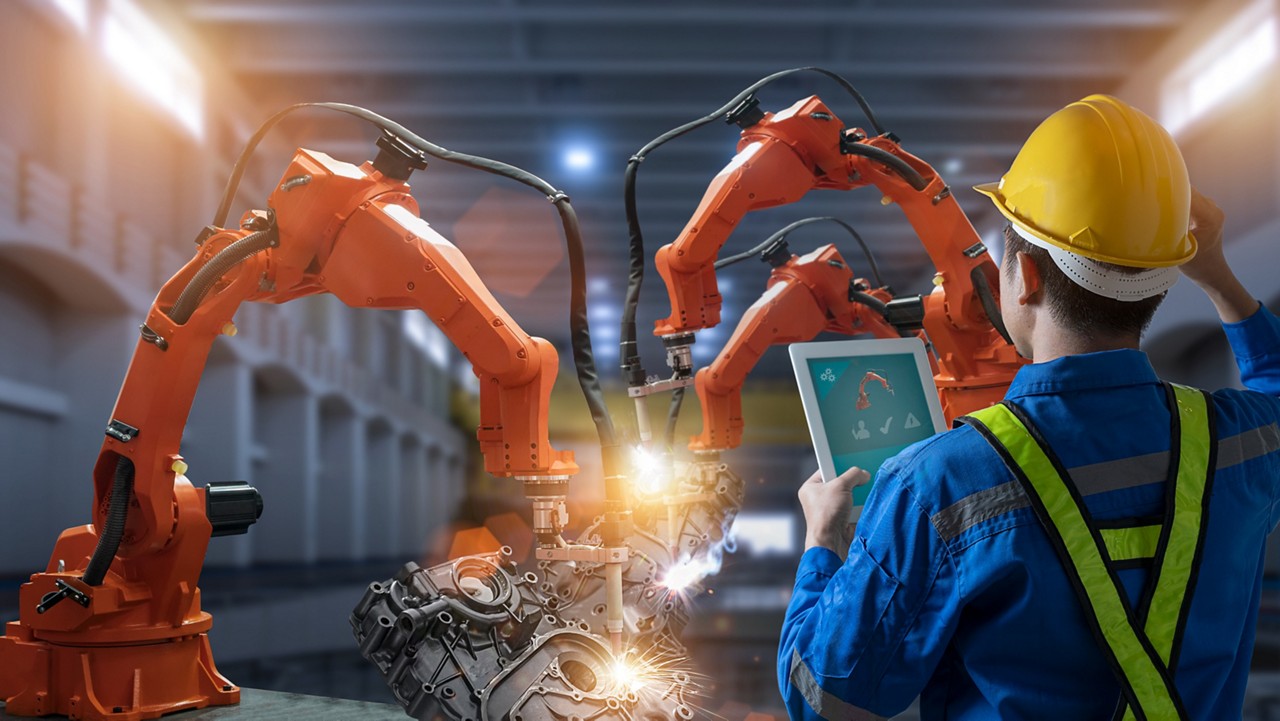
AI in manufacturing extends beyond automation to support real-time decision-making. This role is part of what is often called “smart factories” or “smart manufacturing,” both synonymous with Industry 4.0. This advanced approach to production uses a combination of connected technologies, real-time data analytics and AI to create flexible, efficient and highly automated manufacturing systems. AI monitors ongoing production processes and adjusts without prompting, which maximizes productivity and reduces waste. These systems revolutionize the way companies manufacture, improve and distribute their products.
AI is also at the heart of the growing trend of human-robot collaboration. Traditional industrial robots often require close supervision and controlled environments, but the new generation of AI-powered collaborative robots, or cobots, can work safely alongside humans. Cobots take on repetitive or strenuous tasks while employees focus on more complex and creative work.
Together, these AI applications propel manufacturing toward smarter, more adaptive and sustainable practices. Such benefits make the power of AI a valuable asset in modern manufacturing.