


Online retail is being rewritten in real time: shoppers now arrive with longer questions, sharper expectations, and far less patience for vague claims. The most visible change is that many people see an answer before they see a list of blue links. That answer is often assembled by AI systems that pull together product facts, policies, pricing context, and “what it’s like to use” details, then cite sources that look consistent and verifiable. In practice, this means search engine optimization is no longer just about ranking a page—it’s about becoming a reliable source that AI can quote without hesitation.
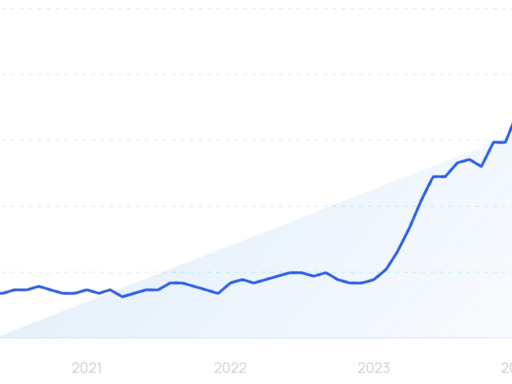
For ecommerce teams, the opportunity is enormous because the mechanics of discovery are shifting at the same time as measurement is improving. By mid-2025, generative-AI referrals to U.S. retail websites had surged by roughly 4,700% year over year, and the curve has continued upward as shopping assistants become default behaviors on phones and browsers. When major sales moments hit, the amplification is even clearer: during Prime Day 2025, AI-driven referrals reportedly jumped over 3,000% year over year while U.S. online sales for the two-day event approached $12 billion (Adobe Analytics). The winners aren’t “doing magic.” They’re building structure, proof, and a disciplined content engine that ties digital marketing, data analytics, and operations into one coherent growth loop.
Retail SEO and AI-driven discovery: how online retail growth is being decided
The practical reality for online retail this year is that shoppers often stay inside a single conversational thread while researching products. They ask for options, refine constraints, request comparisons, then jump to purchase-ready details like shipping cutoffs and return windows. This blended flow—chat, links, and visuals in one experience—pushes brands to optimize for customer experience as much as for keywords.
Consider a fictional mid-market store, “Northline Outfitters,” that sells hiking footwear. A shopper might ask: “Best waterproof hiking boots under $180 for wide feet, for muddy trails, and I need them delivered by Friday.” An AI assistant doesn’t just match a phrase; it assembles a shortlist using structured product attributes (width, waterproofing, outsole type), merchant policies (shipping speed, cutoff times), and proof signals (review summaries, care instructions, return terms). The store that provides clean, consistent facts becomes easy to cite. The store that hides essentials in PDFs or buries them behind accordions without clarity often gets skipped.
This is why SEO now overlaps with “answer engineering.” You’re not only optimizing for crawling and ranking; you’re optimizing for extraction, summarization, and confident attribution. Retailers who embrace this shift are seeing new growth channels open up as AI assistants become a meaningful source of qualified traffic—often late-funnel, because the questions are detailed and purchase-oriented.
What changed in retail search behavior and why it matters
Two shifts show up again and again in analytics and user testing. First, the query itself is longer and more contextual: shoppers compare multiple products “in one go,” asking for tradeoffs rather than browsing category pages. Second, search results increasingly surface rich product information directly: price, availability, shipping estimates, return eligibility, and even “best for” use cases.
If your catalog data is messy—mismatched colors, inconsistent sizing labels, conflicting prices between feed and page—AI systems treat you as risky. If your content is generic—“premium quality,” “ultimate comfort”—you sound interchangeable. In an environment where a summary might cite only two or three sources, being “average” is functionally invisible.
For a grounded view of how shopping behavior is being shaped by AI across seasonal demand, it’s useful to track reporting like AI-driven shifts in U.S. holiday spending, because it highlights how discovery and conversion patterns move together when assistants influence purchase decisions.
A practical measurement mindset for growth
When AI referrals rise quickly, teams sometimes misread the signal, over-crediting a single change (a new blog series, a new tool) rather than the system. Northline’s best quarter came only after three things aligned: product attributes were normalized, policies were made explicit in plain language, and content was written to resolve doubts. The insight is simple: growth comes from reducing friction at every step AI uses to evaluate you.
The next section turns that insight into concrete catalog and markup work—where the highest-leverage fixes usually live.
Structured product data and technical SEO foundations that AI can trust
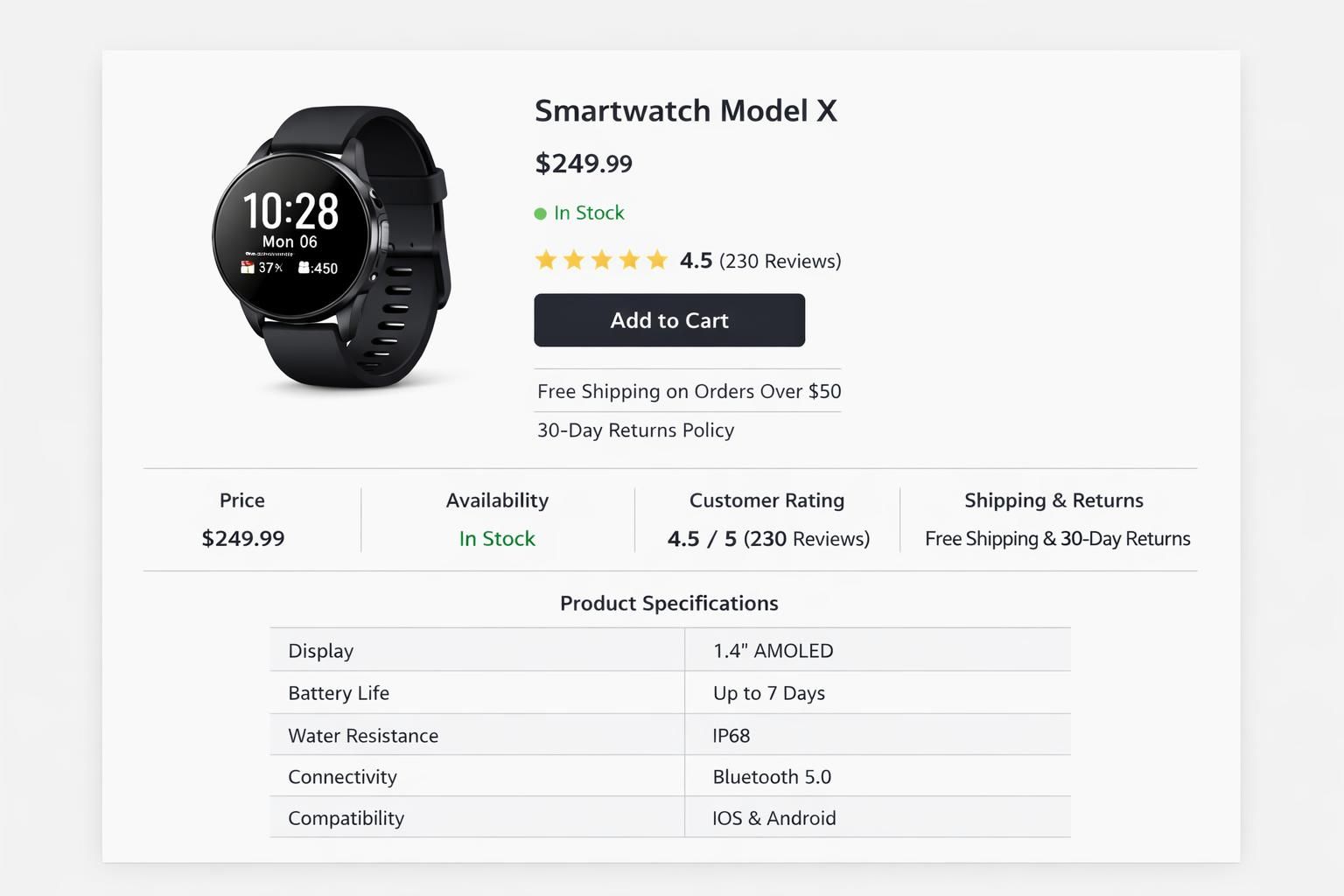
In 2026-era ecommerce, structured data is less about chasing “rich results” as a vanity goal and more about establishing a single, dependable truth. AI systems synthesize information across your Merchant Center feed, your product page HTML, and your structured data. If those sources conflict, the safest move for the system is to cite someone else.
Northline Outfitters learned this the hard way when a “forest green” boot appeared as “olive” in the feed, “green” on the page title, and “dark moss” in reviews. Humans shrugged; AI treated it as ambiguity. Once Northline standardized color naming across feed and on-page copy, referrals improved because product matching became less error-prone. The takeaway is operational: treat feed + page + markup as one source of truth, not as separate projects owned by different teams.
Core markup for SKU pages that supports search engine optimization
Every SKU page should expose key facts in both human-readable text and structured formats. The baseline is product structured data (including price, availability, ratings where applicable, and important attributes). Beyond the basics, policies and identifiers often determine whether your product is usable in an AI-generated answer.
Northline implemented three “non-negotiables”:
- Consistent identifiers across systems (GTIN when available, stable SKU IDs, matching titles and color values).
- One canonical URL per product to avoid splitting signals across filtered or duplicated paths.
- A specification table with units (weight, materials, heel drop, insulation grams), because tidy facts are easy to quote and compare.
Each item looks simple, but together they remove the most common reasons AI summaries “hesitate” to cite a store.
Policy clarity as a ranking and citation factor
Returns and shipping are no longer afterthoughts. AI-led search increasingly surfaces these details directly in the result experience, because they reduce doubt. If your return window is unclear, or exceptions are buried in a separate policy hub, the system struggles to provide a clean answer—so it may cite a competitor with simpler terms.
Northline moved returns and shipping blocks onto every product page, using consistent language: return window, restocking fees (if any), conditions (unworn, tags attached), and where the policy applies (domestic vs. international). That content didn’t just lower support tickets; it improved how often product pages appeared in shopping-focused results where policies are visible.
Technical hygiene that “feeds” AI systems
Even excellent content can underperform if the site is hard to crawl or slow. The boring checklist still wins: compress images, use caching, keep category depth shallow, and publish fresh XML sitemaps for products and images. Avoid hidden duplicate blocks that repeat the same facts; duplication can create extraction noise.
This is also where teams should think about content quality signals and trust. If you’re scaling content with automation, it’s worth understanding how platforms are detecting low-value pages; a useful reference point is how AI-generated spam is being identified in content ecosystems, because it underscores why clarity and verifiable details matter more than volume.
With the technical foundation in place, the next lever is the on-page experience: content formats that both humans and AI can use immediately.
Content formats that AI can quote and shoppers can act on
Many retailers still treat content as decoration around a product grid. In AI-mediated discovery, content is more like a set of “answers” that must stand on their own. The most effective ecommerce pages are built to resolve doubt quickly: what it is, who it’s for, what tradeoffs exist, and what happens after checkout. That’s search engine optimization meeting customer experience in a single artifact.
Northline’s content team stopped writing “brand poetry” and started writing “decision support.” They used short sentences, clear headers, and fact-first language. Instead of “Engineered for ultimate adventures,” they wrote: “Waterproof membrane tested in sustained rain; dries overnight with newspaper stuffing; best for muddy trails, not for desert heat.” That is the kind of plain talk an AI assistant can quote without rewriting.
Patterns that perform in AI-led search
Four formats repeatedly create lift because they map to how people ask questions:
- Problem → fix: state a common issue (heel slip, blisters, wet socks), then give one clean solution (lace lock technique, sizing advice, sock thickness).
- Pros/cons: honest tradeoffs build credibility, especially when paired with who each tradeoff affects.
- Comparison tables: two to four models with differentiators reduces “analysis paralysis” and makes summarization easy.
- Step-by-step care: cleaning, drying, re-waterproofing instructions reduce returns and extend product life.
These are not “SEO tricks.” They are information architectures aligned with how AI composes answers and how humans make choices.
A comparison table that supports ecommerce decision-making
Northline added a small comparison module on top-selling boot pages. It didn’t replace the category page; it complemented it with a decision snapshot. The result was longer time on page, fewer pre-sale questions, and higher add-to-cart rates from users arriving via assistants.
|
Decision factor |
Model A: TrailDry Mid |
Model B: RidgePro Wide |
Model C: CityRain Low |
|---|---|---|---|
|
Best for |
Muddy trails, weekend hikes |
Wide feet, long distances |
Commute, light rain |
|
Waterproofing |
Membrane + sealed seams |
Membrane + gusseted tongue |
Water-resistant coating |
|
Weight (per boot) |
520 g |
610 g |
390 g |
|
Tradeoff |
Runs warm in summer |
Heavier but more stable |
Less grip in deep mud |
|
Return policy clarity |
30 days, unworn |
30 days, unworn |
30 days, unworn |
Authorship and experience signals
AI systems are increasingly sensitive to “who said this” and “how do they know.” Northline began crediting buyer notes and fit guidance to specific roles—store manager, returns lead, or product tester—and describing the method: trail miles, weather conditions, or fit checks across sizes. Those details are not fluff; they’re evidence. When a shopper asks, “Will these work for plantar fasciitis?” the assistant is more likely to cite content that demonstrates lived experience rather than generic comfort claims.
With content formats in place, the next growth frontier is multimodal discovery—where images and video often decide whether you’re selected.
Search is no longer a text-only experience. Shoppers increasingly move from question to visual validation: “Show me how it fits,” “What does the texture look like,” “How big is it next to a laptop,” “How do I clean it.” In multimodal result layouts, media is not decoration; it’s evidence. For online retail, that means your visuals become part of your discoverability stack and a meaningful driver of growth.
Northline’s first attempt at “better imagery” failed because it chased aesthetics rather than clarity. The photos were moody and dark; the boots looked premium but didn’t answer practical questions. When they switched to crisp lighting, scale references (boot next to a water bottle), and close-ups of seams and tread depth, the impact showed up in fewer returns and higher conversion from shoppers arriving through AI summaries that mentioned “visible lug pattern” or “sealed seams.” The content became quotable because the claims were verifiable.
Media that reduces uncertainty in the purchase journey
Three media types consistently perform for ecommerce:
- Feature-proof photos: show what matters (stitching, ports, material weave, tread). Pair each with descriptive alt text that names the feature plainly.
- Short “use and care” clips: how to lace, how to clean, how to size. Captions should be human, not stuffed with keywords.
- Simple diagrams: size charts, port layouts, material layers. Place them adjacent to the specification table so AI and shoppers find them in one scan.
Instead of relying on filters and trend-driven edits, Northline focused on truthfulness: “What question will this image answer in two seconds?” That mindset is aligned with both customer psychology and AI extraction.
Connecting multimodal assets to performance with data analytics
Visual improvements should be measurable. Northline tracked scroll depth to the media block, interactions (play rate, pause rate), and post-view conversion. They also tagged support tickets by theme (sizing confusion, waterproof expectations) and used that feedback to decide which visuals to produce next. That’s data analytics meeting digital marketing in a loop that compounds over time.
In periods of high demand—holiday surges, flash sales—visual clarity can be the difference between profitable scale and a returns nightmare. This ties into broader reporting on AI-shaped shopping patterns, where assistants influence not only discovery but also confidence at checkout.
The remaining challenge is operational: how do you keep all of this consistent across channels, platforms, and rapid catalog changes? That’s where AI-enabled workflows and modern ecommerce architecture come in next.
Operationalizing SEO + AI for scalable ecommerce growth across the retail stack
The most successful retail teams treat artificial intelligence as a coordination layer, not a replacement for strategy. It can accelerate research, standardize product attributes, detect site issues, and prioritize content updates, but only if the underlying process is clear. Northline’s turning point wasn’t adopting a flashy tool—it was building a repeatable pipeline: diagnose → fix → publish → measure → iterate.
To keep quality high, they created a “100 SKU sprint” cadence. Every sprint included feed reconciliation (price, availability, identifiers), on-page policy blocks, a spec table refresh, and a content upgrade focused on decision support. This avoided the common trap of updating a handful of hero products while the rest of the catalog quietly decays.
Where AI fits inside modern search engine optimization workflows
AI can improve speed and consistency in three areas:
1) Attribute normalization: automatically flag mismatched colors, sizes, or materials between feed and page copy, then route fixes to the right owner. This is especially valuable when vendors supply inconsistent data.
2) Content briefs that mirror real queries: using search logs and support tickets, AI can cluster the questions people actually ask (“wide toe box,” “rainproof vs waterproof,” “return if tried indoors”), so writers produce pages that answer demand rather than guessing.
3) Technical monitoring: detect sudden crawl drops, indexation anomalies, template duplication, and sitemap drift. These issues often explain “mysterious” traffic losses more than algorithm changes do.
Because retail platforms evolve quickly, staying aware of ecosystem updates matters. For example, ongoing coverage like January SEO update briefings can help teams anticipate shifts in how results are displayed, especially when AI-driven surfaces expand.
Commerce architecture and the new performance baseline
As catalogs grow and experiences become more personalized, many retailers are adopting headless and composable approaches so content, commerce, and search features can iterate faster. When Northline decoupled their frontend from backend constraints, they could ship better product templates, cleaner internal linking, and faster page performance without waiting on monolithic releases. If you’re planning a replatform, it’s worth reviewing perspectives on headless commerce priorities because architecture choices now directly affect SEO agility and AI-readiness.
Aligning merchandising signals with discovery and conversion
Retail search increasingly surfaces perks that used to be “checkout-only” information: shipping speeds, pickup availability, member pricing, and return terms. Northline treated these as merchandising signals and ensured they were consistent across product pages and feeds. That consistency reduced mismatches that frustrate shoppers and weaken AI confidence.
Finally, Northline connected the dots between discovery and the downstream engine—fulfillment. Faster promises are only valuable if they’re consistently met. Teams exploring this linkage between AI and operational efficiency often follow reporting like AI’s impact on logistics and fulfillment costs to benchmark how smarter routing, forecasting, and packaging decisions protect margins while improving delivery speed.
When SEO, AI, merchandising, and operations reinforce one another, the result is not a one-time spike—it’s a durable system that keeps earning attention in the places shoppers now decide.