
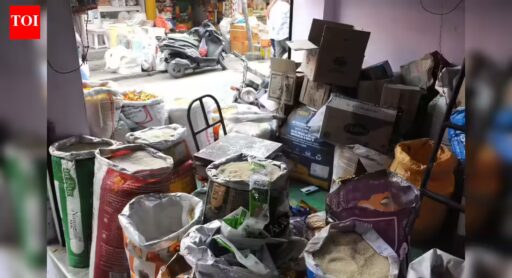
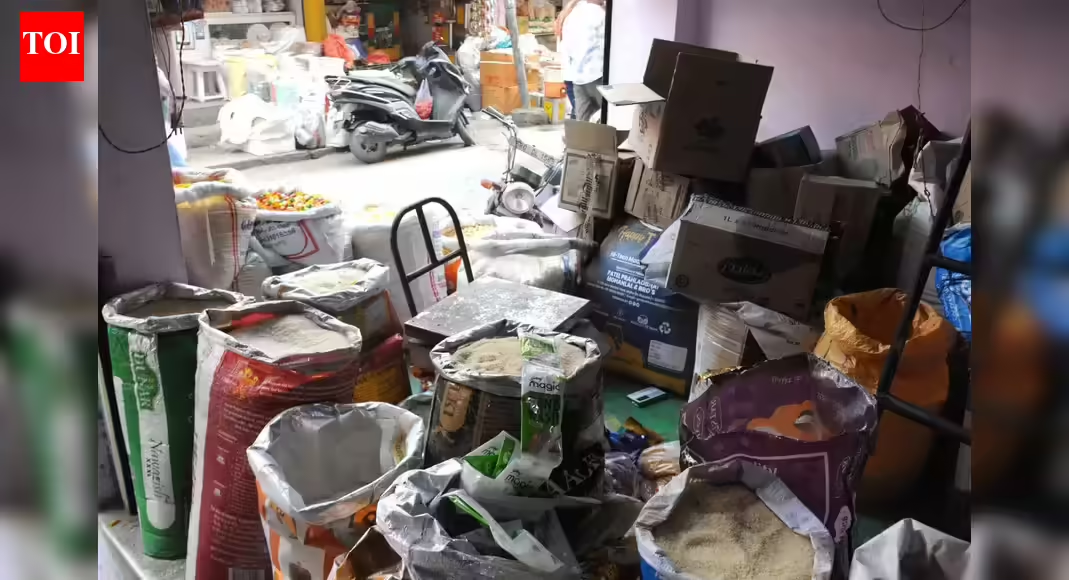
Patna: Quick commerce and e-commerce have reshaped how urban India shops. With a few taps on a smartphone, groceries, medicines and household essentials arrive at the doorstep, often within hours. The promise is speed and convenience. The price, however, is less visible – a gradual erosion of everyday social interaction and the slow decline of neighbourhood markets that once anchored community life.Traditional shopping was never just about buying goods. Local markets and general stores doubled as informal meeting points, where neighbours exchanged news, advice and familiarity. As online platforms replace physical visits, these shared spaces are thinning out, taking with them the small but meaningful interactions that knit communities together.B S Tiwari, a 45-year-old resident of Raja Bazar, recalls a different rhythm. “Earlier I used to prepare a list of things needed at my home in a month and used to buy from the nearest general store. But recently, I have started purchasing online. I only buy food grains from the store, and other products I purchase online,” he said. While the shift saves time, he admits it comes at a cost. “Though this saves time, it has reduced physical interaction. I think slowly we are heading towards isolation. But what can one do, if one has to save time,” he said.For older residents, convenience often fills a genuine need, but not without emotional loss. A Samanpura resident in her early 60s said her children now place orders on her behalf. “Earlier, I used to go myself and purchase. But because of bad health, I cannot move a lot. Also, my kids are staying outside Patna and advise I do not go alone. They order online. Be it my medicine, or any food item, I get via quick commerce. But no doubt, I miss going out and interacting with my neighbours. Such online shopping often lacks the personal touch of face-to-face interactions,” she said.The impact is most visible at the shopfront. Owners of small general stores say footfall has dropped sharply as customers migrate online. Pradeep Jaiswal, who runs a nearly 50-year-old shop, said his business has halved. “With quick commerce, people are now getting things with just a click at their doorstep, especially FMCG items. There was not much problem with e-commerce, but quick commerce has eaten our business and we cannot find any alternative to compete,” he said.Purushottam Kumar, who has operated a general store near Naya Tola for 25 years, said, “No doubt the business has come down by 50% and we are facing the brunt.”