
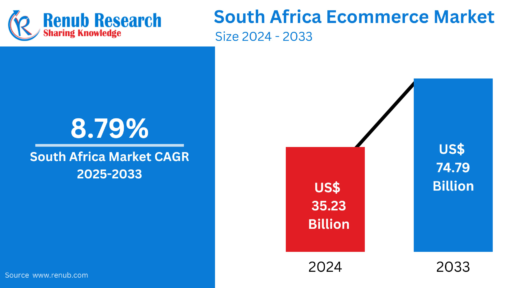
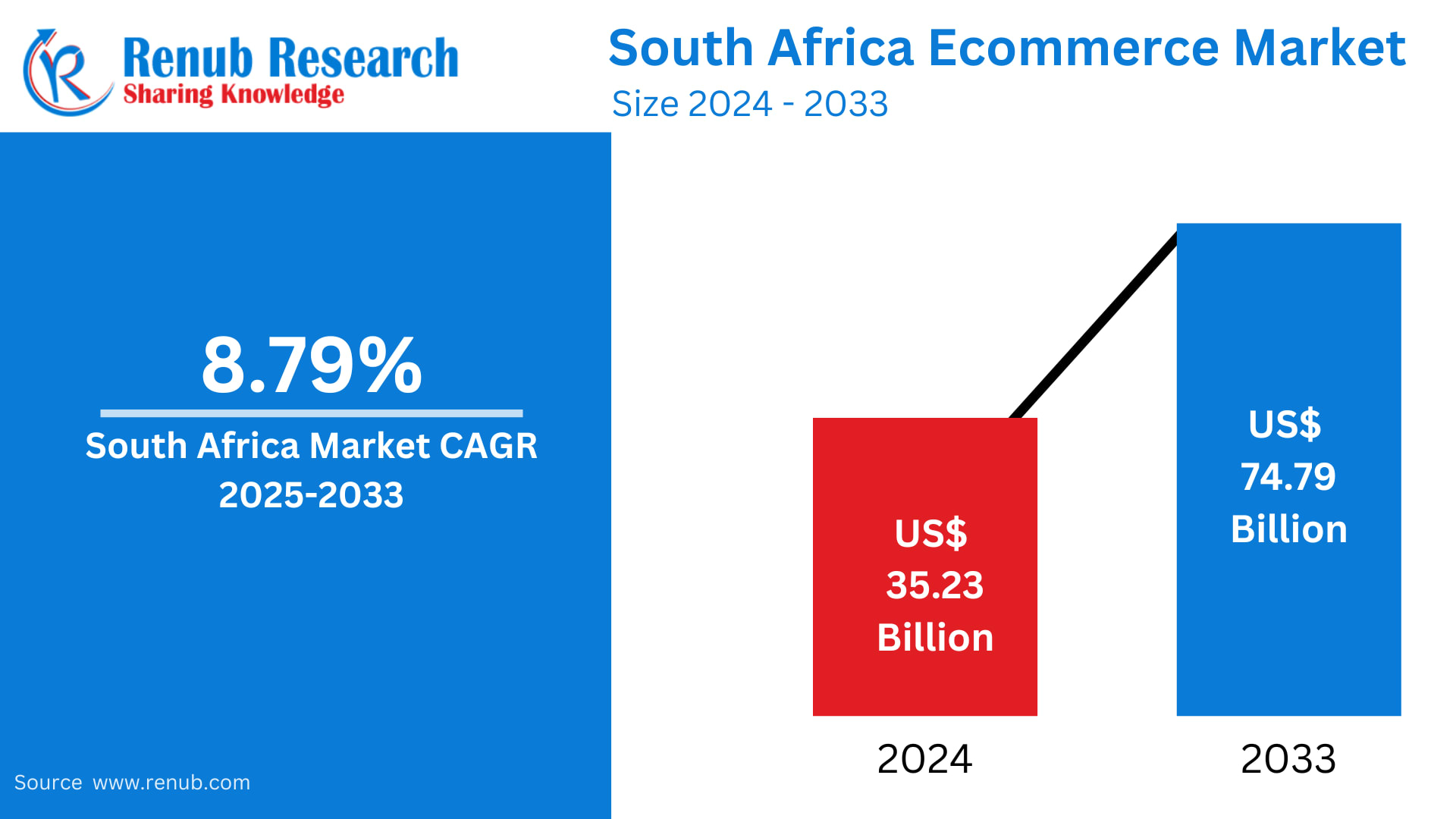
The South African e-commerce market is entering a transformative decade, one that will be defined by rapid digitization, expanding connectivity, and unprecedented consumer adoption of online retail. According to Renub Research, the market is projected to reach US$ 74.79 billion by 2033, nearly double its estimated US$ 35.23 billion valuation in 2024, growing at a compound annual growth rate (CAGR) of 8.79% from 2025 to 2033.
Driven by increased smartphone penetration, maturing digital payment solutions, logistics advancements, and shifting consumer lifestyles, South Africa is fast becoming one of Africa’s most dynamic online retail markets. From fashion and electronics to groceries and health products, the digital marketplace is reshaping how millions of South Africans shop.
The South Africa Ecommerce Market & Forecast report (2025–2033) covers a wide range of categories—Apparel & Accessories, Beauty & Personal Care, Consumer Electronics, Office Supplies, Toys and Hobby, Furniture, Books & Media, and Others. It also evaluates payment modes including Digital Wallets, Credit/Debit Cards, Account-to-Account (A2A), Buy Now Pay Later (BNPL), Cash on Delivery (COD), and even Cryptocurrency.
Below is a detailed news-style market overview written for clarity, insight, and reader engagement.
South Africa E-commerce Market Overview
E-commerce—defined as the digital buying and selling of goods and services—has expanded dramatically across South Africa over the past decade. Consumers now rely on online platforms to compare prices, shop for essentials, pay for services, and receive home deliveries with increasing convenience.
The market’s momentum stems from a potent mix of factors:
Widespread internet access
High smartphone usage
Growth in digital and mobile payment solutions
A cultural shift toward convenience-driven consumption
South Africa’s e-commerce ecosystem is anchored by leading platforms such as Takealot, Zando, Superbalist, Amazon (recently launched in 2024), and various specialized online retailers. These companies have leveraged consumer behavior shifts—particularly after the COVID-19 pandemic—to expand product selection, offer smoother delivery options, and provide personalized online shopping experiences.
The rise of e-commerce has also empowered small and medium-sized enterprises (SMEs), enabling them to reach national audiences without heavily investing in physical stores. Enhanced security protocols and the expansion of mobile banking further contribute to rising consumer trust in online transactions.
What was once a convenience-driven luxury for urban residents has now become a necessity-driven digital lifestyle across the country.
Key Drivers of the South Africa E-commerce Market
1. High Internet Penetration and Mobile Usage
South Africa’s digital infrastructure has improved significantly, allowing millions to access online shopping platforms seamlessly. As of January 2024, 74.7% of the population had internet access, with more than 118.6 million active internet connections reported—a number exceeding the total population due to multi-device usage.
Smartphones have become the primary gateway to digital commerce, particularly with:
Affordable data packages
Competitive mobile brands
Improved mobile broadband speeds
This widespread connectivity has brought online shopping to both urban centers and remote regions, expanding the national consumer base. With mobile phones serving as the primary shopping tool, retailers are now optimizing their apps, mobile interfaces, and one-click checkout features to keep pace with rising demand.
2. Growth of Digital Payment Solutions
Digital payment adoption is accelerating across South Africa, creating a safer, more efficient environment for online commerce. Consumers increasingly rely on mobile wallets, credit cards, debit cards, and localized fintech apps to complete purchases digitally.
Platforms like PayFast, Ozow, SnapScan, and Zapper have enhanced payment convenience and security. Additionally, the South African Reserve Bank’s Digital Payments Roadmap, aligned with Vision 2025, aims to:
Promote innovation
Enhance interoperability
Improve competition
Strengthen financial inclusion
These initiatives reduce consumer friction and increase trust in online shopping, further fueling e-commerce growth. As more South Africans adopt cashless lifestyles, digital wallets and A2A payments will continue to outpace traditional methods.
3. Changing Consumer Shopping Behavior
Over the past few years, South African consumers have increasingly prioritized convenience, value, and time-saving solutions. Online shopping allows them to:
Browse products anytime
Compare prices instantly
Read verified customer reviews
Receive orders at their doorstep
Post-pandemic habits have reinforced this shift. Consumers now prefer home delivery, curbside pickup, and quick-buy features, while companies tailor personalized shopping journeys using:
AI-driven product recommendations
Influencer-led marketing
Loyalty and rewards programs
As living costs rise, consumers also pursue better deals online, contributing to strong e-commerce penetration across categories like electronics, apparel, groceries, and beauty products.
Challenges Facing the South African E-commerce Market
Despite strong growth, the market faces several obstacles that companies must continue to address.
1. Delivery and Logistics Inefficiencies
Logistics remains one of the biggest barriers to seamless e-commerce expansion. While delivery networks in major urban hubs—Johannesburg, Cape Town, and Durban—are robust, rural areas often face:
Longer delivery times
Higher shipping costs
Infrastructure limitations
Road maintenance issues
These hurdles directly affect customer satisfaction. As the market grows, e-commerce companies must invest in:
Micro-fulfillment centers
Advanced last-mile delivery technologies
Partnerships with private courier networks
Innovations such as drone delivery and gig-economy logistics could play significant roles in the next decade.
2. Online Payment Security Concerns
Although digital payments are growing, many consumers still hesitate due to fears of:
Fraudulent transactions
Data breaches
Phishing scams
Identity theft
Building trust remains critical. Companies must prioritize:
Multi-factor authentication
Encrypted payment gateways
Consumer education campaigns
Transparent security policies
Stronger cybersecurity frameworks will encourage hesitant users to shop online with confidence.
Category Insights
South Africa E-commerce Apparel and Accessories Market
This segment is one of the fastest-growing categories in the digital retail landscape. As disposable incomes rise and consumers seek wider fashion choices, online platforms such as Zando, Superbalist, Takealot, and international brands continue to gain traction.
Key growth drivers include:
Mobile-first shopping trends
Personalized style recommendations
Flexible return policies
Competitive pricing
Social media-driven fashion inspiration
In May 2024, Amazon’s entry into South Africa intensified competition within the apparel and fast-fashion sector. The market is expected to flourish as consumers increasingly use smartphones to explore new styles, compare brands, and purchase clothing online.
South Africa Digital Wallet Market
The digital wallet market is expanding rapidly due to:
Rising smartphone ownership
Improved financial inclusion
Growth in mobile banking
Consumer preference for touchless payments
Apple Pay, Google Pay, SnapScan, and Zapper dominate both online and in-store transactions. As e-commerce and fintech ecosystems mature, digital wallets will continue to shape South Africa’s evolving payment landscape—especially among Gen Z and urban millennials.
South Africa E-commerce Market Segmentation
By Product Categories
Apparel & Accessories
Health, Personal Care & Beauty
Computer & Consumer Electronics
Office Equipment & Supplies
Toys & Hobby
Furniture & Home Furnishing
Books / Music / Video
Other Categories
By Payment Mode
Digital Wallet
Credit Card
Debit Card
Account-to-Account (A2A)
Buy Now Pay Later (BNPL)
Cash on Delivery
Prepay
Other (including Cryptocurrency)
Competitive Landscape
Each major company is evaluated across five key viewpoints:
Overview, Key Persons, Recent Developments, Product Portfolio, and Revenue.
Key Players
Takealot Online (Pty) Ltd.
Evetech (Pty) Ltd.
Jumia
Walmart Inc. (via Massmart)
Zando
SoFresh
Decathlon
UCook
These companies are investing in logistics hubs, AI-driven retail solutions, on-demand delivery, subscription-based shopping, and omnichannel strategies to stay ahead of intensifying competition.
Final Thoughts
South Africa’s e-commerce market is poised for a decade of strong, technology-driven evolution. With its value set to rise from US$ 35.23 billion in 2024 to US$ 74.79 billion by 2033, the sector reflects a broader shift toward digital-first consumption.
Improved internet access, a thriving mobile economy, innovative payment solutions, and the changing expectations of modern consumers all contribute to this impressive momentum. However, addressing challenges in logistics infrastructure and cybersecurity will be crucial to unlocking the market’s full potential.
As global and local players expand their footprints, South Africa is well-positioned to emerge as a leading e-commerce powerhouse—not just in Africa, but across the global digital economy.