
Additional Active Pilot and Demonstration Projects
Bus Stop Lighting Program
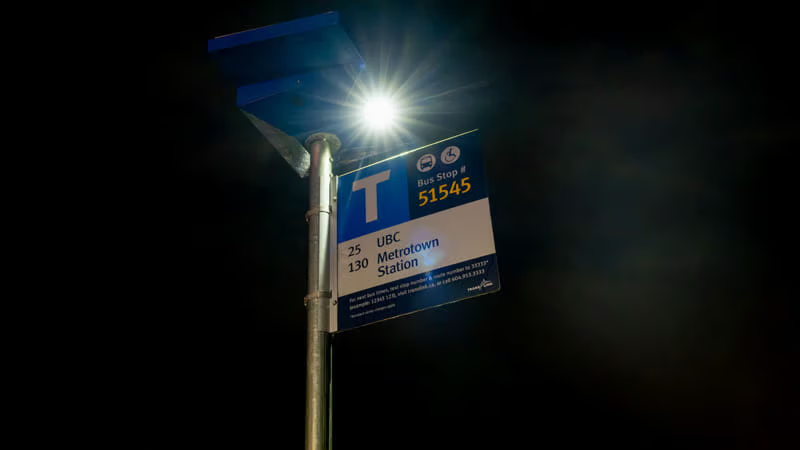
TransLink is rolling out more solar-powered, push-button lighting at bus stops around Metro Vancouver to improve safety, visibility, and the overall customer experience. Starting in November 2025, the expansion of the Bus Stop Lighting Program will include stronger, longer-lasting lighting units to improve performance and reliability, bringing the total to 14 stops.
Customers at participating bus stops are encouraged to try the new lighting and share their feedback through a short online survey, available via QR code on a bus stop sign. TransLink will review the results through early 2027 to determine next steps, including potential installation at additional bus stops across the region. This initiative aligns with TransLink’s Customer Experience Action Plan by enhancing safety, comfort, and accessibility, with a focus on improving wayfinding and visibility at bus stops.
Lighting units can be found at the following bus stops:
Coquitlam Central Mobility Hub Pilot

TransLink has partnered with the City of Coquitlam to improve connections between shared micromobility services – such as e-bikes and e-scooters – and public transit at Coquitlam Central SkyTrain and West Coast Express stations.
Starting in April 2025, designated parking areas for shared micromobility devices will be installed near the station entrances, with physical wayfinding added to guide customers to these locations. This pilot will run until the end of 2025, allowing TransLink to assess its impact and gather valuable insights.
Mobility hubs like this provide an opportunity to integrate sustainable transportation options, enhancing connectivity and convenience across the region. This initiative will help TransLink explore ways to improve the customer experience by increasing access to a variety of transportation choices, while also improving safety, reducing congestion, and enhancing accessibility around transit hubs.
The findings from this project will inform how similar approaches could be applied at other transit hubs across Metro Vancouver, demonstrating the potential of e-bikes and e-scooters as effective first- and last-mile solutions. By exploring benefits of mobility hubs, we are advancing the goal of creating convenient, sustainable transportation choices for everyone, as outlined in Transport 2050.
On-Demand Bike Parking Pilot
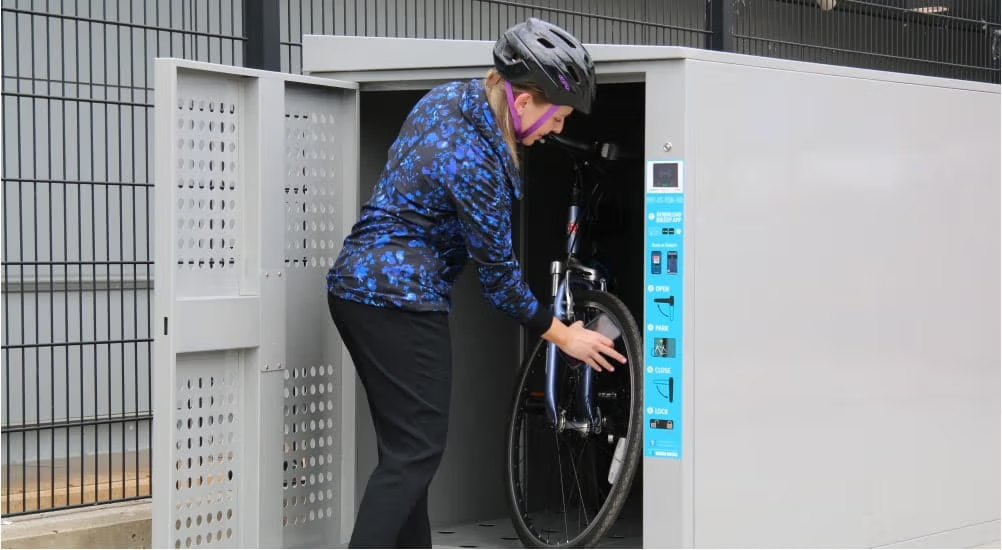
TransLink is piloting a new On-Demand Bike Parking Program to provide customers with more convenient and flexible bike parking options at transit hubs throughout the region. These bike parking facilities are the first of their kind in British Columbia, with keyless entry and payment through smartphone technology.
We’re piloting two types of on-demand bike parking, bike lockers and racks, to see how new technology can improve our customers’ experience combining cycling with transit. These new bike parking facilities use 100 per cent solar power to support the region’s sustainability goals and join a suite of bike parking options across the transit network.
On-demand bike lockers are available at:
On-demand bike racks are also currently available at Moody Centre Station and Lonsdale Exchange.
To learn more about the features of on-demand bike lockers, visit our Bike Parking page. If you’re interested to learn about rates and how to use the bike lockers, visit our Mobile Services page.
This pilot will monitor customer usage and response to the new service over several months. If successful, we expect to keep these lockers long-term and develop plans for rolling this technology out to even more stations in the future. We encourage customers to share feedback on their experience using our new on-demand bike parking options by contacting our Customer Information team at 604.953.3333.
Battery-Electric Bus Pilot
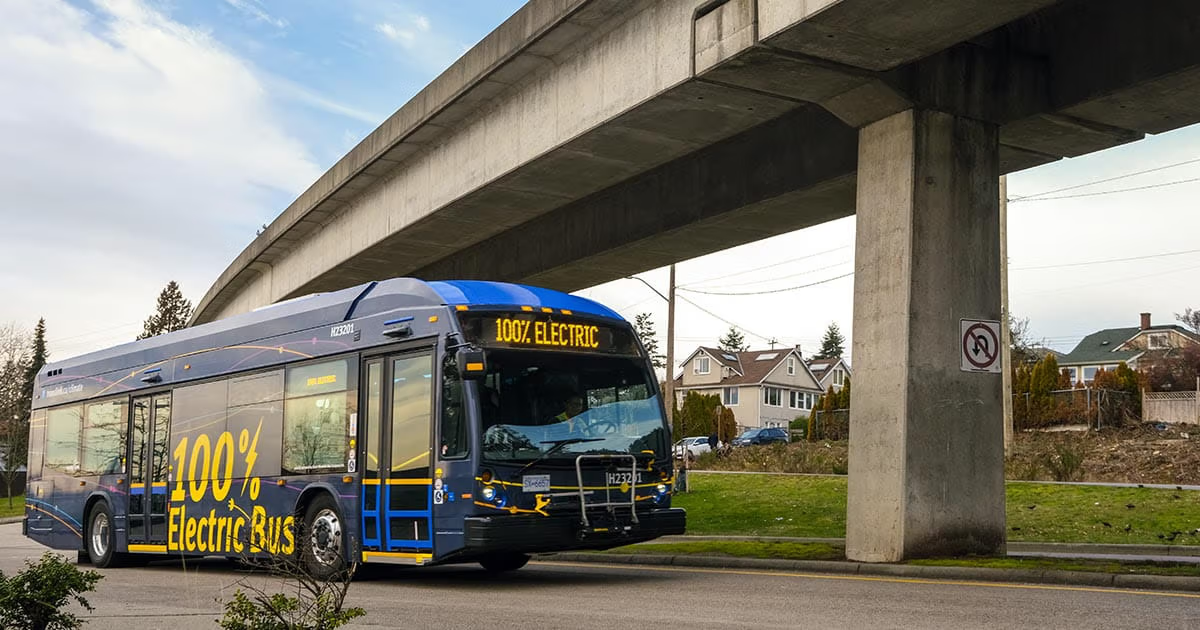
The Battery-Electric Bus Pilot is part of a pan-Canadian partnership between TransLink, the Canadian Urban Transit Research & Innovation Consortium (CUTRIC), the Government of Canada, and BC Hydro.
Over the next two-and-a-half years, we’ll be testing buses (New Flyer and Nova Bus) and chargers (ABB and Siemens) from different manufacturers. These trials will allow us to collect data and obtain valuable experience, so we can scale up our battery-electric bus fleet in order to meet our 100% renewable energy by 2050 target.
See the charging station in action
Our battery-electric buses are powered with clean electricity and have zero tailpipe emissions. Compared to diesel, each battery-electric bus is expected to reduce 100 tonnes of GHG emissions per year – and won’t generate any local air pollution. In addition to contributing to a cleaner environment, the buses will provide a smoother and quieter ride. We expect each bus to save up to $40,000 in fuel costs for the two-and-a-half-year project, compared to diesel.
Data and experience from this project will support transit electrification in Metro Vancouver and throughout Canada. It will support electric vehicle adoption globally by informing the development of the OPPCharge charging protocols.
Completed Pilot and Demonstration Projects
Letenda Bus Trial
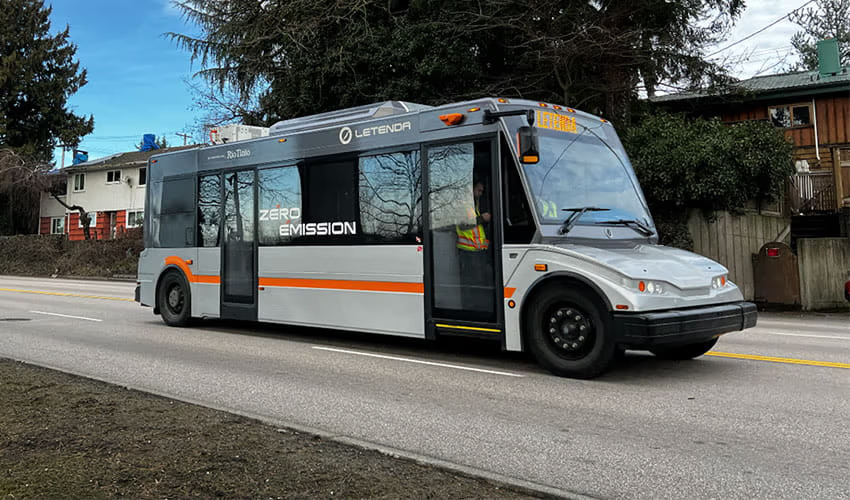
From February to April 2025, TransLink and Coast Mountain Bus Company (CMBC) tested a new 30-foot battery-electric bus to learn more about how it could address capacity challenges on routes served by community shuttles while advancing TransLink’s zero-emission commitments. This trial will help determine whether smaller battery-electric buses can be an effective solution for growing ridership needs while reducing emissions and long-term operational costs.
The Electrip bus, which comes from Quebec-based manufacturer Letenda, arrived at Hamilton Transit Centre in late February. Until early April, CMBC evaluated the bus’s its charging capabilities, range, and overall reliability in Metro Vancouver’s operating environment, including its performance in various weather and road conditions.
As part of the trial, the bus entered service for two weeks, giving customers a firsthand experience. It operated on different routes around Burnaby, New Westminster, and Vancouver, and rides on the bus were free during the trial. Instead of paying a fare, customers were invited to take a short survey to share their experiences, helping TransLink and CMBC understand what works well and what could be improved.
The insights gathered from this trial will help shape future fleet decisions, ensuring TransLink and CMBC continue to expand service in a way that is sustainable, cost-effective, and responsive to customer needs.
Nano Paint
Nano paint, which is made of microscopic particles at the nanometer scale, has gained worldwide popularity, especially in Europe and North America for its eco-friendly and energy-efficient properties. Surfaces coated in nano paint offer unique benefits, including self-cleaning, anti-corrosion, and thermal insulation. By reflecting sunlight and improving insulation, nano paint can reduce reliance on air conditioning in summer and heating in winter, lowering energy use and cutting greenhouse gas emissions.
With Metro Vancouver experiencing hotter summers in recent years, TransLink has been exploring ways to reduce the impact of extreme heat on people and the environment by adapting transit infrastructure. That’s why TransLink recently partnered with the Low Carbon Business Association and the Vancouver Economic Commission (now decommissioned) to explore nano paint’s potential for cooling transit infrastructure in Metro Vancouver.
The pilot project focused on the effectiveness of nano paint in reducing surface heat and its thermal insulation capabilities, particularly in providing heat-reflective properties to maintain cooler temperatures and enhance energy efficiency. It found that while nano paint is effective at reflecting solar energy and improving insulation, it costs nearly ten times more than regular paint. Future use of the technology should include a detailed cost-benefit analysis to determine where its application could provide meaningful savings, as the high cost may outweigh the benefits in some areas.
To learn more, read the final report.
Photocatalytic Oxidation Pilot
From March to April 2021, TransLink piloted a technology called photocatalytic oxidation (PCO) to sanitize the air and surfaces on board transit vehicles. The one-month pilot took place on a 60-foot articulated bus and two double-decker buses.
Photocatalytic oxidation is a safe technology that works by circulating low levels of hydrogen peroxide to kill pathogens like viruses. Before the COVID-19 pandemic, photocatalytic oxidation was most commonly used in buildings, airports and cruise ships. Companies like Microsoft, Hilton and Kennedy Space Center are already using PCO to make their spaces safer. TransLink and other North American agencies have recently been testing its application on transit for the first time.
The goal of TransLink’s pilot was to determine photocatalytic oxidation’s ability to effectively sanitize surfaces on transit and to work with peer agencies to validate the technology’s ability to sanitize air. After analyzing data from the pilot, TransLink determined that the tested PCO equipment was not able to provide the level of improvement to surface cleanliness that CMBC desired from the technology in a bus application.
Copper Pilot Project
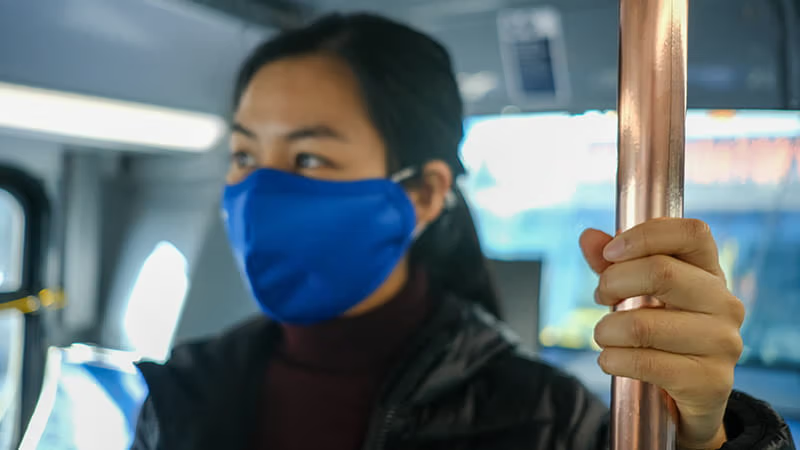
As part of an innovative pilot project, TransLink welcomed medical microbiologists from Vancouver Coastal Health (VCH) onboard our vehicles to test copper products on transit surfaces. The pilot tested copper’s ability to destroy bacteria and viruses on high-touch surfaces.
After two years of research, VCH researchers determined copper products can kill up to 99.9% of bacteria on transit surfaces within two hours of contact.
The project is the result of a partnership between Teck Resources Limited, TransLink, the Toronto Transit Commission, Vancouver Coastal Health, Mount Sinai Hospital, the Coalition for Healthcare Acquired Infection Reduction, the VGH & UBC Hospital Foundation, and Westech Cleaning Audit Systems.
The partnership was fully funded by Teck Resources, as part of their Copper and Health Program.
Did you know?
-
Copper is the only solid metal touch surface registered as a public health product by Health Canada and the U.S. Environmental Protection Agency, proven to naturally eliminate up to 99.9% of bacteria.
-
Antimicrobial copper has been installed in more than 300 healthcare facilities in 26 countries in Europe, South America, Africa, and Asia.
-
Copper surfaces are also being installed in training centers for professional sports teams, airports and restaurants.
-
Copper surfaces are also being installed in training centers for professional sports teams, airports and restaurants.
-
Copper’s antimicrobial properties are supported by over 200 peer-reviewed scientific studies.
-
TransLink was the first transit agency in North America to test copper products on vehicles and is a member of the International Copper Action Hub.
To learn more and share feedback:
Vanpool Pilot
Many employees in Metro Vancouver work in places that are difficult to access by walking, cycling, and conventional transit. In Feb. 2019, TransLink launched the Vanpool pilot in partnership with Modo to supply shared vehicles to the maintenance staff at the University of British Columbia to help provide affordable and shared-use mobility options. The pilot was originally introduced to provide commuters with cost-effective transportation to and from their workplace and to reduce the number of single occupancy vehicles on our roads.
The number of vehicles in the pilot was capped to a maximum of 10. Within the pilot phase, Vanpool operated with roughly 50 participants and 10 vehicles. As part of the pilot demonstration, vanpooling provided a realistic alternative for groups of employees (3-8 persons per vehicle) commuting from outlying municipalities to a central employer or area of employers. The Vanpool pilot provided a more affordable and social alternative to driving alone.
As of Jan. 1, 2023, the Vanpool pilot has transitioned to the program phase. TransLink has partnered with Modo and Liftango to develop and test different approaches to offering Vanpool services by leveraging existing car-share vehicles.
We’re in the process of identifying suitable locations for this program. If you’re a business or employee that would like to help us launch a Vanpool service at your workplace, please contact us at vanpool@translink.ca.
Shared Mobility Pilot Program
The inaugural Open Call for Innovation, which launched under the theme of “Seamless Mobility” in June 2018, resulted in TransLink partnering with Evo Car Share, Modo Co-op and Mobi by Shaw Go to help make multimodal travel easier, more convenient and seamless.
The Shared Mobility Pilot ran between Oct. 2019 and Aug. 2020. During this period, approximately 160 employees of 13 selected Vancouver-based organizations received a special Shared Mobility Compass Card. The card could be used to access transit, carshare and bikeshare services for work-related travel. At the end of each month the participating organizations received one consolidated invoice tallying all trips.
A total of 6,000 trips were completed through the duration of the pilot. The program was highly rated among participants and the results indicate a mode shift towards more sustainable modes of transportation. View the project summary report for more detailed findings.
The pilot aimed to test the user experience and technical integration of tying multimodal journeys together with a Shared Mobility Compass Card. We’re using data and lessons learned from this first phase to determine our next steps, including the potential for deeper integration and wider implementation.
Room to Ride: Bus Capacity Predictions
Translink worked with Transit App to trial exclusive capacity predictions on buses for the period of August 2021 to July 2022.
Providing bus capacity predictions allowed customers to see if there is room to ride on a bus before boarding. As Metro Vancouver emerges from the pandemic, we wanted to give customers the tools to help better plan their transit trips to explore the region and reconnect with the people and places that matter the most.
Bus capacity predictions generated by Transit app are based on historical trends and Automated Passenger Counter (APC) data collected from TransLink’s bus network. They were available on most routes across the region during the pilot run.
Predictions was presented as a new feature within the Transit app for Metro Vancouver riders, using icons to convey three levels of capacity:
- Many seats available (more than 50 per cent seats available)
- Some seats available (10 per cent to 50 per cent seats available)
- Standing room only (less than 10 per cent seats)
TransLink’s collaboration with Transit app was an outcome of the 2020 Open Call for Innovation, which collected ideas for improving the health, safety, and comfort of customers and employees on transit.
Carpool Campaign Pilot
As part of the inaugural Open Call for Innovation on “Seamless Mobility” TransLink collaborated with Poparide to promote an easy-to-use carpooling solution for Metro Vancouver.
The pilot aimed to test the effectiveness of a cross-marketing collaboration between TransLink and Poparide by collecting carpooling activity data and measuring uptake, with the goal of reducing congestion and travel costs for commuters.
Our partnership with Poparide took place between November 2019 and January 2020. The campaign applied multiple marketing techniques through various channels, which resulted in more than 2,000 trips posted and 500 bookings.
Transit On-Demand Pilot Program – Bowen Island
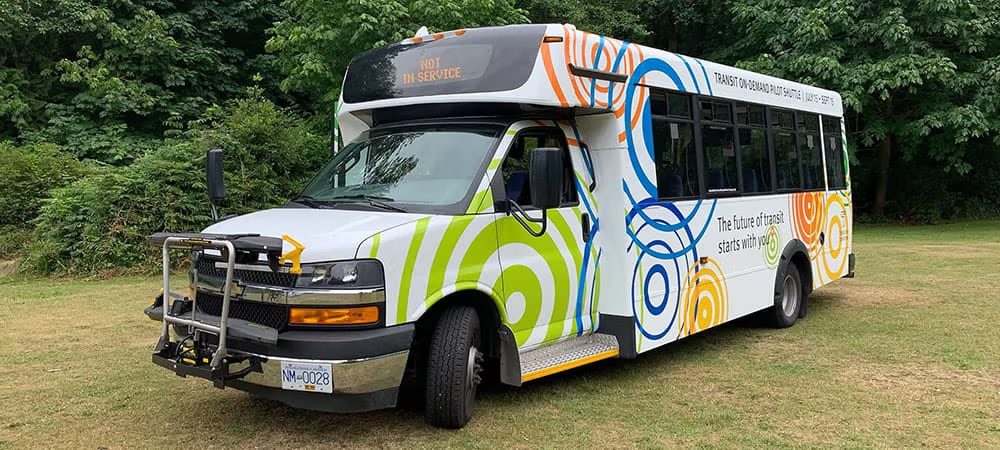
TransLink piloted Transit On-Demand services on Bowen Island from July 15 to September 15, 2019. The on-demand services supplemented the existing routes — 280, 281 and 282 — which continued to provide regular transit service during the trial.
Two additional shuttles offered Transit On-Demand services:
Transit On-Demand customers could book trips up to two weeks in advance using the TapRide app on a smartphone or web browser, or by calling a dispatcher.
Our goal was to explore the technical feasibility and customer experience of implementing Transit On-Demand services.
Key Findings
Over the course of the pilot, the Transit On-Demand service was used by 554 unique users, with a total of 1,200 trips and approximately 2,000 boardings. Three booking options were offered, with the smartphone app being the most popular and accounting for over 76 per cent of total bookings.
The service was well-received and confirmed through the results of a post-pilot survey. Approximately 80 per cent of users gave their on-demand experience top scores, with an average score of 8.6 out of 10. 47 per cent opted to use the on-demand services over their own private cars and over 23 per cent replaced the use of fixed-route transit with on-demand services.
View the project summary report for more detailed findings.
Next Steps
We want to continue learning about how the Transit On-Demand model can improve Metro Vancouver’s transportation system. As part of the learning process, customer and operator feedback is being analyzed to determine next steps regarding service delivery and technology providers. This analysis will help refine the Transit On-Demand model for further testing in suitable areas across the region.
Artificial Intelligence Bus Prediction Pilot
Customers will be able to better plan their journey on TransLink’s bus network, with a new machine learning algorithm improving the accuracy of departure estimates. The system-wide implementation follows a successful pilot program which saw 13 bus routes utilize this technology.
Combining live bus location data with the machine learning algorithm, this innovative methodology improves existing estimates by considering major factors that affect bus departures. These include weather conditions and journey estimates at different times of day and night. To ensure accurate predictions for the entire transportation network, the algorithm involves over 16,000 machine learning models.
The new algorithm has been incorporated into our Next Bus website and SMS tool. Third-party applications that are already using our bus departure estimates, such as the Transit App and Google Maps, will also use the new estimation method.
Mobility Hubs
To provide customers with the flexibility to combine driving and transit, TransLink has partnered with Modo and Evo to created dedicated carsharing parking spaces at select SkyTrain Stations.
Our Park and Ride page has a full list of which stations have dedicated Modo and Evo parking.
For those that prefer cycling, we also provide three different types of bike parking at SkyTrain Stations, bus exchanges, and West Coast Express stations throughout Metro Vancouver including secure bike parkades accessible with your Compass Card.
Visit our Bike Parking page for more information.