

Like more than 6 out of every 10 items sold on Amazon, Eken’s products are posted by an independent company, with Amazon generally handling services such as warehouse services, shipping, and returns. Anyone can sell nearly anything on Amazon, and the company earned roughly $140 billion in revenue from third-party sellers in 2023.
That allows shoppers to find a vast array of products, but it can also make it hard to know just what you’re buying, and who’s selling it.
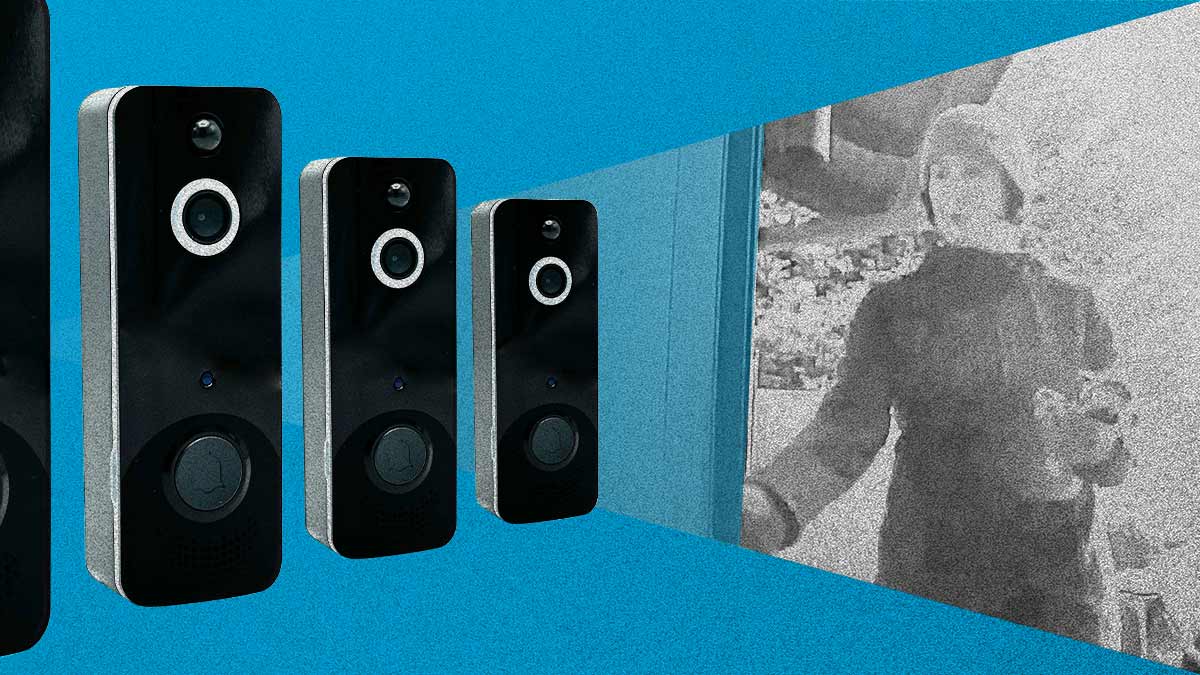
All 10 of the doorbell brands, as well as the Aiwit app, appeared to be owned by an 18-year-old company called Eken Group Ltd., based in Shenzhen, China. The company also has an office in Southern California run out of an apartment in Temple City.
(Eken didn’t respond to CR’s questions about its video doorbells before publication. After publication, the company told CR that it manufactures video doorbells under its own brand, and also manufactures white-label doorbells for separately owned brands.)
For many Chinese tech companies, selling cheap hardware under multiple brand names can increase sales in a product category that’s very popular—until it isn’t, according to Andrew Huang, a prominent engineer and software expert who goes by the name Bunnie and is the author of “The Essential Guide to Electronics in Shenzhen.” At that point, Huang says, the company will switch products, moving on to the next big thing.
“For the security camera market, a brand is just a brand—think of it more like a marketing agency that can do a bit of injection molding and package design to create a look and feel, but they don’t do much beyond that,” he says. “They don’t hold a lot of inventory, and they flit in and out of existence, surfing the trends of commodity markets.”
To create their products, such companies can take a reference design from a chip company that makes the brains inside electronic devices, buy the relevant electronics from neighboring factories, manufacture a cheap plastic case, and then assemble the final product.
Huang says some Chinese companies can put together a new electronic device in as little as two weeks.
However, that kind of fast, cheap product development doesn’t lend itself to cybersecurity, according to Steve Hanna, who is responsible for IoT security strategy and technology at Infineon Technologies, a semiconductor company.
“It’s always the case that building a more secure product costs more,” he says, but for many low-cost IoT companies there is little economic incentive to include security because it is invisible to most consumers.
If such products haven’t been vetted by Amazon, why are they receiving Amazon’s Choice badges? According to a company FAQ, the designation is based on a product’s “ratings, price, popularity, product availability and fast delivery.” They are generated dynamically by an algorithm and can suddenly pop up, then disappear just as quickly.